SDG 6 : Clean Water and Sanitation
SDG 6 “Clean Water and Sanitation” focuses on achieving universal access to clean water and sanitation services with sustainable management. The goals are to solve the lack of water, enhance water quality, and promote hygiene practices.
6.2 Water Consumption per person
UNIMAS is committed to making safe, affordable drinking water, adequate sanitation and good hygiene accessible to all. Through its research, teaching and community partnerships, the university encourages water conservation, better water quality and sustainable sanitation. It also works with communities beyond the campus through outreach and educational activities that build awareness of the value of clean water and proper sanitation.
6.2.1 Water consumption tracking
UNIMAS Measures Total Water Consumption
In 2025, UNIMAS recorded a total water consumption of 3,069,836 m³, supplied by the Kuching Water Board. UNIMAS monitors its water use to understand campus consumption and support responsible water management. The university’s reported figure covers mains supply water.

| Month | Total Volume Consumed (m³) | Average Daily Water Usage per Capita (m³) |
|---|---|---|
| January | 244,525 | 11.29 |
| February | 225,864 | 10.43 |
| March | 246,413 | 11.38 |
| April | 223,149 | 10.30 |
| May | 234,884 | 10.84 |
| June | 266,640 | 12.31 |
| July | 270,275 | 12.48 |
| August | 190,731 | 8.81 |
| September | 219,271 | 10.12 |
| October | 252,931 | 11.68 |
| November | 412,264 | 19.03 |
| December | 282,889 | 13.06 |
| Annual Total | 3,069,836 | 11.81* |
*Average of the 12 monthly per-capita figures.
UNIMAS Environmental, Social and Governance (ESG) Policy
Under Section 8.2, Environmental Responsibility, of the UNIMAS Environmental, Social and Governance (ESG) Policy, the University commits to reducing water consumption and improving water-use efficiency across campus. The policy identifies water-saving technologies, improved monitoring and water-management practices as measures to reduce wastage. These commitments provide a basis for tracking water use and supporting more efficient campus operations.
Keywords: total water use; water consumption measurement; campus water use; water monitoring; water management; water-use efficiency; water-saving technologies; water conservation; monitoring and reporting; UNIMAS ESG Policy
UNIMAS Becomes the First Public University in Malaysia to Publish an ESG Report and Adopt a University-wide ESG Policy
UNIMAS’s university-wide ESG Policy provides a framework for integrating sustainability into campus operations. Reported by the UNIMAS Gazette on 23 August 2025, the policy forms part of the University’s broader sustainability commitment. This institutional framework can support the monitoring and management of campus resources, including water use.
The 2024 UNIMAS ESG Excellence Report provides quantitative evidence for the University’s water consumption: UNIMAS recorded 2,490,580 m³ in 2023, a 5.89% reduction from the previous year. The report identifies the UNIMAS Development Office as responsible for overseeing water consumption and describes measures such as rainwater harvesting, pipe-leak inspections, leak detection and greywater reuse. These details place the total volume of water used within UNIMAS’s wider approach to campus water use, resource monitoring and water management. The university-wide ESG Policy, reported by the UNIMAS Gazette on 23 August 2025, provides a further institutional framework for integrating sustainability into campus operations, including the monitoring and management of water resources.
Keywords: total volume of water used; university water consumption; campus water use; resource monitoring; water management; sustainability policy; ESG Policy; UNIMAS campus operations; water-consumption data
Reference Link: UNIMAS Gazette: UNIMAS Adopts a University-Wide ESG Policy
6.2.2 Water consumption per person
UNIMAS Water Consumption per person
In 2025, UNIMAS recorded a total water consumption of 3,069,836 m³, supplied by the Sarawak Water Board. Using a campus population of 20,685 people, comprising 18,286 students and 2,399 staffs, the University’s water consumption was 148.41 m³ per person for the year. UNIMAS monitors this figure to understand water use across the campus and support efforts to improve water efficiency.
| Month | Total Volume Consumed (m³) | Average Daily Water Usage per Capita (m³) |
|---|---|---|
| January | 244,525 | 11.29 |
| February | 225,864 | 10.43 |
| March | 246,413 | 11.38 |
| April | 223,149 | 10.30 |
| May | 234,884 | 10.84 |
| June | 266,640 | 12.31 |
| July | 270,275 | 12.48 |
| August | 190,731 | 8.81 |
| September | 219,271 | 10.12 |
| October | 252,931 | 11.68 |
| November | 412,264 | 19.03 |
| December | 282,889 | 13.06 |
| Description | Number / Volume |
|---|---|
| Campus Population | 20,685 |
| Number of Students | 18,286 |
| Number of Staff | 2,399 |
| Total Volume of Water Consumed in 2025 | 3,069,836 m³ |
| Water Consumption per Person | 148.41 m³/person/year |
= Total Annual Water Consumption ÷ Total Campus Population
= 3,069,836 ÷ 20,685
= 148.41 m³/person/year
6.3 Water Usage and Care
6.3.1 Waste water treatment
UNIMAS Treats Laboratory Wastewater before Discharge
UNIMAS operates neutralisation plants at the Faculty of Engineering and the Faculty of Resource Science and Technology to manage wastewater generated by laboratory activities. The wastewater treatment process begins as laboratory effluent flows by gravity into a raw wastewater tank for temporary storage. It is then pumped to an equalisation tank, where diffusers mix the wastewater to create a more consistent flow for treatment.
Next, the wastewater enters a neutralisation tank, where sodium hydroxide or hydrochloric acid is used to adjust its pH. The treated effluent is discharged only after it reaches the stated Department of Environment range of pH 5.5 to 9.0. Through laboratory effluent treatment, pH control and responsible discharge, UNIMAS helps manage wastewater and protect water quality in the surrounding environment.
Keywords: wastewater treatment; laboratory wastewater; neutralisation plant; raw wastewater storage; equalisation tank; pH adjustment; effluent treatment; responsible discharge; water-quality protection; UNIMAS
Reference Link: UNIMAS Treats Laboratory Wastewater before Discharge


UNIMAS Wastewater Treatment through STP 1 and STP 2
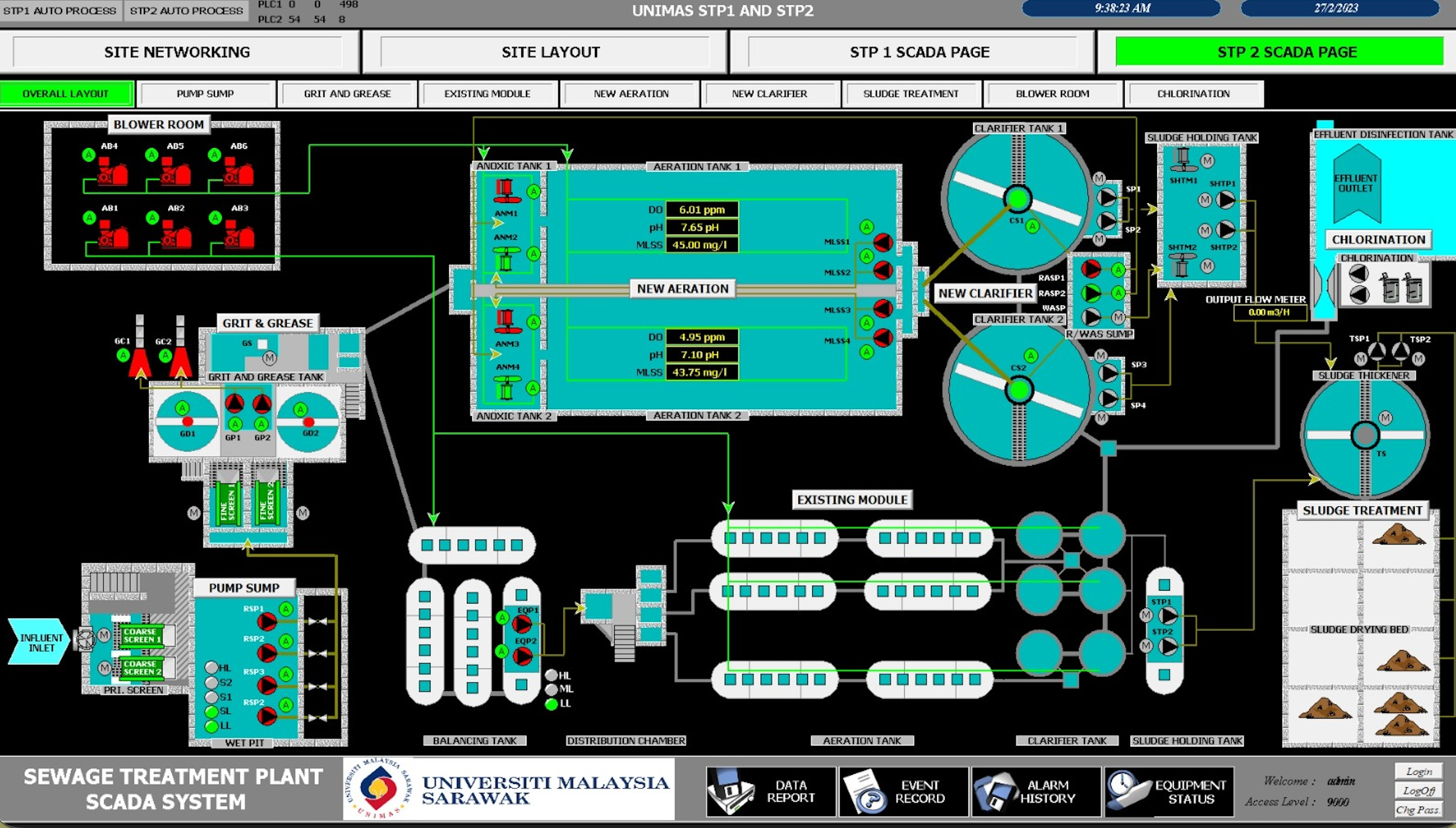
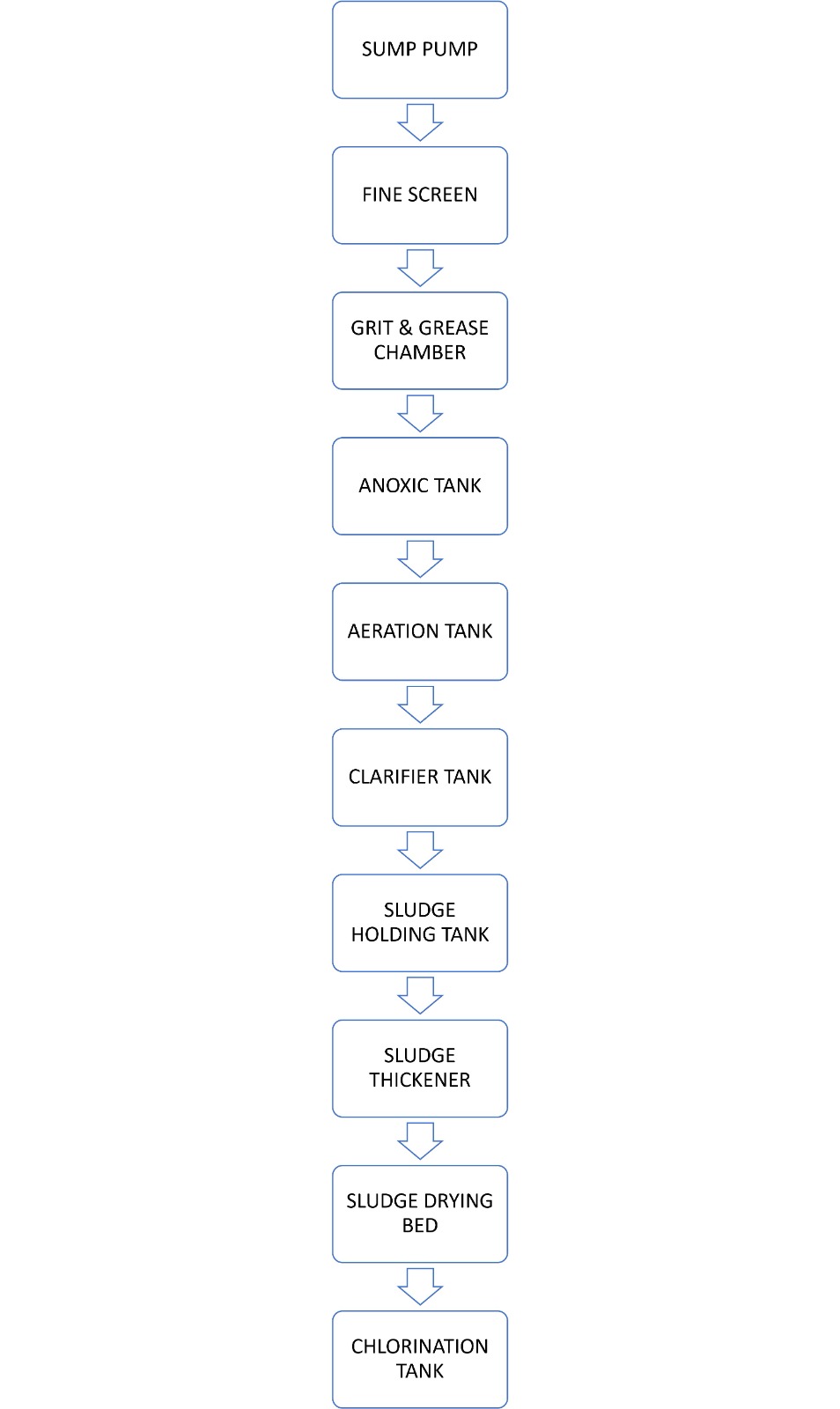
UNIMAS manages campus wastewater through its Sewage Treatment Plants (STP 1 and STP 2). The documented treatment sequence includes coarse and fine screening to remove solid debris, grit and grease removal, and biological treatment in anoxic and aeration tanks. Clarifiers then separate treated water from biological solids, followed by chlorination to disinfect the effluent. Sludge from the process is directed to holding, thickening and drying stages for further handling.
The plant layout and operating parameters describe treatment equipment and process controls, while the site networking image shows the locations of STP 1, STP 2 and the workstation, together with the PLC and SCADA communication system. These components support wastewater-treatment monitoring and management across the campus.
Keywords: wastewater treatment; sewage treatment plant; STP 1; STP 2; coarse screening; fine screening; grit and grease removal; anoxic treatment; aeration; biological treatment; clarification; chlorination; sludge management; PLC; SCADA monitoring; campus wastewater management
UNIMAS STP – Operation Parameters based on Design Parameters
| Population Equivalent | 15,000 PE |
| Average Daily Flow |
3.375 m³ per day 3,375,000 litres per day |
| Peak Flow |
11,776.1 m³ per day 11,776,100 litres per day |
| Hydraulic Retention Time | 20 hours (requirement = 18–24 hours) |
| Anoxic Tank | D.O. < 1.0 mg/L, as close to 0% as possible |
| Aeration Tank MLSS Level |
Design: 4,000 mg/L Range: Min. 3,600 mg/L to max. 5,000 mg/L |
| Aeration Tank Dissolved Oxygen Level |
Target: 2.0 mg/L Range: 1.5–2.0 mg/L |
| F/M Ratio |
Design: 0.09 (target) At 3,600 mg/L = 0.1 (minimum) At 5,000 mg/L = 0.07 (wasting to be carried out) Guideline: 0.05 < F/M < 0.10 |
| Clarifier Solids Loading at MLSS = 4,000 mg/L |
Peak flow: 119.5 (requirement < 150) Average flow: 34.26 (requirement < 50) Surface overflow: 29.88 (requirement < 30) |
| Clarifier Solids Loading at Maximum MLSS = 5,000 mg/L |
Peak flow: 149.4 (requirement < 150) Average flow: 42.82 (requirement < 50) Surface overflow: 29.88 (requirement < 30) |
| Sludge Age |
At 3,600 mg/L = 24.58 days At 4,000 mg/L = 29.75 days At 5,000 mg/L = 47.88 days Requirement: > 20 days |
| Additional Notes | |
|
|
UNIMAS Sewage Treatment Plant Layout
SEWAGE TREATMENT PLANT PROCESS
6.3.2 Preventing water system pollution
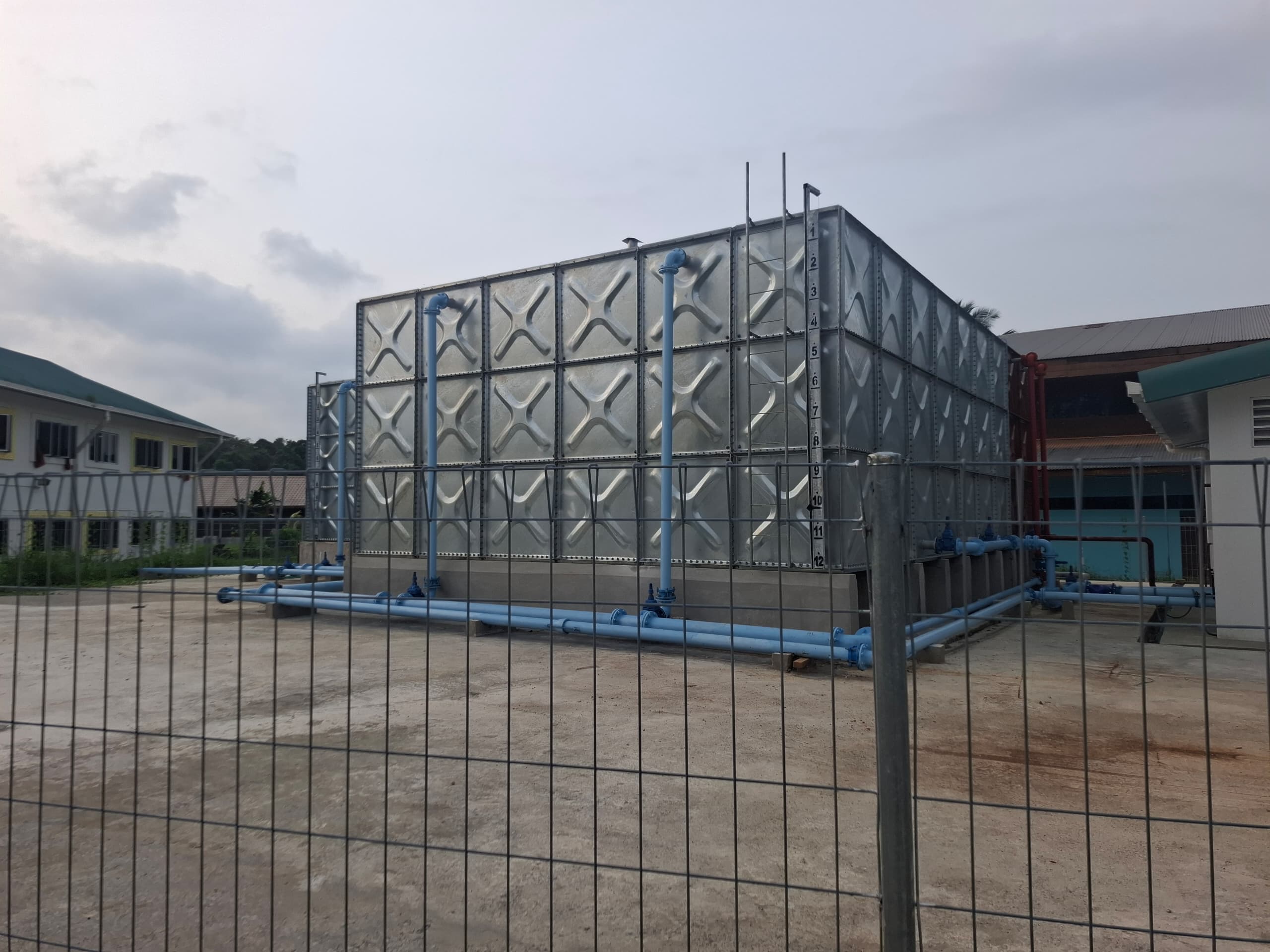
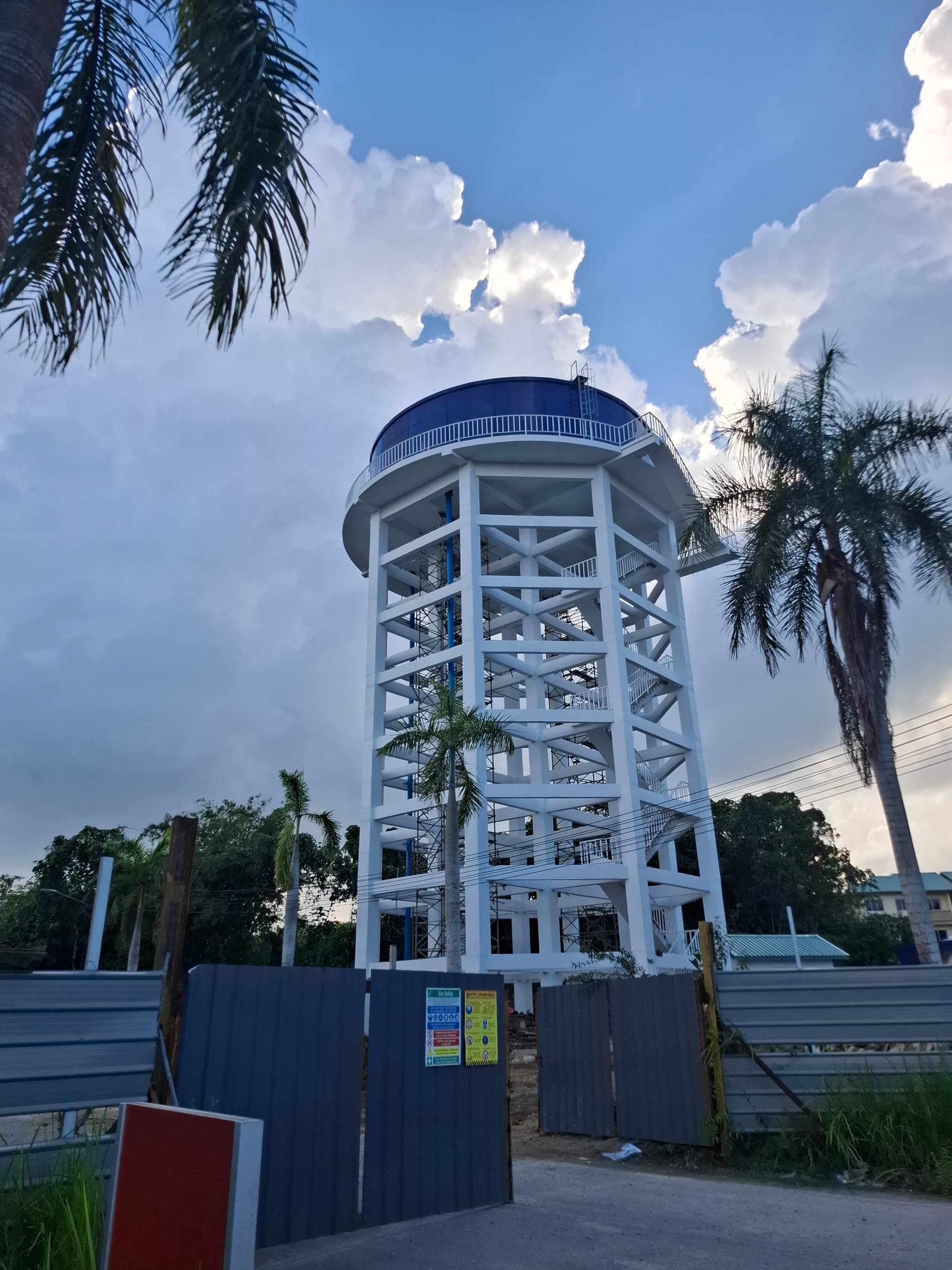
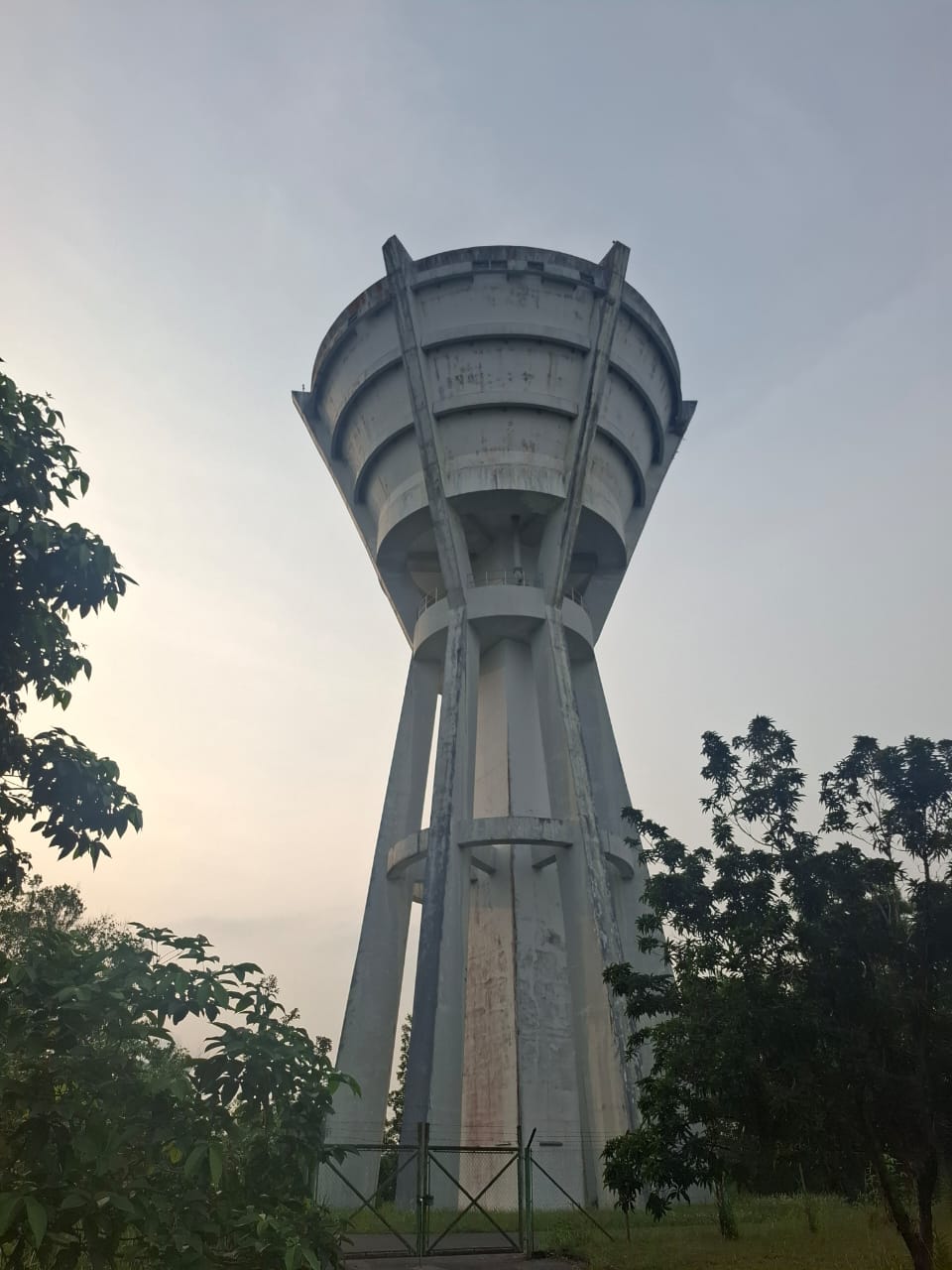
UNIMAS supports water pollution prevention through measures that help protect water quality across campus. At the Faculties of Engineering and Resource Science and Technology, a neutralisation plant treats laboratory wastewater and adjusts its pH to the Department of Environment’s stated discharge range of 5.5 to 9.0 before release. At the CUBE academic block, the rainwater harvesting system filters roof runoff and directs it through a first-flush diverter into a storage tank. UNIMAS’s campus water tank towers with the capacity of 1,000,000 gallon and 500,000 gallon also form part of its water storage and distribution infrastructure, supporting the managed supply of water to campus facilities. Together, wastewater treatment, rainwater filtration and responsible water-system management contribute to pollution prevention and water-quality protection.
Keywords: water pollution prevention; wastewater treatment; laboratory wastewater; neutralisation plant; pH control; rainwater harvesting; filtration; first-flush diverter; water storage; tank towers; water-quality protection; UNIMAS campus water management
Reference Link: UNIMAS Water System Pollution
Water Tank Location | Pictures |
|---|---|
Kampur Timur |
|
Rafflesia College |
|
Cempaka College |
|
Student Pavilion |
|
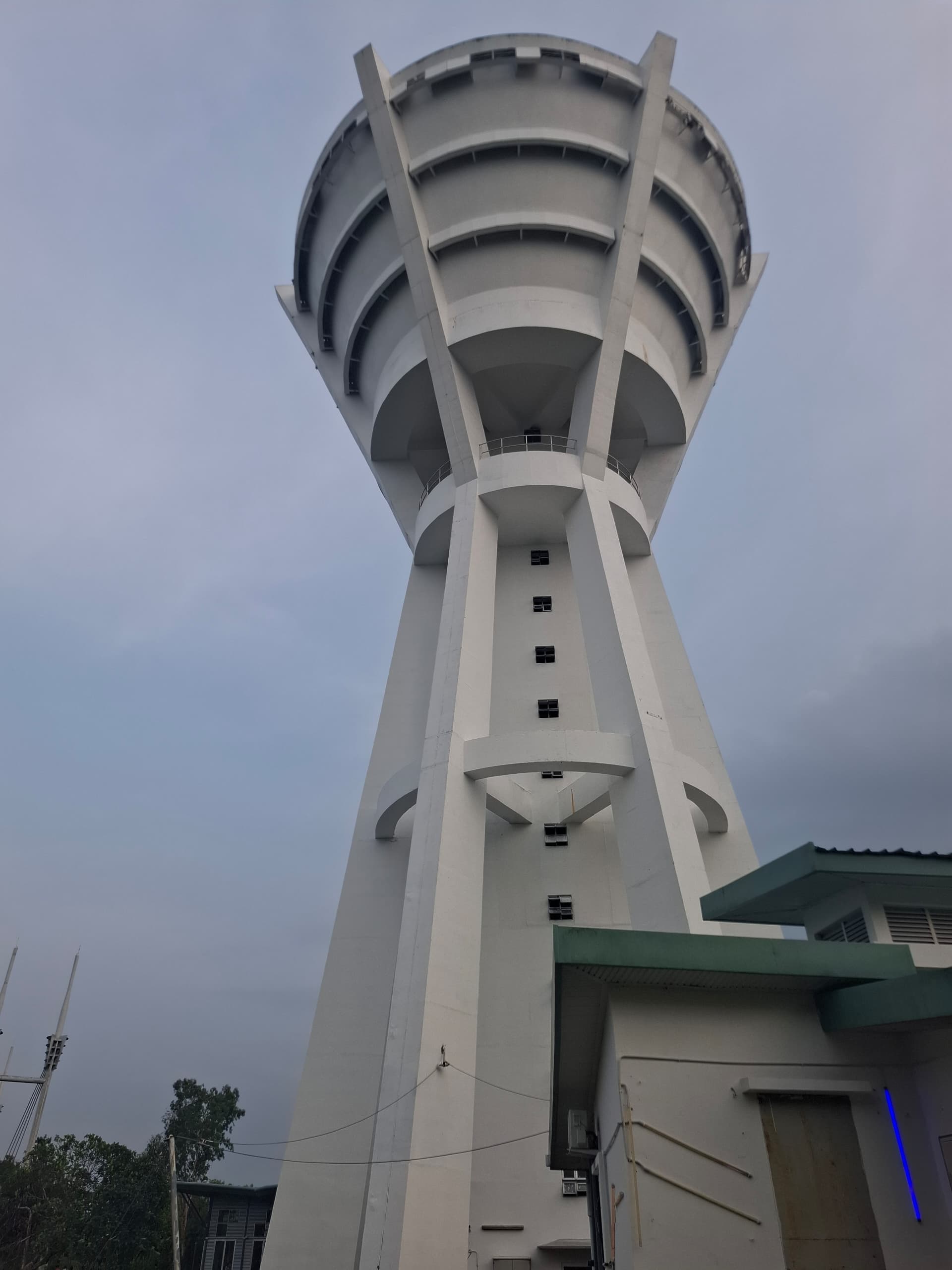
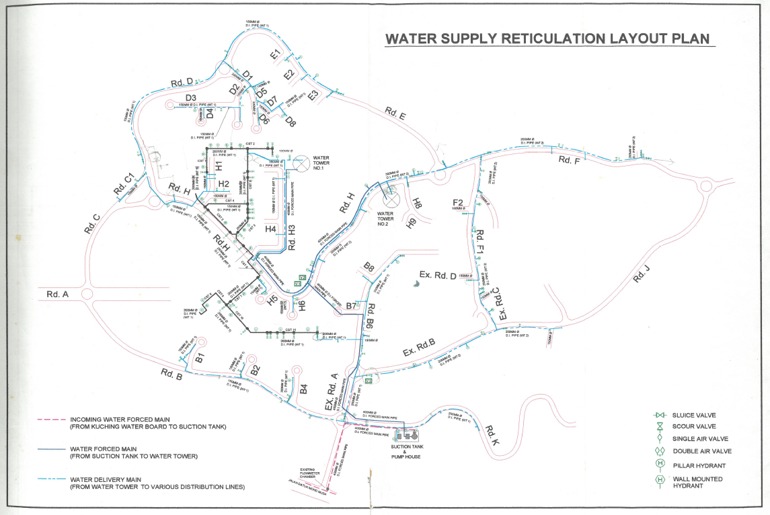 Water Supply Reticulation Layout Plan in UNIMAS
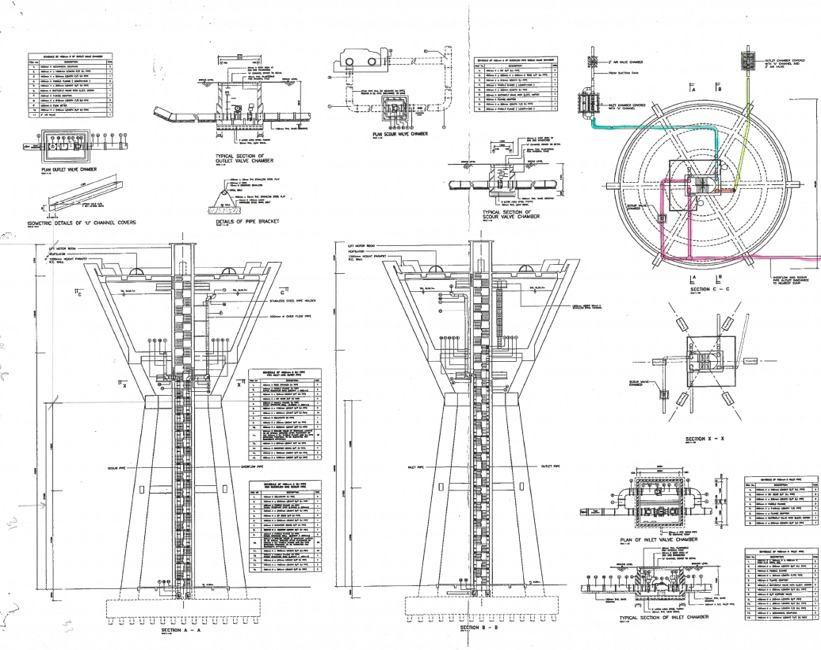 UNIMAS Water Tower: General Arrangement and Engineering Details
6.3.3 Free drinking water provided
UNIMAS Free Drinking Water for Students and Staff
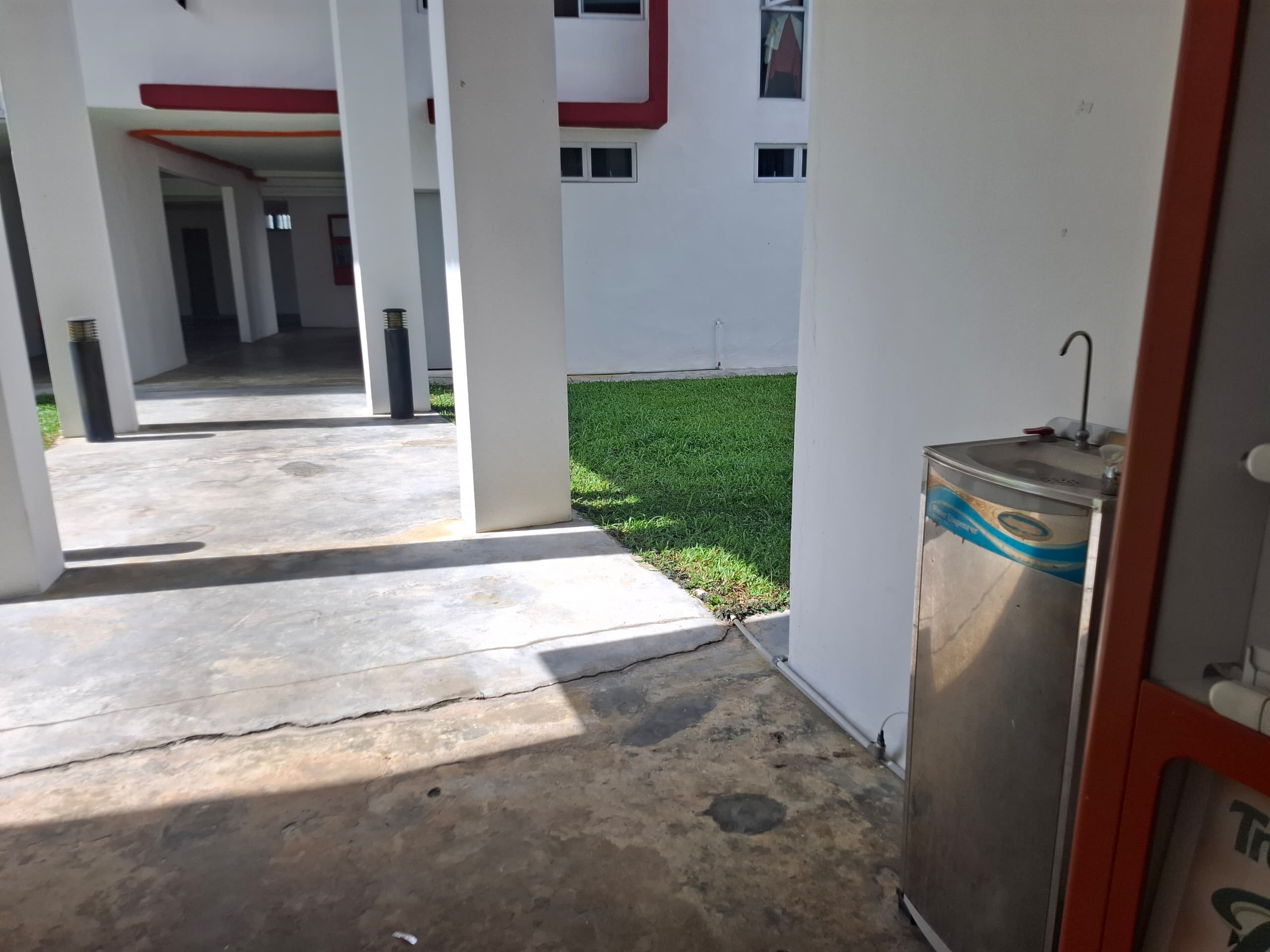
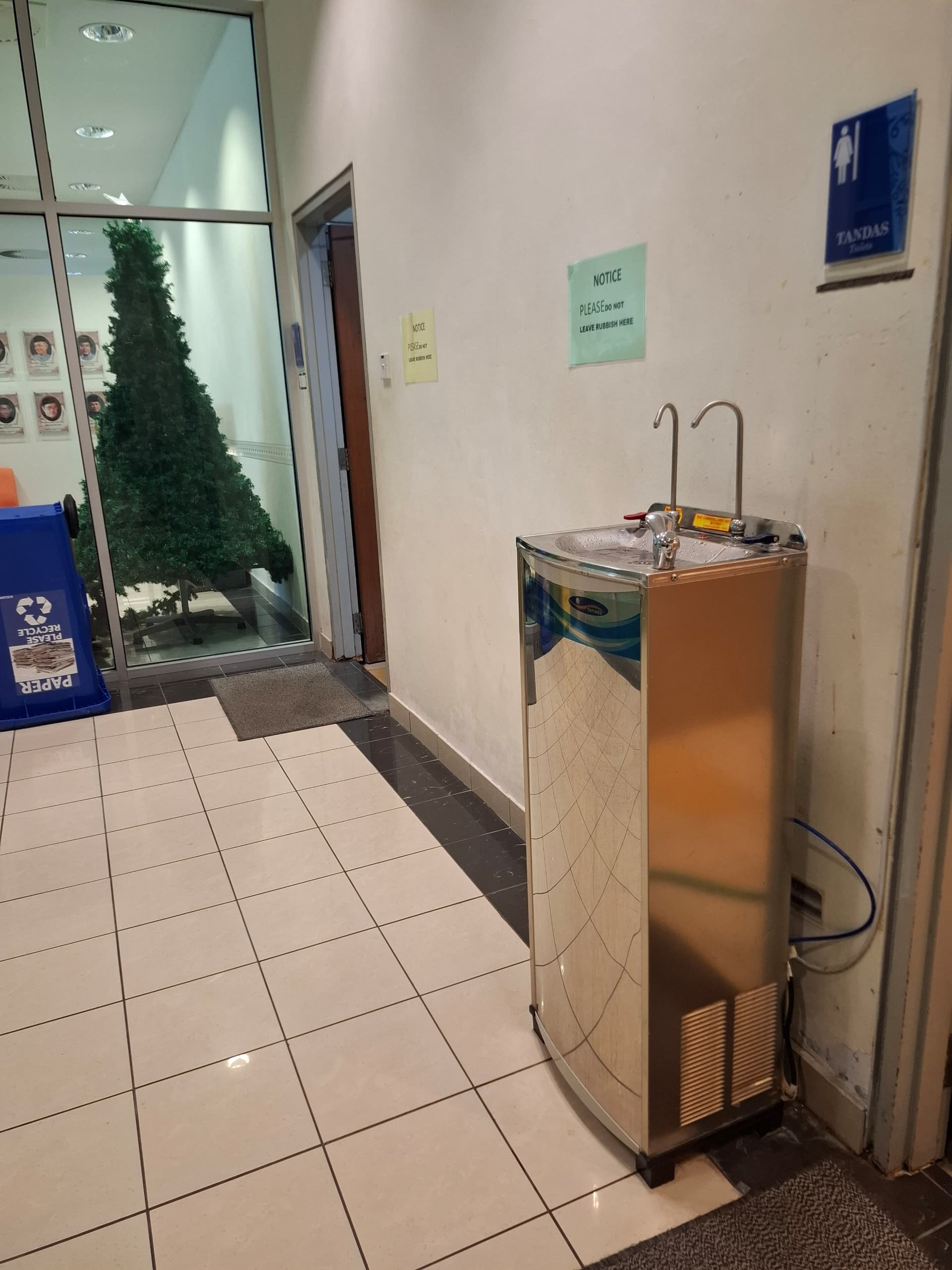
UNIMAS provides drinking-water dispensers in faculty and residential college blocks. According to the UNIMAS page, the dispensers are connected to the mains water supply, offering students a reliable source of drinking water. The fountains allow users to drink directly or refill water bottles. Direct connection to the mains also helps prevent water stagnation and supports hygiene.
Keywords: free drinking water; drinking-water dispensers; water fountains; mains water supply; student access; residential colleges; faculty buildings; bottle refilling; safe drinking water
Reference Link: UNIMAS Clean Water and Sanitation
|
Water Dispenser located at Faculty
|
|
|---|---|
|
Water Dispenser located at Residential College
|
|
|
Water Dispenser at Library
|
|

6.3.4 Water-conscious building standards
The Sarawak Buildings Ordinance 1994
UNIMAS’s building planning operates within the regulatory framework of the Sarawak Buildings Ordinance, 1994. The Ordinance allows local authorities to set building requirements for water-supply and sanitary facilities, including their provision, maintenance and repair. It also provides for a sufficient and pure water supply to buildings. These requirements support the inclusion of water infrastructure in building planning.
Keywords: building planning; water-supply; sanitary facilities; pure water supply; inclusion of water infrastructure; water conservation
UNIMAS Environmental, Social and Governance (ESG) Policy
UNIMAS’S ESG Policy commits the university to responsible water management across its campus. It aims to reduce water consumption and improve water-use efficiency through water-saving technologies and reduced wastage, supported by better monitoring and management. Rainwater harvesting is one example of a water-saving measure used at UNIMAS, including the rainwater collector at The CUBE. As campus water is primarily supplied by the Sarawak Water Board, these measures support more responsible use of the university’s water supply.
Keywords: responsible water management; reduce water consumption; water-use efficiency; water-saving technologies; reduced wastage; rainwater harvesting; water-saving measures; rainwater collector; Sarawak Water Board
Student Pavilion UNIMAS for Platinum Green Building Index (GBI)
UNIMAS incorporates water-saving features into campus buildings through rainwater harvesting and green-building design. The Student Pavillion is described as a Green Building Index (GBI) rated building, with water efficiency among its assessment criteria and a rainwater harvesting system intended to supply occupants’ needs. At the CUBE Academic Block, rooftop rainwater is filtered and channeled to storage for daily use, helping reduce reliance on the mains supply. Together, these examples show how UNIMAS applies water-conscious design measures to reduce building water demand.
Keywords: water-saving features; green-building design; Green Building Index (GBI); water efficiency; rainwater harvesting system; rooftop rainwater; water conscious design; building water demand
6.3.5 Water-conscious planting
Growing together: Takasago-UNIMAS Educational Forest @ Tree Planting Program 2025
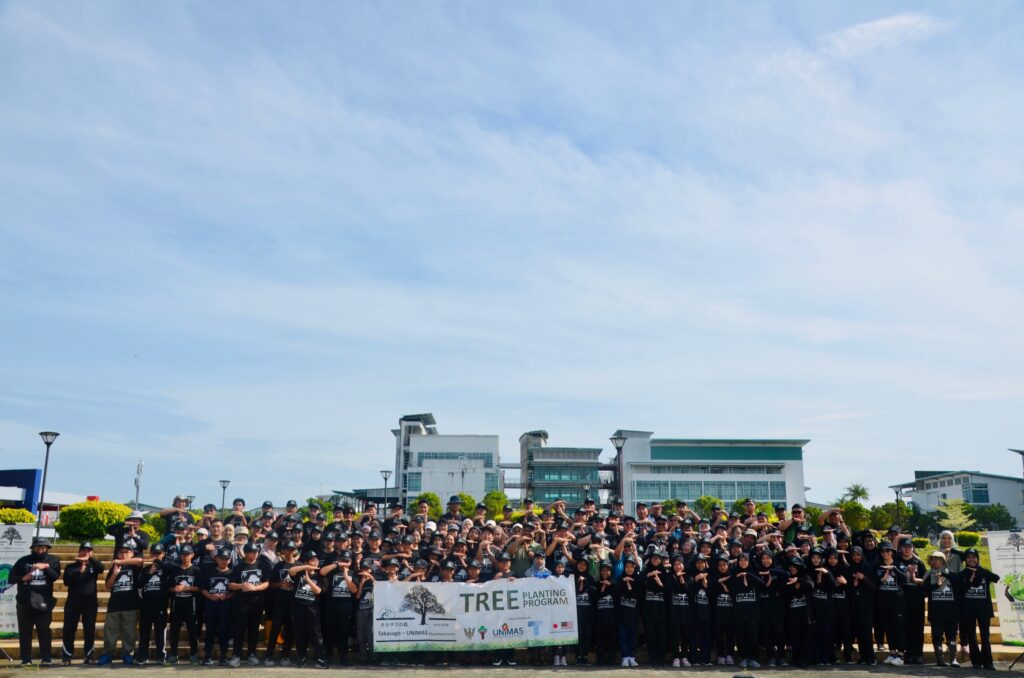
Established in 2018, the Takasago–UNIMAS Educational Forest Project is a long-term collaboration between Universiti Malaysia Sarawak (UNIMAS), Takasago Thermal Engineering Co. Ltd., the Japan–Malaysia Association and the Forest Department Sarawak. UNIMAS allocated approximately 10 hectares of campus land for the educational forest, creating space for forest restoration, environmental learning and research. By the 2025 programme, a cumulative 29,400 trees had been planted in the forest. On 29 November 2025, 150 participants planted a further 1,000 seedlings of indigenous tree species, continuing the project’s restoration work.
The planting initiative contributes to forest landscape restoration, supports biodiversity and helps strengthen the long-term health of the campus landscape. Its use of indigenous species is relevant to water-conscious planting because it promotes a landscape approach informed by local environmental conditions and responsible land management. Through sustained planting and collaboration, the project also provides opportunities for environmental education, research and community participation in campus conservation.
Keywords: water-conscious planting; indigenous tree species; forest landscape restoration; biodiversity; responsible land management; sustainable campus landscape; environmental education; community participation; Takasago–UNIMAS Educational Forest.
Reference Link: Growing together: Takasago-UNIMAS Educational Forest @ Tree Planting Program 2025
Reference Link: Takasago Tie-Up to Establish 10 Hectares
UNIMAS ‘s Plant Landscape Minimize Water Use
UNIMAS’s 2025 campus planting records document 550 trees planted across the South West and North West Campus. The recorded species include Syzygium campanulatum (Eugenia oleana), Terminalia molinetii (Bucida) and Tabebuia rosea (Tecoma or Rosy Trumpet). The records also identify vegetation at Tasik UNIMAS, along Jalan Belian and around Tasik Kampus Timur, including Chinese Palm, Nipa Palm and Rose of India. By documenting planting locations and species, UNIMAS supports informed campus landscape planning, tree diversity and responsible management of green spaces.
(Eugenia oleana), Terminalia molinetii (Bucida) and Tabebuia rosea (Tecoma or Rosy Trumpet). The records also identify vegetation at Tasik UNIMAS, along Jalan Belian and around Tasik Kampus Timur, including Chinese Palm, Nipa Palm and Rose of India. By documenting planting locations and species, UNIMAS supports informed campus landscape planning, tree diversity and responsible management of green spaces.
Keywords: water-conscious planting; sustainable campus landscaping; tree planting; 550 trees; tree diversity; native and ornamental species; green-space management; responsible land management; UNIMAS 2025
| Bil | Nama Saintifik | Nama Tempatan | Jumlah | Lokasi | Tahun Tanam |
|---|---|---|---|---|---|
| SELATAN KAMPUS BARAT | |||||
| 1 | Syzygium campanulatum | Eugenia Oleana | 80 | Selatan Kampus Barat | 2025 |
| 2 | Terminalia molinetii M. Gomez | Bucida | 50 | Selatan Kampus Barat | 2025 |
| 3 | Tabebuia rosea | Tecoma / Rosy Trumpet | 80 | Selatan Kampus Barat | 2025 |
| 4 | Terminalia molinetii M. Gomez | Bucida | 20 | Selatan Kampus Barat | 2025 |
| JUMLAH POKOK - SELATAN KAMPUS BARAT | 230 | ||||
| UTARA KAMPUS BARAT | |||||
| 5 | Terminalia molinetii M. Gomez | Bucida | 180 | Utara Kampus Barat | 2025 |
| 6 | Syzygium campanulatum | Eugenia Oleana | 120 | Utara Kampus Barat | 2025 |
| 7 | Tabebuia rosea | Tecoma / Rosy Trumpet | 20 | Utara Kampus Barat | 2025 |
| JUMLAH POKOK - UTARA KAMPUS BARAT | 320 | ||||
| JUMLAH KESELURUHAN POKOK | 550 | ||||
Tasik UNIMAS

Jenis Pokok: Weeping Tea Tree, Sea Apple Tree, Pokok Pulai Bukit, Chinese Palm, Red Bucida, Bucida, Pokok Akasia, Yellow Flame Tree, Red Flame Tree, Pokok Kenanga & Elephant Apple Tree.
Kawasan Jalan Belian

Jenis Pokok: Pokok Tecoma (Sepanjang Jalan Belian) & Nipa Palm/Nipah (Semulajadi)
Tasik Kampus Timur

Jenis Pokok: Rose of India (Sekitar Tasik Kampus Timur dan Sepanjang Jalan)
6.4 Water reuse
6.4.1 Water reuse policy
UNIMAS Sustainability Masterplan 2021-2025
Through Sustainability Masterplan 2021-2025, UNIMAS identifies the establishment of a water reuse policy as part of its SDG 6 agenda. The proposed policy would provide guidance for promoting water reuse across campus, conserving water resources and reducing wastage. The Masterplan also calls for research on water and sanitation and awareness programmes on sustainable water use, reinforcing UNIMAS’s broader commitment to sustainable water management.
Keywords: water reuse policy; water reuse; conserving water resources; water and sanitation; awareness programmes on sustainable water use; sustainable water management; UNIMAS Sustainability Masterplan 2021-2025
Sarawak Water Ordinance, 1994
The Sarawak Water Ordinance, 1994 provides a state-level framework for the conservation, protection, development and management of Sarawak’s water resources, including water supply and distribution. It also recognises tanks and water towers as part of waterworks infrastructure. This framework gives broader context to responsible water stewardship and the management of campus water-supply systems.
At UNIMAS, the photographs document water-storage infrastructure, including a large modular tank and elevated water towers at the Pavilion, Residential College and Kampus Timur. The tank system has a reported capacity of 500,000 cubic metres (m³), providing substantial storage within the campus water infrastructure. Together, these facilities support water storage and distribution across different campus areas and illustrate the practical systems that underpin campus water management and water-supply services.
Keywords: Sarawak Water Ordinance, 1994; water stewardship; water-resource conservation; responsible water management; 500,000 cubic metres (m³) water storage capacity; water supply and distribution; campus water infrastructure; sustainable water use.
Building (Amendment) Ordinance, 2025
The Building (Amendment) Ordinance, 2025 strengthens Sarawak’s approach to environmental sustainability in the built environment. In force from 15 May 2026, the amendment establishes a framework for green building standards and certification, supporting more sustainable building design and development. For UNIMAS, it provides relevant regulatory context for advancing resource-conscious campus facilities and responsible water stewardship.
Keywords: green building standards; environmental sustainability; sustainable building design; resource conservation; water stewardship; campus facilities; regulatory framework; green building certification.
6.4.2 Water reuse measurement
UNIMAS Rainwater Reuse at the CUBE Academic Block
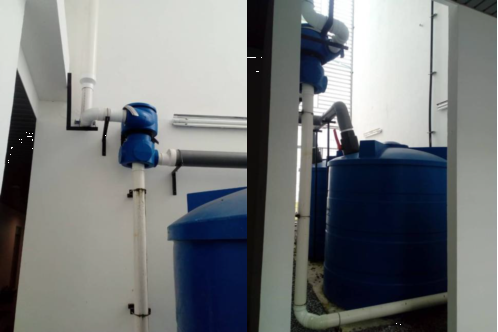
UNIMAS incorporates rainwater harvesting into the CUBE Academic Block as a campus measure to support water reuse and more efficient water management. The CUBE has two storage tanks, each with a capacity of 4,000 litres, giving a total rainwater storage capacity of 8,000 litres. Rain falling on the roof is channelled through the gutters and downpipes into the collection system, where it passes through a filter. The filtered rainwater is directed through a first-flush diverter into a storage tank for daily use. Capturing and storing rainwater on site provides an alternative source for suitable building needs and supports water conservation by reducing reliance on the main water supply.
Keywords: water reuse measurement; rainwater harvesting; roof runoff collection; filtered rainwater; first-flush diverter; water storage; daily building use; water conservation; reduced mains-water demand; water monitoring; CUBE Academic Block; UNIMAS campus operations
Reference Link: UNIMAS Rainwater Reuse at the CUBE Academic Block
6.5 Water in the community
6.5.1 Water management educational opportunities
UNIMAS Raises Public Awareness of Water Management and Floor Preparedness
On 7 February 2025, TVS published a freely accessible interview with Dr Rosmina Ahmad Bustami, Director of the UNIMAS Water Centre, about climate change and the increasing frequency of floods in Sarawak. The article provides a free public educational resource on water-related challenges, explaining how heavier rainfall, vegetation loss and ineffective river management can contribute to flooding. It also raises awareness of sustainable drainage guidance, including the Urban Stormwater Management Manual (MSMA) and Sarawak Urban Stormwater Management (SUStoM) Guideline, and highlights the need for stronger climate-change education, water management and community preparedness.
Through this media contribution, UNIMAS shares accessible information that can help the wider community understand water management, flood risk and climate resilience. The opportunity is free to access as a public news article. It supports awareness and informal learning; the evidence does not describe a formal course or training programme.
Keywords: water management education; free public learning resource; community awareness; flood preparedness; flood risk; climate change education; sustainable drainage; MSMA; SUStoM; climate resilience; UNIMAS Water Centre.
Reference Link: TVS: Perubahan Iklim Antara Punca Kekerapan Banjir

UNIMAS Water Quality and Water Treatment Processes Seminar
The workshop provided a water-management educational opportunity for civil engineers, technical staff and Inspectors of Works (IOWs) working in the water and environmental sectors. Its focus on water quality and treatment processes offered participants a way to develop relevant technical knowledge and strengthen their professional understanding of water-management practices.
By sharing this training opportunity with sector professionals, UNIMAS supported technical learning, professional development and capacity building in areas central to water services and environmental management. The Instagram announcement included a registration link and contact details for those seeking further information, helping interested participants access the educational opportunity.
Keywords: paid water-management education; water quality; water treatment processes; technical learning; professional development; capacity building; water and environmental sector; UNIMAS Water Centre.
Learning the SDGs the Creative Way at FSSH UNIMAS
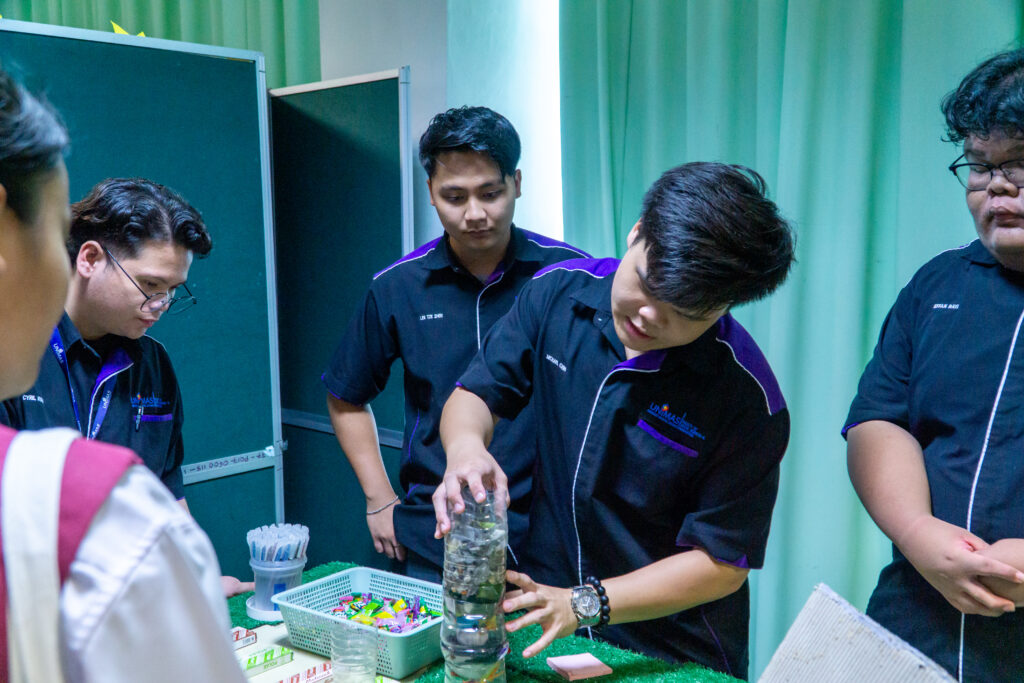
On 21 November 2025, the Faculty of Social Sciences and Humanities (FSSH), UNIMAS, hosted the “Building a Better World: School Sustainability Toolkits 2025” free exhibition as part of its CARE experiential-learning framework. A student-led SDG educational activity provided participants with practical learning about water management, water filtration, water quality and clean water and sanitation. Using sand, gravel, charcoal and fabric, students demonstrated an affordable filtration method and discussed how accessible water solutions can support rural water access and community well-being. This community-based sustainability education engaged 60 students and 6 teachers from SMK Muara Tuang.
Keywords: water management education; water filtration; water quality; water management; water filtration; water quality; clean water and sanitation; rural water access
Reference Link: Learning the SDGs the Creative Way at FSSH UNIMAS
6.5.3 Off-campus water conservation support
Sarawak Level World Rivers Day 2025 Celebrations
Universiti Malaysia Sarawak (UNIMAS) supported off-campus water conservation through its participation in Sarawak’s World Rivers Day 2025 celebration at Kampung Stabut, Siburan, on 4 October 2025. UNIMAS lecturers provided a briefing on the community-based River Ranger activity, which focused on river conservation. The programme also introduced the public to river monitoring techniques and encouraged shared responsibility for maintaining river cleanliness and ecosystem health. Through this community outreach, UNIMAS helped strengthen local awareness and participation in protecting freshwater resources.
Keywords: off-campus water conservation; river conservation; community outreach; River Ranger; river monitoring techniques; freshwater resources; local community participation; water stewardship; ecosystem health
Reference Link: Sarawak Level World Rivers Day 2025 Celebrations
FENG with Nature at Koloyan River Cottage, Bau, Kuching
The FENG Nature programme was conducted on 24 May 2025 at Koloyan River Cottage, Bau, with Year 2 and Year 4 students from the Department of Civil Engineering. The field activity gave students an opportunity to explore a local river and shallow stream, observe the river profile, and study related hydrology and hydraulic parameters in a natural setting. This practical experience connected water-management concepts with direct field observation and supported students’ understanding of river systems.
Alongside the technical learning, the programme included soft skills development, with students gaining experience in event management. By combining field exploration with academic study and event-related learning, FENG Nature provided a local, hands-on educational experience focused on water systems and environmental awareness.
Keywords: local water-management education; field-based learning; hydrology; hydraulic parameters; river-profile study; stream exploration; water systems; environmental awareness; event management; soft skills; Civil Engineering students.
UNIMAS Water Centre and JBALB Cooperation on Innovative Solutions for Sustainable Rural Water Supply in Sarawak
On 19 June 2025, Associate Professor Dr Rosmina Ahmad Bustami, Director of the UNIMAS Water Centre, joined the Sarawak Alternative Water Supply System (SAWAS) programme in Kuching as a panel member. The programme focused on filtration technology and sustainable rural water supply. Dr Rosmina contributed her expertise to discussions and the evaluation of water-filtration products presented by private companies.
The session provided a professional water-management learning opportunity through the sharing of filtration technologies suited to rural and remote communities. Representatives from government agencies, water authorities, industry and academic institutions took part, encouraging knowledge exchange on effective water-treatment systems and potential solutions to strengthen rural water access. The programme supported capacity building and informed discussion on sustainable water supply for communities beyond the main grid.
Keywords: water-management education; filtration technology; rural water supply; sustainable water access; professional knowledge exchange; water treatment; capacity building; government–industry–university engagement; SAWAS; UNIMAS Water Centre.

6.5.4 Sustainable water extraction on campus
UNIMAS Research Advances Peat-Water Treatment
In 2025, UNIMAS researchers investigated how zeolite and activated carbon can improve the treatment of peat water collected from Beladin, Sarawak. The study found that a 1:1 filtration-media ratio achieved the strongest reported results, removing 66.67% of humic compounds, 84.45% of chemical oxygen demand (COD) and 65.95% of total organic carbon (TOC). The research contributes to sustainable water management by exploring ways to improve the quality of a local water resource and informing future filtration-system development. It offers relevant research context for sustainable water use, although the publication describes peat-water treatment research rather than water extraction carried out on the UNIMAS campus.
Keywords: sustainable water management; peat-water treatment; local water resources; water-quality improvement; zeolite filtration; activated carbon; humic-compound removal; COD reduction; TOC reduction; filtration research; water security
UNIMAS Research on Polymer Nanocomposite Membranes for Sustainable Water Treatment
In 2025, UNIMAS researchers contributed to a book chapter examining polymer nanocomposite membranes for water treatment and desalination. The chapter explains how chemisorption and physisorption occur at membrane surfaces and how these processes influence the separation and purification of water. It discusses membrane properties such as permeability, selectivity and resistance to fouling, which affect how effectively membranes can treat water.
By advancing understanding of these processes, the research contributes to the development of membrane technologies for water purification and desalination. Such technologies may support the treatment of water from different sources and contribute to wider efforts in sustainable water management and water security. The chapter therefore provides relevant research context for the development of water-treatment solutions.
Keywords: sustainable water management; water treatment research; water security; desalination; polymer nanocomposite membranes; membrane technology; chemisorption; physisorption; water purification; permeability; selectivity; fouling resistance; UNIMAS research
Reference Link: UNIMAS Research on Polymer Nanocomposite Membranes for Sustainable Water Treatment

UNIMAS Rainwater Harvesting as a Sustainable Campus Water Source
UNIMAS supports sustainable water sourcing on campus through a rainwater harvesting system at the CUBE Academic Block. The system collects rainwater from the roof through gutters and downpipes, filters it and channels it through a first-flush diverter into a storage tank for daily use. By capturing rainfall on site, the system provides an alternative water source for suitable campus needs and supports responsible water management while helping reduce reliance on mains water.
Keywords: sustainable water sourcing; rainwater harvesting; on-campus water collection; alternative water source; filtered rainwater; water storage; responsible water management; reduced mains-water reliance; CUBE Academic Block
Reference Link: UNIMAS Rainwater Reuse at the CUBE Academic Block
6.5.5 Cooperation on water security
UNIMAS Collaborates on Water Security through Microalgae-Bacteria Research
On 29 October 2025, the UNIMAS Water Centre participated in stakeholder engagement meeting in Kuching for the Microalgae-Bacteria Symbiosis Project for Optimal Heavy Metal Absorption. The meeting brought UNIMAS together with local agencies, including the Department of Irrigation and Drainage Sarawak (DID Sarawak), Kuching North City Hall (DBKU), Kuching South City Council (MBKS) and the Natural Resources and Environment Board (NREB). This multi-stakeholder cooperation on water security supports collaborative research into heavy-metal absorption and sustainable water innovation, contributing to local water resilience and broader water-management efforts.
Keywords: stakeholder engagement meeting; multi-stakeholder engagement; water security; sustainable water innovation; local water resilience; water-management efforts
UNIMAS Water Centre Team Visited the Slabi Water Treatment Plant in Serian
Universiti Malaysia Sarawak (UNIMAS), through the UNIMAS Water Centre (UWC), strengthened local cooperation on water security during a visit to the Slabi Water Treatment Plant in Serian on 5 August 2025. Guided by Ir. Ts. Qairuniza Roslan and her team, UWC members learned about the plant’s operational processes, water-treatment techniques and sustainable water-management practices. This knowledge exchange between UNIMAS and water-treatment practitioners supported shared understanding of treated-water management and strengthened expertise relevant to local water security.
Keywords: local cooperation on water security; water-treatment techniques; sustainable water management practices; water-treatment practitioners; treated-water management; local water security
UNIMAS Water Centre at International Conference on Dam Safety Management and Engineering (ICDSME 2025)
The UNIMAS Water Centre, led by Assoc. Prof. Dr. Rosmina Ahmad Bustami, represented the University at the 3rd International Conference on Dam Safety Management and Engineering (ICDSME 2025), held from 4 to 7 November 2025. In partnership with the Malaysian National Committee on Larga Dams (MyCOLD), Sarawak Energy Berhad (SEB), and Universiti Tenaga Nasional (UNITEN), the conference brought together experts, industry representative and policymakers to discuss dam safety, energy transition and sustainable water management. This engagement supported knowledge-sharing and capacity-building among university, industry and professional partners, contributing to cooperation on Malaysia’s water security.
Keywords: SDG 6; water security; cooperation on water security; regional collaboration; national partnerships; sustainable water management; dam safety; knowledge-sharing; capacity-building; energy transition; sustainable water management; UNIMAS Water Centre; MyCOLD; Sarawak Energy Berhad; UNITEN; ICDSME 2025
World Rivers Day at Kampung Stabut, Serian
On 4 October 2025, the UNIMAS Water Centre (UWC) took part in the World Rivers Day celebration at Kampung Stabut, Serian, organised by the Sarawak Department of Irrigation and Drainage. The programme involved collaboration with lecturers from the Faculty of Resource Science and Technology and included a River Ranger activity for school students and community members. Through this local cooperation, UNIMAS helped raise awareness of river conservation and encouraged young people and residents to take an active role in caring for their waterways. This engagement supports cooperation on water security by bringing together a university centre, a government agency, faculty members and the local community around river stewardship.
Keywords: water security cooperation; river conservation; local partnership; Sarawak Department of Irrigation and Drainage; UNIMAS Water Centre; community engagement; River Ranger; youth participation; waterway stewardship; sustainable water management
6.5.6 Promoting conscious water usage on campus
UNIMAS Promotes Conscious Water Use on Campus
UNIMAS promotes conscious water usage through clear awareness signage displayed beside a campus tap. The sign reminds users to turn off the tap when it is not in use, encouraging students, staff and visitors to avoid unnecessary water wastage during everyday activities. By placing the reminder at the point of use, UNIMAS makes water conservation a visible and practical action for the campus community. Repeated reminders can help strengthen responsible water-use habits and build a water-conscious campus culture, supporting the university’s broader commitment to sustainable water management.
Keywords: conscious water usage; water conservation; water-saving awareness; campus signage; turn off taps; responsible water use; prevent water wastage; point-of-use reminder; campus community; sustainable water management
Reference Link: UNIMAS Promotes Conscious Water Use on Campus

6.5.7 Promoting conscious water usage in wider community
Sarawak Level World Rivers Day 2025 Celebrations Lively
Universiti Malaysia Sarawak (UNIMAS) supported conscious water use in the wider community through its participation in the Sarawak-level World Rivers Day celebration at Kampung Stabut, Siburan, on 4 October 2025. UNIMAS lecturers contributed to the River Ranger activity, a community education programme on river conservation. The event raised public awareness of the importance of rivers as clean-water sources and encouraged local residents to help maintain river cleanliness and ecosystem health. Through this community outreach, UNIMAS promoted water awareness, river stewardship and shared responsibility for protecting freshwater resources.
Keywords: conscious water use; wider community; water awareness; community education; river conservation; River Ranger activity; river stewardship; clean-water sources; freshwater protection; community outreach
Reference Link: Sarawak Level World Rivers Day 2025 Celebrations Lively
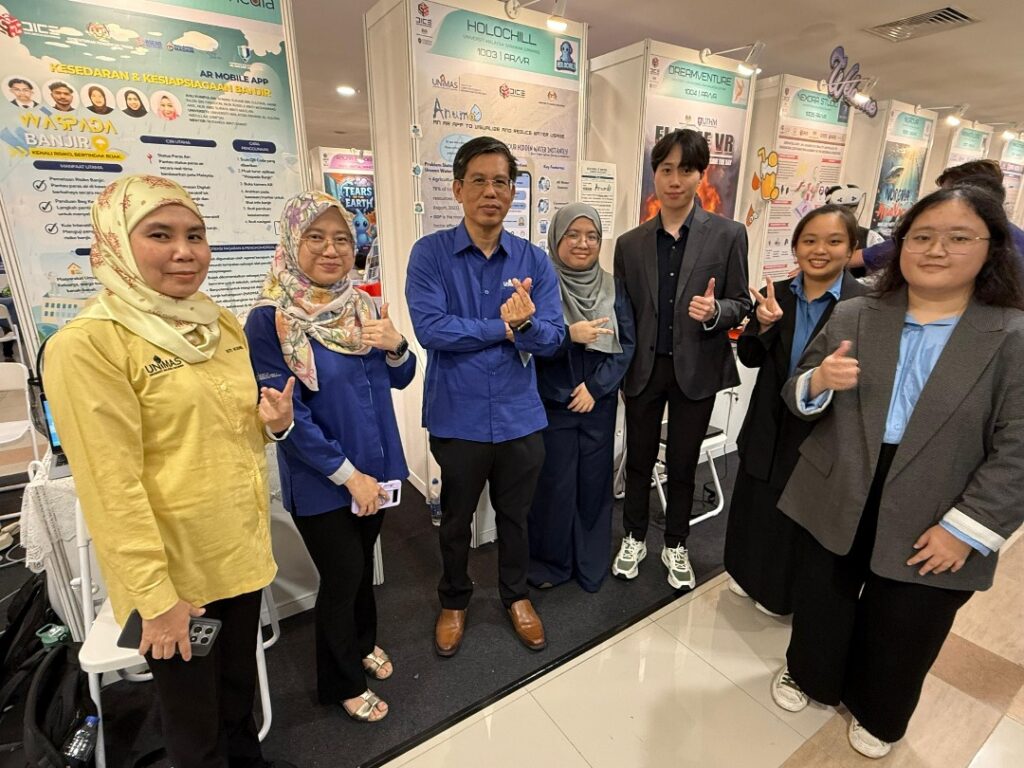
UNIMAS Anum Mobile Application
On 4 September 2025, a UNIMAS student team showcased Anum, an augmented-reality mobile application, at the Digital Innovation Creativepreneur (DICE) 3.0 competition in Johor Bahru. Designed to promote conscious water use in the wider community, the app scans everyday objects to illustrate their virtual water footprint, estimates water costs using Malaysian tariffs, and encourages water-saving behaviour through education, gamification and community challenges. By making hidden water consumption easier to understand, Anum offers an engaging digital approach to building public awareness and supporting responsible water use.
Keywords: conscious water use in the wider community; virtual water footprint; water-saving behaviour; responsible water use
Reference Link: UNIMAS Anum Mobile Application
UNIMAS Promotes Conscious Water Use in Kampung Semera Lot Baru
As part of the Kampung Angkat MADANI 2025 programme, UNIMAS implemented a rainwater harvesting project for the community in Kampung Semera. The system, installed at community facilities including the mosque, collects and stores rainwater alongside treated water to provide a more reliable source for local needs. By introducing rainwater harvesting as a practical alternative supply, the project promotes conscious water usage and supports wider-community access to sustainable water resources, particularly during shortages. Suara Sarawak reported on the broader programme on 10 August 2025.
Keywords: rainwater harvesting; rainwater; treated water; conscious water usage; supports wider-community; sustainable water resources; sustainable water use; Kampung Angkat MADANI 2025
Reference Link: UNIMAS Promotes Conscious Water Use in Kampung Semera Lot Baru