SDG 2 : Zero Hunger
SDG 2: "Zero Hunger" seeks to eliminate hunger by assuring access to healthy food, enhancing food security, and developing sustainable agriculture and aquaculture, including sustainability matter.
Universiti Malaysia Sarawak (UNIMAS) is committed to advancing food security, improving access to nutritious and affordable food, and promoting sustainable food systems across the university and surrounding communities. Through initiatives that address food insecurity among students, reduce food waste, and encourage healthier food choices on campus, the university supports efforts to ensure that food resources are managed responsibly and that those in need receive appropriate support.
Beyond the campus, UNIMAS contributes to sustainable agriculture and aquaculture through education, research, and knowledge-sharing initiatives that empower local farmers and food producers. By facilitating community engagement, supporting the exchange of agricultural knowledge and practices, and promoting sustainable approaches to food production and consumption, the university works towards strengthening local food systems. These efforts reflect UNIMAS's broader commitment to reducing hunger, improving nutrition, and fostering a more inclusive, resilient, and sustainable food future.
2.2 Campus Food Waste
Universiti Malaysia Sarawak (UNIMAS) recognises the importance of managing food waste as part of its commitment to promoting food security and sustainable consumption within the campus community. With a large population of students and staff, food consumption across campus facilities, cafeterias and dining areas generates organic waste that requires proper management. Through waste monitoring, awareness initiatives and sustainable waste management practices, UNIMAS aims to minimise food waste, encourage responsible food consumption and reduce the environmental impact of food disposal. These efforts contribute to promoting a more sustainable campus environment while supporting broader food security objectives.
2.2.1 Campus food waste tracking
Universiti Malaysia Sarawak (UNIMAS) monitors campus waste generation through monthly domestic waste collection records and its Greenhouse Gas (GHG) Dashboard initiative. These initiatives support the monitoring of waste management activities and environmental performance, providing information to guide improvements in campus sustainability practices.
2.2.2 Campus food waste tracking
The 2025 domestic waste collection data shows monthly fluctuations throughout the year. Collection was lowest in February, at 520, before increasing to 720 in March and remaining at this level from April to July. Collection decreased to 600 in August before rising to 760 in September. The highest recorded monthly collection was 860 in both October and November, followed by a slight decrease to 840 in December. This pattern highlights seasonal or operational variations in campus waste collection and provides a basis for identifying periods when waste generation and collection may require closer monitoring.
Of the total waste recorded in 2025, 210.24 metric tonnes were identified as organic waste (food waste), alongside a campus population of 20,685 people. Based on these figures, the estimated food waste amounted to approximately 10.17 kg per person annually, equivalent to around 28 grams per person per day. This per-capita estimate provides a baseline for monitoring food waste generation in relation to the campus population and assessing opportunities for more effective food waste management.
This initiative supports SDG 2 (Zero Hunger) by highlighting opportunities to improve food resource management and promote more sustainable food consumption practices within the university. Monitoring food waste can help UNIMAS identify potential areas for waste reduction, improve food waste segregation, and explore recovery methods such as composting. Where suitable surplus edible food can be safely recovered and redistributed, it may also contribute to efforts to improve food access and reduce food insecurity. These efforts can support a more sustainable campus food system while contributing to SDG 2's broader goal of achieving food security and improved nutrition.

Figure 1: Average Waste Collection in 2025

Figure 2: Total Organic Waste Produced in 2025
2.3 Student Hunger
2.3.1 Student food insecurity and hunger
Universiti Malaysia Sarawak (UNIMAS) is committed to addressing student food insecurity by providing assistance to students from financially disadvantaged backgrounds and improving access to essential food supplies. Through welfare programmes, financial assistance, food distribution initiatives and collaborations with external organisations, the university supports students in meeting their daily food needs while pursuing their studies. Initiatives such as food aid distribution and surplus food recovery also help ensure that available food reaches students who need it most. These efforts reflect UNIMAS's commitment to promoting food security, reducing hunger and fostering a supportive campus environment where students can access adequate food and essential resources.
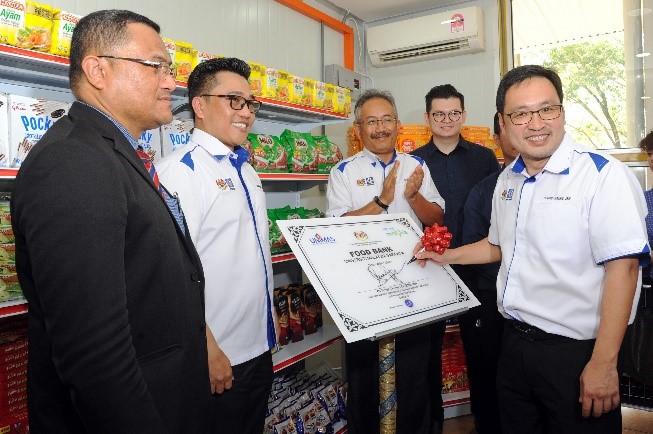
Food Bank Initiative Providing Free Food to Students
The Faculty of Resource Science and Technology (FRST), UNIMAS, provides free food to students through its food bank initiative, helping improve food accessibility and support students who may face financial difficulties in obtaining meals. This initiative promotes student welfare and contributes to SDG 2: Zero Hunger by addressing food insecurity within the faculty.
Keywords: FRST Food Bank, free food distribution, student food aid, food accessibility, food insecurity, student welfare, food assistance, SDG 2, Zero Hunger
Program Bubur Lambuk for Everyone
UNIMAS organised the Bubur Lambuk for Everyone programme on 18 May 2025, involving the university management, student representatives and students in a collaborative effort to carry out the initiative. The programme promoted community participation, cooperation and food sharing within the university community.
Keywords: Bubur Lambuk, food distribution, food sharing, food accessibility, student participation, community engagement, campus community, food assistance, SDG 2, Zero Hunger
Program Ibadah Korban
Universiti Malaysia Sarawak (UNIMAS) organised the Program Ibadah Korban on 9 June 2025, which included a Kenduri Rahmah for 400 members of the university community and the distribution of sacrificial meat to 30 asnaf recipients. The programme promoted food sharing and provided meals and food assistance to students and members of the community in need, contributing to SDG 2: Zero Hunger by improving food accessibility and supporting the well-being of the university community.
Keywords: Ibadah Korban, sacrificial meat distribution, food assistance, asnaf recipients, food accessibility, underprivileged groups, community welfare, food security, SDG 2, Zero Hunger.
UNIMAS Ready-to-Eat Food Boxes
On 5 October 2025, Universiti Malaysia Sarawak (UNIMAS) reported collecting RM43 million in donations from April 2023 to September 2025 to support various university initiatives, including student welfare. As part of its food assistance efforts, UNIMAS provides 2,000 ready-to-eat food boxes every month to students from underprivileged backgrounds, alongside pocket money assistance.
Keywords: student food assistance, ready-to-eat food boxes, 2,000 monthly food boxes, underprivileged students, pocket money assistance, student welfare, food insecurity, access to nutritious food, financial assistance, SDG 2, Zero Hunger.
Reference Link: UNIMAS Ready-to-Eat Food Boxes

2.3.2 Students and staff hunger interventions
Universiti Malaysia Sarawak (UNIMAS) implements various initiatives to alleviate hunger and support students who face difficulties accessing sufficient food. Through financial assistance, food distribution programmes and partnerships with external organisations, the university helps students meet their daily nutritional needs and reduces the financial burden associated with obtaining food. These interventions include providing meals and essential food supplies to students in need, as well as redistributing surplus food to minimise waste and improve food accessibility on campus. Such efforts contribute to a more supportive university environment by ensuring that students experiencing financial hardship have better access to food and essential resources.
Community Care: Baitulmal MRE Contributions for UNIMAS Students
On 25 July 2025, Universiti Malaysia Sarawak (UNIMAS) actively advanced the objectives of Sustainable Development Goal 2 (Zero Hunger) by ensuring immediate nutritional support and food security for its campus community. Through a generous provision of 2,000 ready-to-eat meal (MRE) boxes donated by Tabung Baitulmal Majlis Islam Sarawak, the university's Student Welfare Section established efficient distribution mechanisms across faculties and emergency offices. This vital initiative directly combats student hunger, guarantees access to safe and nutritious daily nourishment, and reinforces institutional safety nets for vulnerable individuals experiencing financial hardship.
Keyword: Zero hunger, food security, nutritional support, hunger alleviation, ready-to-eat meals, food distribution, student nourishment.
Reference Link: Community Care: Baitulmal MRE Contributions for UNIMAS Students

Kasih Insani Programme, 7th Edition
UNIMAS continued its efforts to alleviate student hardship through the seventh edition of the Kasih Insani Programme, held on 21 April 2025. The initiative provided 1,423 students with financial assistance totalling RM1,150,995, alongside 1,500 ready-to-eat meals (MRE). Organised by the university’s Endowment and Waqf Division, the programme brings together contributions from corporate partners and donors to support students facing financial difficulties. By providing ready-to-eat meals and essential items, the programme delivers direct food assistance while helping reduce the burden of daily living expenses. This intervention strengthens student welfare and helps ensure that financially disadvantaged students have better access to food and other basic necessities.
Keyword: Student hunger interventions, ready-to-eat meals, direct food assistance, food security, hunger alleviation, underprivileged students, financial assistance, basic needs support, access to food
Reference Link: Kasih Insani 7th edition, 22 April 2025

UNIMED Weekly Bread Distribution Drive
The UNIMAS Medical Society (UNIMED), through its Welfare Bureau, launched the Zero Food Wastage bread distribution campaign on 11 April 2025 to address food waste while supporting students' access to food. In collaboration with AEON Mall Kuching Central and Kechara Soup Kitchen, student volunteers collect unsold bread and pastries every Friday, check their quality and repackage them into food bundles for distribution at residential colleges. On 11 June 2025, approximately 200 packages were prepared from 25 kilograms of bread and pastries and distributed to students, with subsequent distributions reaching Rafflesia, Cempaka and Kasturi colleges. By redirecting surplus food to students instead of allowing it to go to waste, the campaign provides regular food assistance and serves as a practical hunger intervention within the campus community.
Keyword: Student hunger interventions, free food distribution, food assistance, surplus food recovery, food redistribution, food waste reduction, food security, access to food, student welfare, hunger alleviation
Reference Link: UNIMED Turns Surplus into Support with Weekly Bread Distribution Drive – UNIMAS Gazette
2.3.3 Sustainable food choices on campus
UNIMAS promotes sustainable food choices on campus by providing a variety of dining options to accommodate the diverse dietary needs and preferences of students, staff and visitors. These options include local Sarawakian dishes, Western-style meals and vegetarian choices at selected cafeterias and food outlets. Through the availability of diverse food options and initiatives that encourage access to affordable meals, the university supports more inclusive and accessible campus dining while encouraging individuals to make food choices that align with their dietary requirements and sustainability considerations.
Student Pavillion
UNIMAS provides a variety of food choices for students, staff and visitors through its on-campus food outlets, including the Student Pavilion managed by UNIMAS Holdings Sdn. Bhd. The Student Pavilion features a food court with multiple food and beverage kiosks, offering a convenient dining space for the university community. These outlets cater to different preferences by providing a range of cuisines, snacks and beverages, including local dishes and vegetarian options at selected food outlets. By accommodating diverse dietary preferences, UNIMAS supports inclusive access to food across campus and provides opportunities for individuals to choose meals that suit their needs. The availability of vegetarian food also allows members of the university community to consider plant-based meals as part of their food choices, supporting more sustainable eating habits.
Keywords: Sustainable food choices, Student Pavilion, campus food outlets, vegetarian food, dietary diversity, plant-based meals, inclusive food access.
Reference Link: New Student Pavilion

Campus Cafeteria Availability and Food Accessibility
UNIMAS supports access to food on campus by providing information on cafeteria operating schedules during the inter-semester break. This helps students plan their meals and identify available food outlets, including those who remain on campus during the holidays. The continued availability of campus dining facilities helps students access meals conveniently and supports their daily nutritional needs. Together with the variety of food choices offered at campus cafeterias, including vegetarian options at selected outlets, these facilities contribute to a more accessible and inclusive campus dining environment, encouraging students to make food choices that suit their dietary needs and preferences.
Keywords: Campus cafeterias, food accessibility, cafeteria operating hours, student well-being, meal access, campus dining facilities, sustainable food choices, vegetarian food, inclusive dining.
UNIMAS Initiatives to Promote Food Accessibility and Sustainable Food Systems
Complementing the diverse food options available at the Student Pavilion, UNIMAS supports food accessibility and sustainable food systems through its Zero Hunger initiatives. The university highlights the Student Food Bank programme, which follows the concept of “From the Students to the Students” and encourages student involvement in providing assistance to those in need. Beyond supporting students’ access to food, UNIMAS also collaborates with local government agencies and food producers to strengthen agricultural knowledge and technology transfer. For example, the Memorandum of Understanding signed between UNIMAS and the Malaysia Pepper Board in 2018 established a partnership to promote modern agricultural practices and technologies, including the Internet of Things (IoT) and Big Data Analytics. Together, these efforts complement the dining facilities at the Student Pavilion by addressing food accessibility while supporting a more sustainable food system and promoting the well-being of the university community.
Keywords: Zero Hunger, Student Food Bank, food accessibility, student food assistance, sustainable food systems, local farmers, food producers, agricultural technology, technology transfer, modern agriculture, Internet of Things (IoT), Big Data Analytics, student well-being.
Reference Link: Zero Hunger
2.3.4 Healthy and affordable food choices
UNIMAS promotes access to healthy and affordable food by providing a variety of dining options across campus to meet the nutritional needs and financial circumstances of students and staff. Through its campus cafeterias, food outlets and initiatives such as the Student Food Bank and affordable meal programmes, the university supports food accessibility and student well-being. These efforts aim to ensure that members of the university community have access to nutritious meals at reasonable prices, while accommodating diverse dietary preferences and encouraging healthier eating habits.
UNIMAS Initiatives to Promote Healthy and Affordable Food Choices
UNIMAS promotes healthy and affordable food choices by providing access to a variety of meals that cater to the nutritional needs and financial circumstances of its campus community. Through its campus cafeterias, food outlets and initiatives highlighted under the university’s Zero Hunger agenda, UNIMAS supports access to sufficient and nutritious food, particularly for students from lower-income families. The university offers a range of food options, including local dishes, Western meals and vegetarian choices at selected outlets, while the Student Pavilion provides convenient ready-to-eat meals, snacks and beverages. These efforts help students make food choices that suit their dietary preferences and budgets, while supporting student well-being and a more inclusive campus dining environment.
Keywords: Healthy food choices, affordable meals, nutritious food, food accessibility, Zero Hunger, student food assistance, campus cafeterias, vegetarian food, student well-being, food security.
Reference Link: Zero Hunger
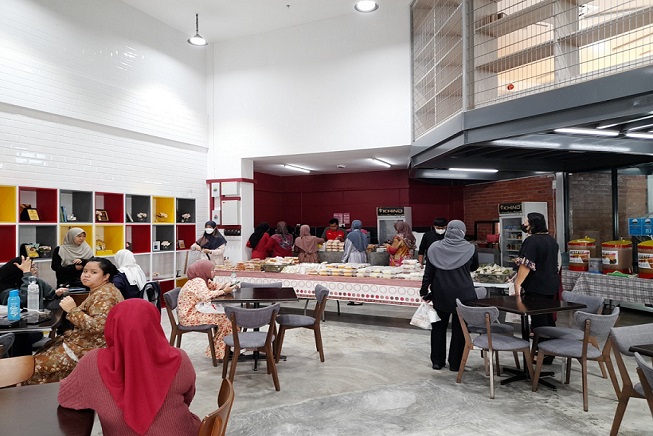
Student Pavilion: Promoting Accessible and Affordable Campus Dining
The Student Pavilion at UNIMAS provides a convenient dining space for students and the wider university community, bringing together multiple food and beverage outlets in one location. By offering a range of food options, the facility makes meals more accessible to students with different preferences and daily needs. Its food court setting allows students to choose from available meals and refreshments according to their budgets, supporting more convenient and affordable campus dining. In addition, the availability of diverse food options, including vegetarian choices at selected outlets, provides opportunities for students to select meals that suit their dietary requirements. Overall, the Student Pavilion contributes to a more accessible campus food environment and supports UNIMAS’s efforts to encourage healthy and affordable food choices among its community.
Keywords: Healthy food choices, affordable meals, Student Pavilion, campus dining, food accessibility, dietary diversity, vegetarian food, student well-being, inclusive food choices, UNIMAS Holdings.
Reference Link: New Student Pavilion

2.3.5 Staff hunger interventions
Universiti Malaysia Sarawak (UNIMAS) supports the well-being of its staff through initiatives that provide financial assistance and improve access to food within the university community. Through collaborations with external organisations and food distribution activities, the university helps address the needs of staff experiencing financial difficulties and promotes a supportive working environment. These efforts, including assistance for eligible staff and the distribution of prepared food, demonstrate UNIMAS's commitment to reducing hunger, strengthening staff welfare and improving access to essential food resources.
Food Distribution Initiative to Support Staff Welfare and Alleviate Hunger
UNIMAS supports staff welfare through food distribution initiatives that provide meals to members of its university community. One example is the Program Agihan Bubur Lambuk for FSSH and IPB students and staff, which helps provide food during Ramadan and promotes a caring and supportive campus environment. By including university staff among the recipients, the initiative contributes to efforts to alleviate hunger and improve access to food within the university community. Such programmes also encourage solidarity and mutual support among students, staff and university departments, reflecting UNIMAS’s commitment to staff well-being and food security.
Keywords: Staff hunger intervention, food assistance, food distribution, staff welfare, food security, Ramadan, Bubur Lambuk, university community, UNIMAS.
Chinese New Year Food Distribution to Promote Staff Welfare and Community Care
In conjunction with Chinese New Year 2025, the Institute of Biodiversity and Environmental Conservation (IBEC) Recreational Club at UNIMAS organised a mandarin orange distribution activity involving students, academic staff, administrative staff and cleaning representatives. The initiative demonstrated a spirit of sharing and inclusivity by extending the distribution to different groups within the university community, including support staff. By providing food items to staff, the activity contributed to staff well-being and promoted a caring campus environment. Although the initiative was primarily organised to celebrate the festive occasion rather than specifically address hunger, it represents a food-sharing effort that supports staff welfare and encourages a culture of mutual care within UNIMAS.
Keywords: Staff welfare, food distribution, staff hunger intervention, food sharing, Chinese New Year 2025, mandarin oranges, university community, inclusive support, UNIMAS.
IBEC Food-Sharing Programme to Promote Staff Welfare and Community Togetherness
The Institute of Biodiversity and Environmental Conservation (IBEC) Recreational Club at UNIMAS organised a Bubur Kacang Hijau and Bubur ChaCha programme to encourage food sharing and strengthen relationships among members of the university community. The activity brought participants together through the preparation and sharing of traditional desserts, with support from the IBEC Postgraduate Club. By providing food in a shared community setting, the initiative contributes to staff welfare and promotes a caring and supportive workplace environment. Although the programme was primarily a social gathering rather than a targeted hunger-relief intervention, it demonstrates how food-sharing activities can foster togetherness and contribute to the well-being of staff and other participants.
Keywords: Staff welfare, staff hunger intervention, food sharing, food assistance, Bubur Kacang Hijau, Bubur ChaCha, IBEC Recreational Club, workplace well-being, community engagement, UNIMAS.
FRST-IBEC Bubur Lambuk Programme to Support Food Sharing and Staff Welfare
The Faculty of Resource Science and Technology (FRST), through the Institute of Biodiversity and Environmental Conservation (IBEC), organised the “Jom Masak Bubur Lambuk” programme in conjunction with Ramadan, involving academic staff and support staff in the preparation of the traditional dish. The bubur lambuk was subsequently distributed to staff and students across UNIMAS, providing an opportunity for the university community to share food and support one another. By involving staff in food preparation and extending the distribution to the wider campus community, the initiative promotes food sharing, strengthens social connections and contributes to staff welfare. This programme demonstrates how university-led food distribution activities can foster a supportive campus environment and contribute to efforts to improve access to food.
Keywords: Staff hunger intervention, food distribution, food accessibility, staff welfare, Bubur Lambuk, Ramadan, academic staff, support staff, student welfare, community support, UNIMAS.
2.4 Proportion of graduates in agriculture and aquaculture including sustainability aspects
Agriculture and aquaculture play an important role in promoting sustainable food production, strengthening food security and supporting the responsible management of natural resources. Higher education institutions such as Universiti Malaysia Sarawak (UNIMAS) contribute to these areas by developing graduates with relevant knowledge and skills to address challenges in agricultural development, aquaculture and sustainability. The proportion of graduates in these fields provides an indication of the university's contribution to developing human capital for the agriculture and aquaculture sectors.
2.4.1 Proportion of graduates in agriculture and aquaculture
In 2025, UNIMAS recorded a total of 6,613 graduates, of whom 582 graduated in agriculture and aquaculture, representing approximately 9% of the total graduates. Graduates in agriculture and aquaculture contribute to the development of skilled human capital in sectors that are important for sustainable food production, food security and natural resource management. Their knowledge and expertise can support the adoption of sustainable agricultural practices, responsible aquaculture management and more efficient use of resources, contributing to the long-term sustainability of these sectors.
UNIMAS Graduates in 2025 | Number |
Graduate in Other Field | 6031 |
Graduate in Agriculture and Aquaculture | 582 |
Total Graduates | 6613 |
Table 1. Number of graduates from agriculture and aquaculture courses including sustainability aspects (2025)

Figure 3. Graduates from Agriculture and Aquaculture in 2025
2.5 National Hunger
2.5.1 Access to food security knowledge
Universiti Malaysia Sarawak (UNIMAS) promotes food security and sustainable food production by sharing knowledge, skills and technologies with local farmers, aquaculture practitioners and food-producing communities. Through community outreach programmes, technical workshops, research collaborations and the introduction of sustainable farming technologies, the university helps local communities strengthen agricultural and aquaculture practices, improve food production and develop more sustainable livelihoods. These initiatives support the transfer of practical knowledge beyond the university and contribute to strengthening local food systems through sustainable agriculture, aquaculture and community capacity-building.
Sustainable Aquaculture Training for Fishermen Associations
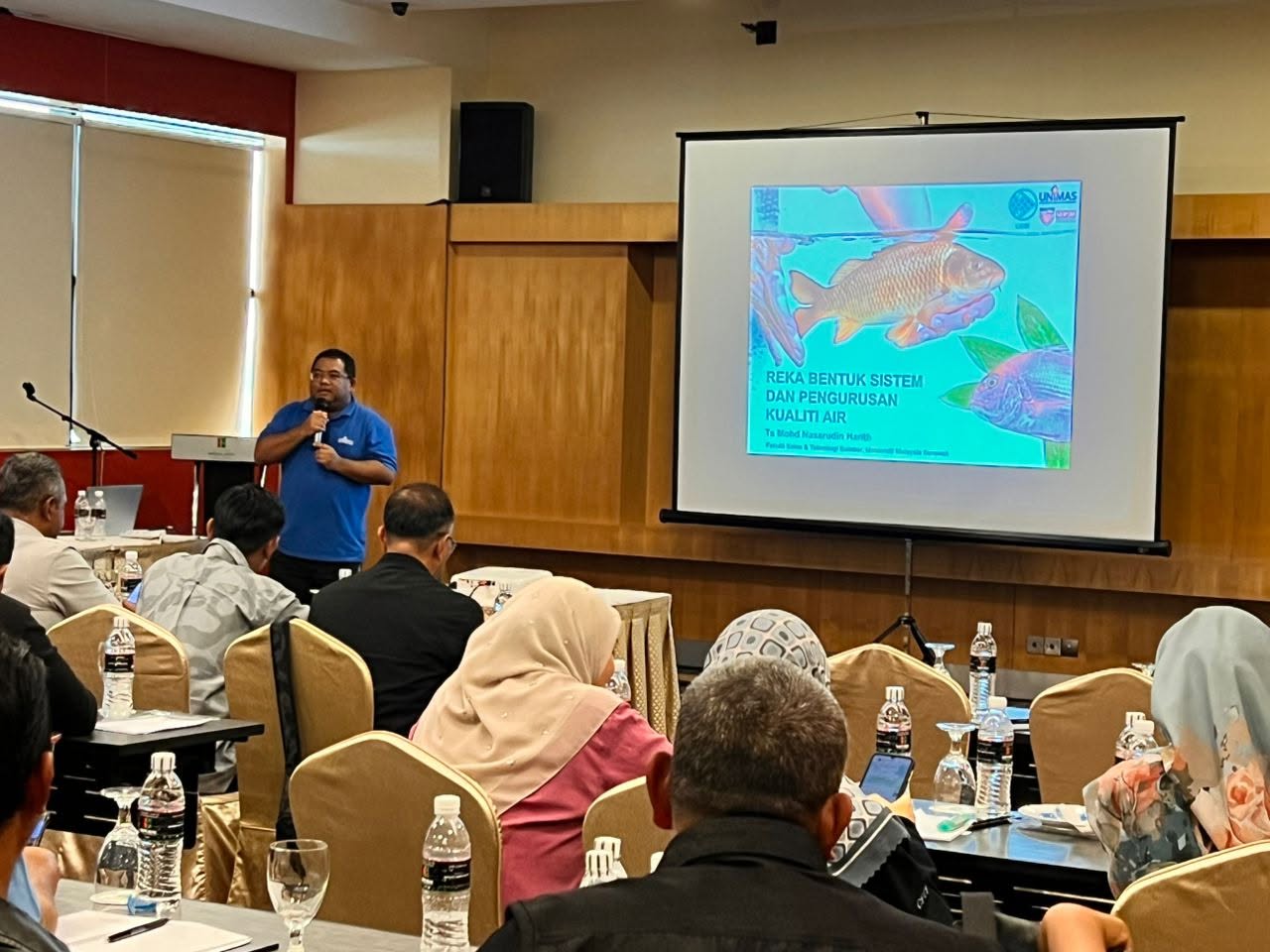
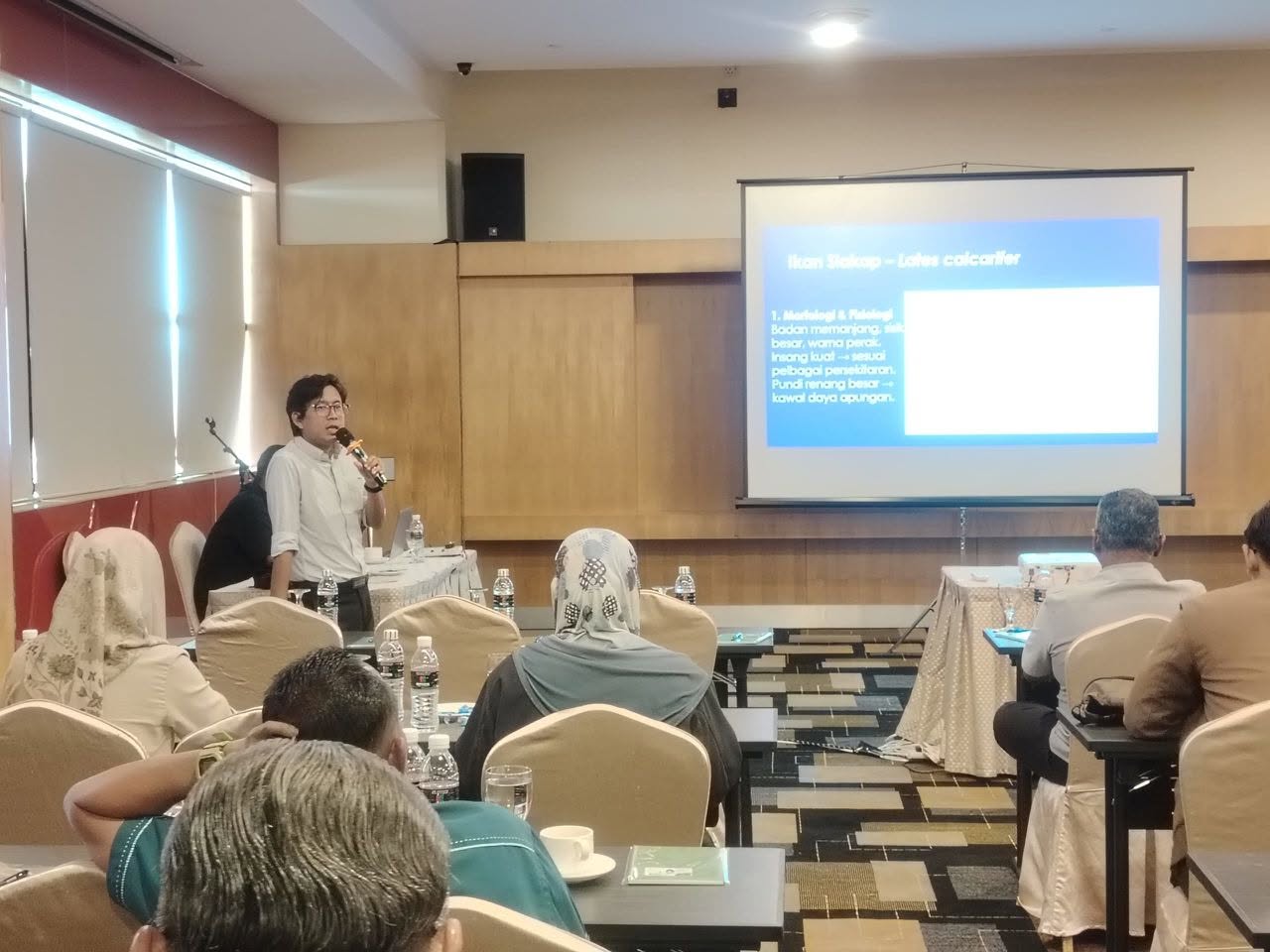
On 24 November 2025, experts from UNIMAS's Faculty of Resource Science and Technology (FRST) contributed technical knowledge to a course on sustainable aquaculture organised by the Malaysian Fisheries Development Authority (LKIM) Sarawak. The sessions covered marine aquaculture biology, system design, water quality management, aquatic disease prevention and control, and aquaculture feed management. Managers from Fishermen Associations (PNK) across Malaysia participated in the programme, which provided opportunities to exchange knowledge and discuss practical challenges in aquaculture operations. Through this knowledge-sharing initiative, UNIMAS supports the development of technical skills and sustainable aquaculture practices that can strengthen fish production, rural livelihoods and long-term food security.
Keywords: Food security knowledge, sustainable aquaculture, technical training, fishermen associations, aquaculture management, water quality management, fish health, sustainable fish production, knowledge transfer
Reference Link: UNIMAS Leading Sustainable Aquaculture through Strategic Partnerships for Sarawak’s Blue Economy and Food Security
Good Agricultural Practices Workshop for Oil Palm Smallholders in Mukah
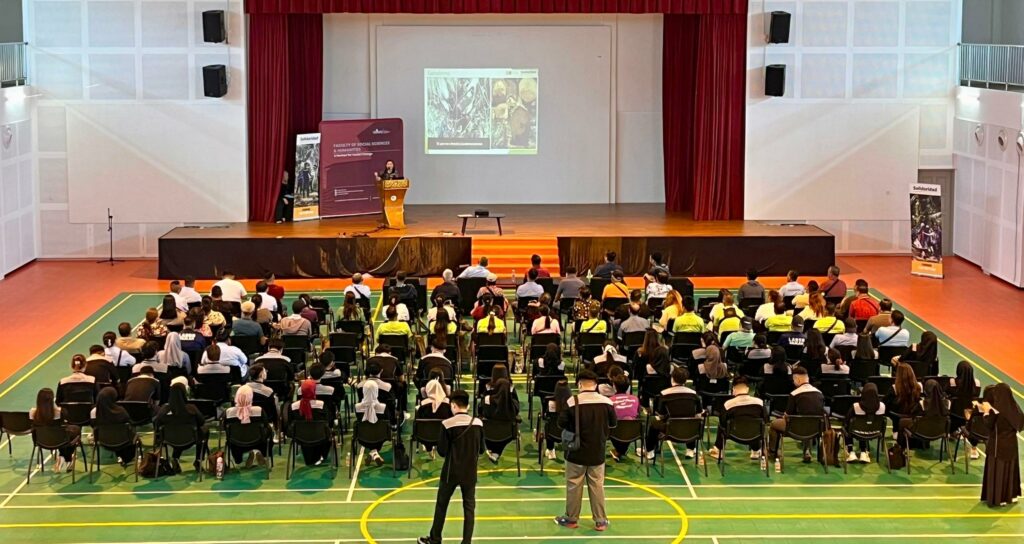
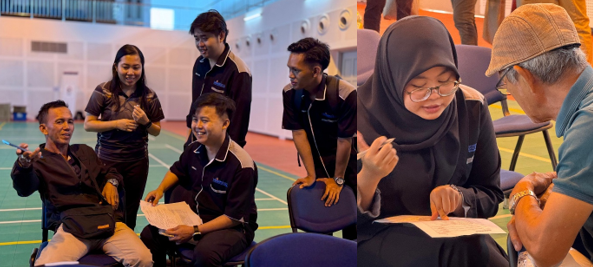
UNIMAS conducted a Good Agricultural Practices (GAP) workshop on 29 November 2025 at CENTEX, Mukah, to strengthen the knowledge and practical skills of oil palm smallholders from six longhouses in Balingian. Organised by the Faculty of Social Sciences and Humanities in collaboration with the Land Custody and Development Authority (LCDA) and Solidaridad Network Malaysia, the workshop covered sustainable palm oil production, fertiliser application, pest and disease management, harvesting techniques, farm management and the proper use of personal protective equipment. The initiative provided local farmers with practical guidance on improving agricultural practices, maintaining farm productivity and managing environmental challenges. Although focused on oil palm rather than food crops, the programme demonstrates UNIMAS's contribution to agricultural knowledge transfer and sustainable farming practices among local smallholders.
Keywords: Agricultural knowledge, sustainable agriculture, local farmers, smallholder farmers, Good Agricultural Practices, farm management, sustainable farming, agricultural skills, knowledge transfer
Reference Link: Stronger Palms, Smarter Practices: A GAP Workshop for Mukah’s Oil Palm Smallholders – UNIMAS Gazette
UniMADANI 2025 Janggut Duyung Product Development in Santubong and Pulau Salak
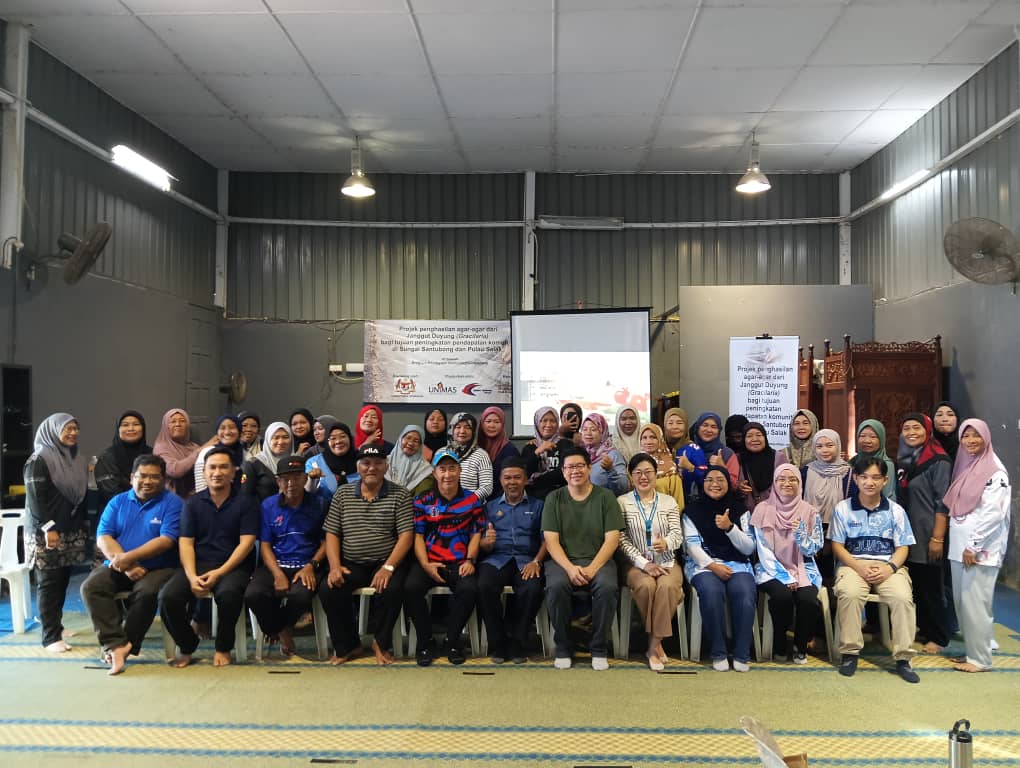
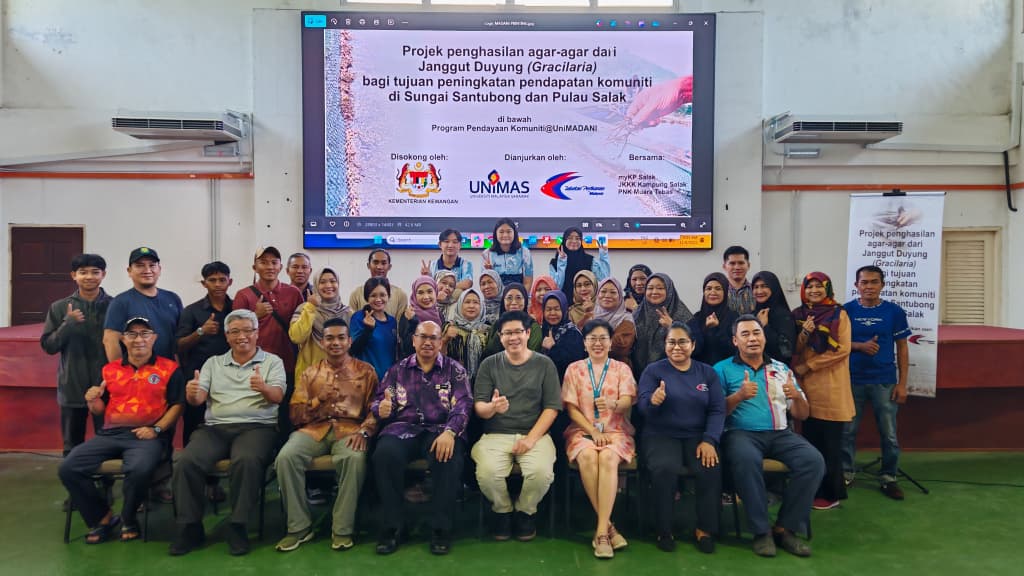
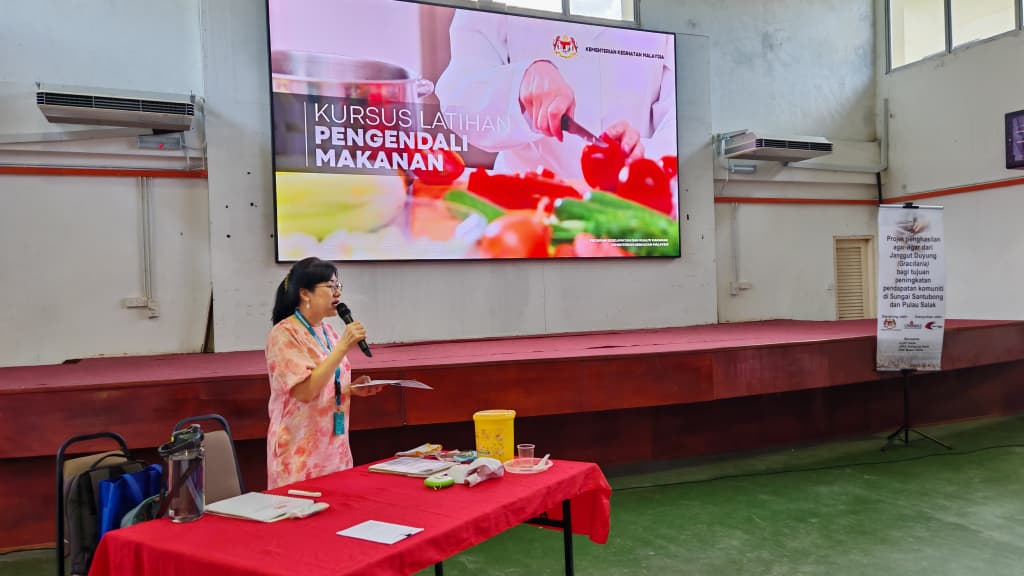
Through the UniMADANI 2025 initiative, UNIMAS supported coastal communities in Santubong and Pulau Salak by providing practical training on the processing and commercial potential of Janggut Duyung (Gracilaria algae). The project involved 60 community participants and included training sessions held on 3 and 11 September 2025. Participants learned agar extraction, safe food production techniques and the development of value-added food products using locally available algae. A certified food-handling course was also provided to strengthen participants' knowledge of safe food preparation. By equipping coastal communities with practical food-processing skills and knowledge of potential commercial applications, the initiative supports local food product development, community livelihoods and opportunities for sustainable income generation.
Keywords: Food security knowledge, food production skills, local food producers, sustainable food production, food processing, food safety, aquaculture resources, value-added food products, community capacity building
Reference Link: UniMadani 2025 Initiative Empowers Coastal Communities Through Janggut Duyung Product Development in Santubong and Pulau Salak – UNIMAS Gazette
Sustainable Aquaponics Technology in Kampung Rantau Dilang
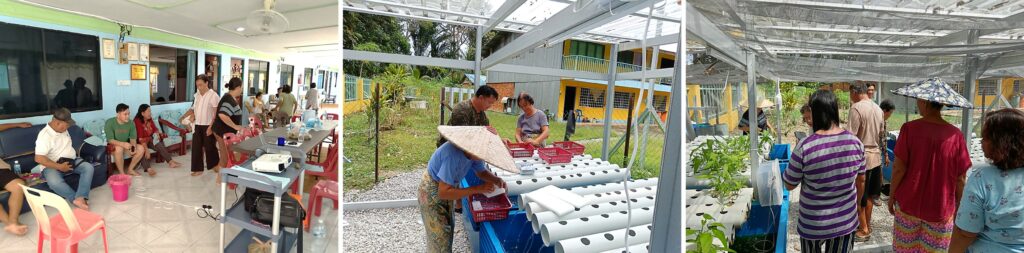
UNIMAS introduced an aquaponics technology project in Kampung Rantau Dilang, Kanowit, to equip rural residents with practical knowledge and skills for producing fish and vegetables for household consumption and potential sale. Led by researchers from the Faculty of Resource Science and Technology under the KOMUNITI@UniMADANI programme, the project combines tilapia farming with the cultivation of vegetables such as lettuce and water spinach in an integrated system. Hands-on training was provided to villagers to help them understand how to operate and maintain the aquaponics system. This initiative demonstrates how UNIMAS transfers sustainable food production technology to rural communities, supporting local food availability, nutritional intake and potential income generation.
Keywords: Food security knowledge, sustainable aquaculture, sustainable agriculture, aquaponics technology, fish farming, vegetable cultivation, rural farmers, hands-on training, food production technology, local food security
Reference Link: UNIMAS Brings Sustainable Aquaponics Technology to Kampung Rantau Dilang
2.5.2 Events for local farmers and food producers
Universiti Malaysia Sarawak (UNIMAS) supports local farmers, food producers and community-based entrepreneurs by organising events that encourage knowledge exchange, practical skills development and collaboration. Through technical workshops, training sessions and community engagement programmes, the university connects local communities with researchers, industry partners and relevant agencies to share knowledge on sustainable agricultural practices, aquaculture, food processing and product development. These events provide opportunities for participants to learn from experts, exchange experiences and strengthen their capacity to produce food and develop locally sourced products sustainably.
Sustainable Aquaculture Course for Fishermen Associations
On 24 November 2025, UNIMAS experts from the Faculty of Resource Science and Technology participated in the Kursus Kelestarian & Daya Maju Projek Akuakultur Persatuan Nelayan, organised by LKIM Sarawak. The course brought together managers from Fishermen Associations (PNK) across Malaysia to exchange experiences and strengthen their understanding of sustainable aquaculture. UNIMAS academics delivered technical sessions covering marine aquaculture biology, aquaculture system design, water quality management and aquatic disease prevention, while a representative from UPM Sarawak shared knowledge on aquaculture feed management. The event provided a platform for knowledge exchange between universities, government agencies and fisheries practitioners, supporting the development of sustainable aquaculture operations and strengthening food security.
Keywords: Events for local farmers and food producers, sustainable aquaculture, fishermen associations, knowledge exchange, technical training, fisheries practitioners, aquaculture management, food security, university-industry collaboration
Reference Link: UNIMAS Leading Sustainable Aquaculture through Strategic Partnerships for Sarawak’s Blue Economy and Food Security
Good Agricultural Practices Workshop for Oil Palm Smallholders in Mukah
UNIMAS organised a Good Agricultural Practices (GAP) workshop on 29 November 2025 at CENTEX, Mukah, in collaboration with the Land Custody and Development Authority (LCDA) and Solidaridad Network Malaysia. The event brought together 60 participants from six longhouses in Balingian to discuss sustainable farming practices and the challenges faced by local oil palm smallholders. Participants received practical guidance on fertiliser application, pest and disease management, harvesting techniques, farm management and the appropriate use of personal protective equipment. The workshop also facilitated dialogue between farmers, academic representatives, government-linked agencies and industry organisations, allowing participants to exchange experiences and learn about practices that can improve productivity and environmental sustainability.
Keywords: Events for local farmers and food producers, local farmers, knowledge transfer, agricultural workshops, sustainable farming, Good Agricultural Practices, smallholder farmers, stakeholder collaboration, agricultural productivity
Reference Link: Good Agricultural Practices Workshop for Oil Palm Smallholders in Mukah
UniMADANI 2025 Janggut Duyung Product Development in Santubong and Pulau Salak
Through the UniMADANI 2025 initiative, UNIMAS organised two training sessions on 3 and 11 September 2025 to support coastal communities in Santubong and Pulau Salak. The programme involved 60 participants and was conducted with the Santubong District Marine Fisheries Office, with funding from the Ministry of Finance Malaysia. Participants received hands-on training in agar extraction, food processing, safe food production and the development of value-added products from Janggut Duyung (Gracilaria algae). A certified food-handling course was also provided to strengthen participants' knowledge of food safety. The initiative created opportunities for community members, fisheries representatives and university researchers to share knowledge and develop practical skills that may support local food-product innovation and new business opportunities.
Keywords: Events for local farmers and food producers, coastal communities, food producers, food processing, knowledge transfer, food safety, sustainable food production, fisheries, product development, community collaboration
Reference Link: UniMadani 2025 Initiative Empowers Coastal Communities Through Janggut Duyung Product Development in Santubong and Pulau Salak – UNIMAS Gazette
Hands-On Mini Eggplant Fertigation Workshop with Smart IoT Automation
On 29 and 30 November 2025, the Agrotechnology Programme at UNIMAS organised the Hands-On Mini Eggplant Fertigation Workshop with Smart IoT Automation in collaboration with Mega Jaya Agro Tech Sdn Bhd and DDND Synergy Sdn Bhd. The workshop involved 31 participants, including Agrotechnology and Plant Science students, postgraduate students and external participants. It aimed to promote smart agricultural technologies by providing practical knowledge of fertigation systems for mini eggplant cultivation and demonstrating how Internet of Things (IoT) technology can automate and monitor farm operations. Field activities conducted in Kampung Semera gave participants hands-on experience in managing and applying fertigation techniques. By bringing together university participants, external learners and industry partners, the workshop facilitated knowledge exchange and strengthened practical skills in technology-driven and sustainable food production.
Keywords: Events for local farmers and food producers, agricultural technology, knowledge transfer, smart farming, sustainable agriculture, fertigation, IoT automation, mini eggplant cultivation, practical agricultural training, industry collaboration, food production
2.5.3 Events for local farmers and food producers
Universiti Malaysia Sarawak (UNIMAS) supports sustainable food production by connecting local communities with agricultural technologies, research expertise and practical facilities that can help improve farming and food-processing practices. Through community-based projects and collaborations with industry partners, the university facilitates opportunities for local participants to learn about and apply technologies such as smart fertigation, food-processing methods and sustainable aquaculture systems. These initiatives demonstrate the potential of university expertise and technology transfer to strengthen local food production. For this indicator, however, the strongest evidence should specifically demonstrate that local farmers or food producers were given access to university facilities, equipment, laboratories, plant materials or other relevant resources, whether free of charge or for a fee.
UniMADANI 2025 — Janggut Duyung Product Development
Through the UniMADANI 2025 initiative, UNIMAS supported coastal communities in Santubong and Pulau Salak by providing practical training in agar extraction, food processing and the development of value-added products from Janggut Duyung (Gracilaria algae). The programme involved 60 participants and included training in safe food production and food handling. By connecting community members with university expertise and technical guidance, the initiative supported the development of practical food-processing skills and opportunities to improve locally sourced products. However, the published report does not explicitly confirm that participants were given access to UNIMAS laboratories or other university facilities, so this is supporting evidence of technology and knowledge transfer rather than direct evidence of facility access.
Keywords: University access to local farmers and food producers, food-processing technology, technical skills, food safety, local food producers, product development, knowledge transfer, community empowerment
Reference Link: UniMadani 2025 Initiative Empowers Coastal Communities Through Janggut Duyung Product Development in Santubong and Pulau Salak – UNIMAS Gazette
Smart IoT-Based Mini Eggplant Fertigation Training Programme
On 29 and 30 November 2025, the UNIMAS Agrotechnology Programme organised the Hands-On Mini Eggplant Fertigation Workshop with Smart IoT Automation in collaboration with Mega Jaya Agro Tech Sdn Bhd and DDND Synergy Sdn Bhd. The workshop involved 31 participants, including students, postgraduate researchers and external participants. Through practical activities in Kampung Semera, participants gained experience in operating fertigation systems and understanding how Internet of Things (IoT) technology can automate and monitor agricultural operations. The workshop demonstrated the application of smart farming technology to improve crop management and sustainable food production. However, the announcement does not establish that participants accessed university-owned facilities or that local farmers were among the participants. It is therefore more suitable as supporting evidence of agricultural technology training than as direct evidence of access to university facilities.
Keywords: University access to local farmers and food producers, smart farming technology, fertigation systems, IoT automation, agricultural technology, hands-on training, sustainable crop production, technology transfer
2.5.4 Sustainable food purchases
Universiti Malaysia Sarawak (UNIMAS) is committed to promoting sustainable and responsible food practices through its university-wide Environmental, Social and Governance (ESG) Policy, which was adopted in 2025 alongside the publication of its ESG Report. Under Section 8.4(c), the policy encourages ethical and sustainable procurement by promoting the use of locally sourced materials and services and collaboration with suppliers and contractors whose practices align with the university’s sustainability goals. This commitment provides a framework for encouraging responsible sourcing, supporting local economic development and reducing environmental impacts throughout university operations, including campus food services.
Across the campus, UNIMAS provides a variety of food choices to cater to the diverse needs of its students and staff, including local Sarawakian dishes, Western-style meals and vegetarian options at selected cafeterias and food outlets. The university also promotes access to nutritious and affordable meals through initiatives such as Menu Rahmah UNIMAS, which offers selected meals at prices ranging from RM3 to RM5, helping students, particularly those from lower-income backgrounds, access affordable food. In addition, UNIMAS encourages food operators to adopt environmentally responsible practices, including sourcing ingredients locally, reducing single-use plastics and minimising food waste through appropriate portion control. These efforts, together with the university’s emphasis on clean, safe and healthy food premises, reflect its commitment to fostering a campus food environment that supports affordability, dietary diversity, responsible consumption and environmental sustainability.
Keywords: Affordable food, Menu Rahmah UNIMAS, nutritious meals, dietary diversity, vegetarian options, local food sourcing, sustainable food practices, food waste reduction, plastic reduction, food safety, responsible consumption.
Reference Link: Zero Hunger