SDG 16 : Peace, Justice and Strong Institutions
SDG 16: "Peace, Justice, and Strong Institutions" works to create peaceful and fair societies, ensure access to justice, and build effective and accountable institutions at all levels. This goal involves reducing violence, obeying the law, prevent corruption, and improving accountable governance.
16.2 University governance measures
16.2.1 Elected representation
Elected Representation at UNIMAS
Universiti Malaysia Sarawak (UNIMAS) promotes participatory governance through formal representation mechanisms for students, academic staff and other university stakeholders, as outlined in the Constitution of Universiti Malaysia Sarawak and its institutional governance framework.
Faculty representation is established through the University Senate, UNIMAS's principal academic governing body. Under Section 20(1)(d) of the Constitution, up to 20 professors and associate professors are elected by their academic peers to serve in the Senate. The Senate oversees key academic matters, including teaching, research and examinations, ensuring academic staff participation in university decision-making.
| No. | Name | Position | Representation |
|---|---|---|---|
| 1 | Prof Dr. Ahmad Hata Rasit | Vice-Chancellor | University Management |
| 2 | Prof Ir Ts Dr. Al-Khalid Haji Othman | Deputy Vice-Chancellor (Student Affairs and Alumni) | University Management |
| 3 | Prof Ir Dr. Siti Noor Linda Taib | Deputy Vice-Chancellor (Research & Innovation) | University Management |
| 4 | Prof Dr Fitri Suraya | Deputy Vice-Chancellor (Academic and International) | University Management |
| 5 | Profesor Ts. Dr. Faisal Ali Bin Anwarali Khan | Dean | Faculty of Resource Science and Technology |
| 6 | Dr. Haslina binti Hashim | Dean | Faculty of Social Sciences and Humanities |
| 7 | Prof Dr. Jane Labadin | Dean | Faculty of Computer Science and Information Technology |
| 8 | Prof Ir Dr. Abdullah bin Hj Yassin | Dean | Faculty of Engineering |
| 9 | Dr. Ringah Kanyan | Dean | Faculty of Applied and Creative Arts |
| 10 | Dr. Hana Hamidi | Dean | Faculty of Cognitive Sciences and Human Development |
| 11 | Prof. Dr Asri | Dean | Faculty of Medicine and Health Sciences |
| 12 | Prof Dr. Dayang Affizah Awang Marikan | Dean | Faculty of Economics and Business |
| 13 | Dr. Dilah Tuah | Dean | Faculty of Education, Language and Communication |
| 14 | Dr. Atta Idrawani Zaini | Dean | Faculty of Built Environment |
| 15 | Dr. Mohd Alhafiizh Zailani | Director | Centre for Pre-University Studies |
| 16 | Prof Dr. Mohd Azlan Jayasilan Abdul Gulam Azad | Director | Institute of Biodiversity and Environmental Conservation |
| 17 | Prof Dr. David Perera | Director | Institute of Health and Community Medicine |
| 18 | Prof Dr. Hasnizam Abdul Wahid | Director | Institute of Creative Arts and Technology |
| 19 | Prof Dr. Poline Bala | Director | Institute of Borneo Studies |
| 20 | Prof Dr. Tan Chong Eng | Director | Institute of Social Informatics and Technological Innovations |
| 21 | Prof Dr. Wang Yin Chai | Director | Institute for Tourism Research and Innovation |
| 22 | Prof Dr. Shanti Faridah Salleh | Director | Institute of Sustainable and Renewable Energy |
| 23 | Dr. Edris Aden | Director | Centre for Student Development |
| 24 | Prof Dr. Mohammad Affendy Arip | Director | Centre for Graduate Studies |
| 25 | Prof Dr. Awang Ahmad Sallehin Awang Husaini | Director | Research, Development, Innovation, Commercialisation and Entrepreneurship Centre |
| 26 | Dr. Nur Tahirah Razali | Director | Academic Development and Management Centre |
| 27 | Ts. Dr. Ade Syaheda Wani bt Marzuki | Director | Academic Quality Assurance Division |
| 28 | Prof Gs. Dr. Tarmiji Masron | Director | Strategic Planning and Quality Management Centre |
| 29 | Assoc Prof Dr. Rafeah Wahi | Director | University Sustainability Centre |
| 30 | Prof Dr. Ehfa Bujang Safawi | Director | UNIMAS Teaching Hospital and Medical Centre |
| 31 | Prof Dr. Mohd Hasnain Md Hussain | Director | University Industry Centre |
| 32 | Prof Dr. Abd Halim Busari | Director | UNIMAS Leadership Centre |
| 33 | Assoc Prof Ts Dr. Rohana Sapawi | Director | Accreditation of Prior Experiential Learning Centre |
| 34 | Profesor Madya Dr. Joseph Ramanair | Director | Centre for Flexible Learning |
| 35 | Prof Dr. Mohammad Zulkarnaen Ahmad Narihan | Professor | Elected Professor Membership* |
| 36 | Prof Ir Dr. Andrew Ragai Henry Rigit | Professor | Elected Professor Membership* |
| 37 | Prof Dr. Zainab Ngaini | Professor | Elected Professor Membership* |
| 38 | Prof Dr. Chen Chwen Jen | Professor | Elected Professor Membership* |
| 39 | Prof Dr. Mohamad Jais | Professor | Elected Professor Membership* |
| 40 | Prof Dr. Ting Su Hie | Professor | Elected Professor Membership* |
| 41 | Ts. Humphrey Rayang Nelson Janang | Director of Development | University Administration |
| 42 | Madam Sherina James Solomon | Director | Tun Abang Haji Openg Digital Centre |
| 43 | Mr Thian Foong Fatt | Director | UNIMAS Global |
| 44 | Prof Dr. Wan Hashim Wan Ibrahim | Chief Digital Officer | University Administration |
| 45 | Assoc Prof Ts. Noraziah Abdul Wahab | Assistant Vice-Chancellor | Industry, Community Engagement and Sustainability |
| 46 | Tuan Haji Azlan Ramli | Registrar | University Administration |
| 47 | Dr. Haji Mazlan Kiflie | Bursar | University Administration |
| 48 | Madam Levas Mejus | Director | PeTARY Library |
| 49 | Madam Mavis Goh | Legal Advisor | University Administration |
Keywords: Elected Academic Representatives; Faculty Representation; University Senate; Democratic Elections; Academic Governance; Constitution of UNIMAS.
Reference: UNIMAS Senate

Student representation is formally established under Section 67 of the Constitution through the Students' Representative Council (Majlis Perwakilan Pelajar, MPP). Students elect their representatives through secret ballots for a one-year term. The MPP represents student interests and communicates student concerns to university management, providing a formal channel for student participation in institutional decision-making.
Keywords: Elected Student Representatives; Student Representation; Majlis Perwakilan Pelajar (MPP); Student Elections; Secret Ballot; Student Participation; Student Governance.
Reference: UNIMAS MPP Election Information


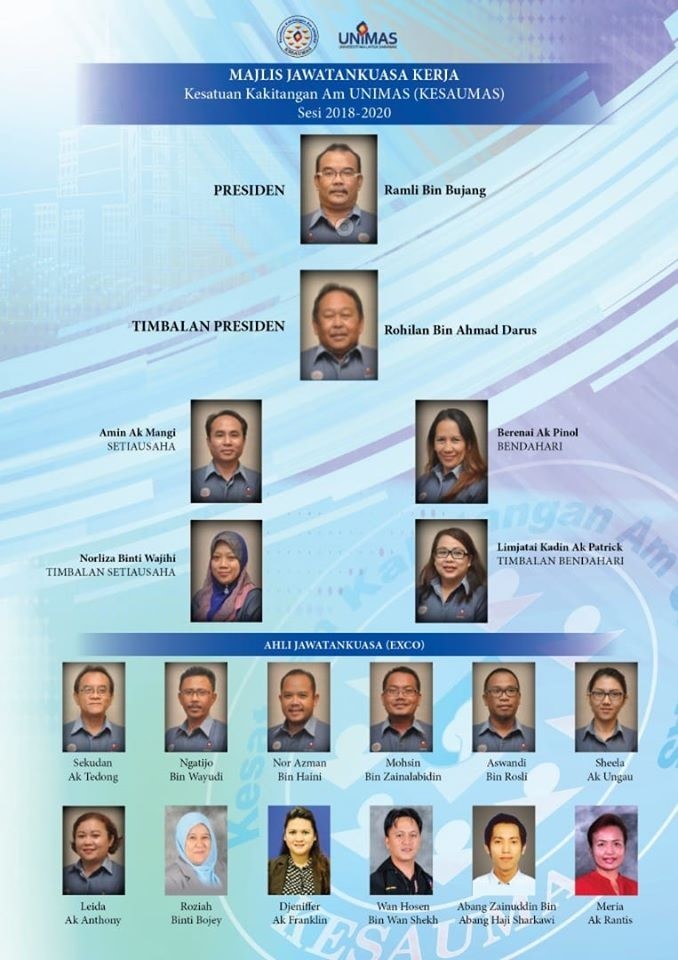
Staff (non-faculty employees) are represented through KESAUMAS, the organisation representing UNIMAS support staff. It provides a collective platform to address employee welfare, workplace interests and staff-related concerns. However, further evidence is required to establish elected non-academic staff representation within the University's highest governing body.
Keywords: Non-Academic Staff Representation; KESAUMAS; Support Staff; Staff Welfare; Employee Representation; Trade Union; Collective Representation.
Reference: UNIMAS Organisation
16.2.2 Students' union
Student Representation at UNIMAS
Universiti Malaysia Sarawak (UNIMAS) promotes student participation in university governance through the constitutionally recognised Majlis Perwakilan Pelajar (MPP), which serves as the official platform for elected student representation and advocacy.
Under Section 67 of the Constitution of Universiti Malaysia Sarawak, the Students' Union and Students' Representative Council are formally established. MPP representatives are democratically elected through secret ballots for a one-year term, providing students with a formal voice in university affairs.
The MPP fulfils three key roles:
Governance Input to the University: Represents student views and communicates concerns to university management, contributing input on academic policies, campus facilities and student-related matters.
Student Support: Advocates for student welfare by addressing concerns relating to academic needs, financial assistance, accommodation and campus well-being.
Social Activities: Organises student-led programmes, cultural events, community engagement and leadership activities that promote inclusiveness and strengthen campus relationships.
Through these functions, UNIMAS reinforces student empowerment and participatory governance by providing an elected platform for students to influence university affairs, access support and actively contribute to campus development.
Keywords: Elected Student Representatives; Student Representation; Majlis Perwakilan Pelajar (MPP); Students' Union; Student Elections; Secret Ballot; Student Governance; Student Welfare; Student Engagement; Student Empowerment.
References: UNIMAS MPP Election Information
16.2.3 Identify and engage with local stakeholders
Engaging Local Stakeholders
Universiti Malaysia Sarawak (UNIMAS) promotes inclusive stakeholder engagement through its Environmental, Social and Governance (ESG) Policy, which establishes a framework for identifying, collaborating with and engaging external stakeholders in advancing sustainable development and community well-being.
Under Section 8.5 (Strategic Partnership and Stakeholder Engagement, pp. 11–12), UNIMAS identifies key stakeholders, including government agencies, industry partners, local communities, students, staff, alumni, the public and non-governmental organisations (NGOs). The policy establishes regular stakeholder engagement to gather feedback and shape university ESG strategies.
Further details are outlined in Section 8.3(g) (Local Communities Engagement, p. 9), which commits UNIMAS to working with local and Indigenous communities to co-develop initiatives that address their needs and aspirations. These include improving educational opportunities, promoting sustainable livelihoods and developing digital literacy and green skills for underserved communities.
Through these provisions, UNIMAS institutionalises stakeholder engagement through strategic partnerships, regular consultation and community collaboration, demonstrating its commitment to inclusive decision-making, social responsibility and sustainable community development.
Keywords: Local Stakeholder Engagement; Community Engagement; Strategic Partnerships; Indigenous Communities; Government Collaboration; NGO Engagement; Stakeholder Consultation; Sustainable Community Development; ESG Policy.
16.2.4 Participatory bodies for stakeholder engagement
Participatory Decision-Making with Stakeholders
Universiti Malaysia Sarawak (UNIMAS) promotes inclusive and participatory governance through its Environmental, Social and Governance (ESG) Policy, which provides a framework for engaging external stakeholders in university strategies and decision-making.
Under Section 8.5 (Strategic Partnership and Stakeholder Engagement, p. 11), UNIMAS commits to regular engagement with industry partners, government agencies, local communities, Indigenous communities and NGOs to gather input and shape its ESG strategies. This ensures that stakeholder perspectives and community needs are considered in developing university initiatives.
Additionally, Section 8.4(g) (Transparency in Governance, p. 10) emphasises transparent decision-making, open stakeholder communication and institutional accountability. Section 8.1 (Mechanism of Delegation, p. 6) further establishes the University Sustainability Committee (UNSC) to coordinate and monitor ESG implementation.
Through these mechanisms, UNIMAS institutionalises stakeholder participation in its governance framework, strengthening transparency, collaboration and shared responsibility in advancing sustainable university development.
Keywords: Participatory Decision-Making; Stakeholder Engagement; Strategic Partnerships; Local Community Participation; Indigenous Community Engagement; Industry Collaboration; Transparency in Governance; University Sustainability Committee; Inclusive Governance.
References: University Sustainability Committee

16.2.5 University principles on corruption and bribery
Integrity and Anti-Corruption Commitment
Universiti Malaysia Sarawak (UNIMAS) demonstrates its commitment to ethical governance through the implementation of the UNIMAS Organisational Anti-Corruption Plan (OACP) 2026–2030, which establishes a strategic framework to strengthen institutional integrity, prevent corruption and promote transparency and accountability across the University.
The OACP 2026–2030 focuses on three priority areas: governance, financial management and academic management. It outlines 28 initiatives to address 12 high-priority corruption risks identified through institutional risk assessments, reinforcing UNIMAS's commitment to a corruption-free university environment. The OACP 2026–2030 was issued under Administrative Circular No. 15/2026 and came into effect on 8 December 2025, establishing its formal applicability from that date.
This commitment is further reinforced through Section 3.1 (Corporate Integrity Pledge) of the UNIMAS Code of Ethics, which affirms the University's commitment to preventing corruption and promoting ethical conduct in its dealings with business partners and government agencies. The pledge was formalised in collaboration with the Malaysian Anti-Corruption Commission (MACC) on 2 April 2015. Additionally, Section 9 (Conflict of Interest) establishes requirements for declaring potential conflicts of interest to safeguard the University's integrity.
The University's zero-tolerance commitment is explicitly established under Section 8.4(d) (Anti-Corruption, p. 10) of the UNIMAS ESG Policy, which commits to preventing corruption and unethical behaviour and achieving full compliance with anti-corruption training and policies. This is reinforced by Section 8.4(f) (Ethical Leadership, p. 10), which promotes integrity and ethical decision-making across university functions, and Section 9.1 (Implementation and Monitoring, p. 13), which establishes key performance indicators and regular policy reviews to ensure accountability.
Through these policies and initiatives, UNIMAS institutionalises anti-corruption principles across its governance, financial and academic operations, strengthening transparency, accountability and a culture of integrity throughout the University.
Keywords: Anti-Corruption Commitment; Organisational Anti-Corruption Plan (OACP); Zero Tolerance for Corruption; Corporate Integrity Pledge; UNIMAS Code of Ethics; Conflict of Interest; Transparency; Accountability; Ethical Governance; Integrity Division.
16.2.6 Academic freedom policy
Safeguarding Academic Freedom at UNIMAS
Universiti Malaysia Sarawak (UNIMAS) recognises academic freedom as an important foundation for scholarly excellence, independent research and knowledge dissemination. This commitment is supported by the University's constitutional framework and institutional policies governing research and academic development.
Under Section 20(4) (p. 13) of the Constitution of UNIMAS, the Senate serves as the University's academic body, exercising general direction over instruction, research and examinations. This establishes the Senate's responsibility in overseeing the University's academic activities and development.
Further support is provided through the UNIMAS Open Science Research Data Management Policy (2024), approved by the University Board of Directors on 16 July 2024. Section 5 (p. 6) establishes its application to academic staff and postgraduate research students, while Sections 7.3 and 7.4 (pp. 8–9) promote open access to research publications and research data sharing, supporting scholarly transparency and knowledge dissemination.
Additionally, the UNIMAS Equality Policy (2023) reinforces an inclusive academic environment by promoting equal access to quality education and non-discriminatory practices across the University.
Together, these frameworks demonstrate UNIMAS's commitment to academic governance, open research practices and an inclusive environment that supports scholarly development and knowledge sharing.
Keywords: Academic Freedom; Academic Governance; Research Independence; Research Data Management; Open Science; Knowledge Dissemination; Academic Equality; Inclusive Education; Scholarly Development.
16.2.7 Publish financial data
Financial Transparency and Accountability at UNIMAS
Universiti Malaysia Sarawak (UNIMAS) demonstrates its commitment to financial transparency and institutional accountability through the publication of its Annual Reports and Financial Statements on its official university website.
The University's financial reporting and auditing obligations are governed by the Statutory Bodies (Accounts and Annual Reports) Act 1980 (Act 240). Under Section 5, statutory bodies are required to maintain proper financial records, prepare annual financial statements and submit them to the Auditor General for audit. Furthermore, Sections 7 and 8 establish the requirements for submitting audited financial statements and annual reports to the responsible Minister for tabling in Parliament.
UNIMAS provides an official online platform for its Annual Reports and Financial Statements, reflecting its institutional commitment to financial reporting and accountability. However, access to the individual financial statement PDFs currently requires password authentication.
Through its statutory reporting obligations and institutional financial reporting mechanisms, UNIMAS demonstrates its commitment to responsible financial management, independent auditing and public-sector accountability.
Keywords: Financial Transparency; Financial Accountability; Annual Financial Statements; Independent Auditing; Statutory Bodies (Accounts and Annual Reports) Act 1980; Act 240; Institutional Governance; Financial Reporting.
Reference: UNIMAS Annual Reports | Statutory Bodies (Accounts and Annual Reports) Act 1980 (Act 240)


16.3 Working with government
16.3.1 Provide expert advice to government
Providing Expert Advice to Government at UNIMAS
Universiti Malaysia Sarawak (UNIMAS) contributes specialist academic expertise to government policymaking and development initiatives at local, regional and national levels through research collaborations, expert consultations and knowledge transfer.
Local Level – Kampung Rampangi Social Innovation Project
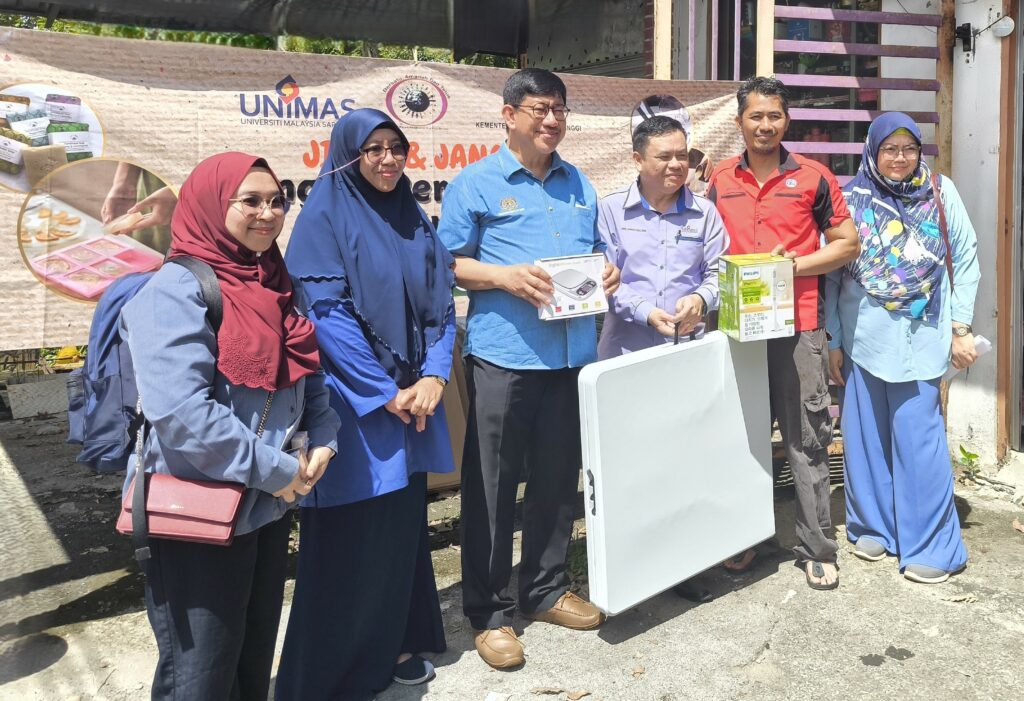
UNIMAS provides research-based expertise and community development support through its Social Innovation Project in Kampung Rampangi. The initiative attracted the attention of the Deputy Chief Secretary (Policy) of the Ministry of Higher Education, who visited the project site in November 2025 to assess its progress, outcomes and opportunities for further policy support.
Keywords: Local Government Engagement; Community Development; Social Innovation; Kampung Rampangi; Ministry of Higher Education; Community-Based Research; Local Development; Government Engagement; Knowledge Transfer.
Reference: Deputy Chief Secretary of MOHE Visits UNIMAS Social Innovation Project Site in Kampung Rampangi
2. Regional Level – Sarawak Digital Economy Transformation Initiative
UNIMAS supports Sarawak's regional economic development through its research collaboration with the Ministry of Economy, Sarawak Economic Development Corporation (SEDC), Sarawak Digital Economy Corporation (SDEC) and Sarawak Craft Council. Through a Short-Term Research Grant project in 2025, UNIMAS researchers developed evidence and practical recommendations to support digital transformation strategies for rural handicraft entrepreneurs, contributing to a Manual Guide for Policy Development for relevant government agencies.
Keywords: Regional Government Advisory; Sarawak Economic Development; Digital Economy Transformation; Ministry of Economy; SEDC; SDEC; Sarawak Craft Council; Rural Economic Development; Policy Recommendations; Research-Based Advisory.
3. National Level – Malaysia Blue Economy Blueprint
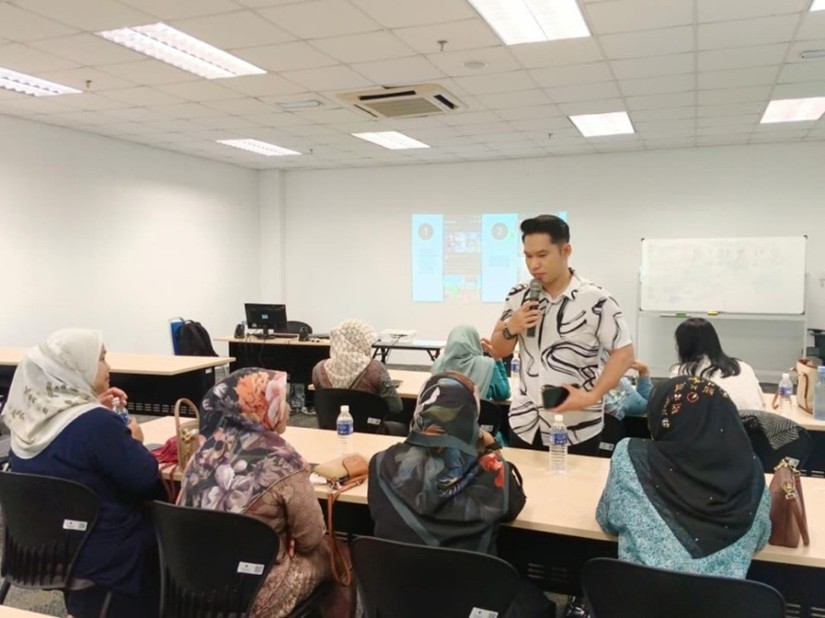
UNIMAS contributes expert knowledge to national policy development through its participation in the Malaysia Blue Economy Blueprint study, spearheaded by the Ministry of Economy and organised by the Academy of Sciences Malaysia. In March 2025, UNIMAS researchers provided specialist insights on marine biodiversity, sustainable fisheries, climate adaptation and ocean governance to support the development of Malaysia's national Blue Economy framework.
Keywords: National Government Advisory; Expert Consultation; Malaysia Blue Economy Blueprint; Ministry of Economy; Academy of Sciences Malaysia; Marine Policy; Evidence-Based Policymaking; National Policy Development.
Reference: Advancing the Blue Economy: UNIMAS’ Commitment to Marine Sustainability

UNIMAS further facilitates access to its academic expertise through the UNIMAS Expert Directory, which identifies researchers, their specialist knowledge and research capabilities, supporting engagement with government agencies and policymakers.
Keywords: Academic Expertise; Expert Directory; Research Specialisation; Knowledge Transfer; Government Consultation; University-Government Engagement.
Through these initiatives, UNIMAS demonstrates its role as a knowledge partner to the government, translating academic research and specialist expertise into evidence-based policy recommendations and development strategies.
Keywords: Expert Advice to Government; Government Consultation; Evidence-Based Policymaking; National Policy Development; Regional Development; Local Government Engagement; Academic Expertise; Research-Based Policy; Knowledge Transfer.
16.3.2 Policy- and lawmakers outreach and education
Policy- and Lawmakers Outreach and Education at UNIMAS
Universiti Malaysia Sarawak (UNIMAS) promotes policy and government capacity-building through structured educational programmes, knowledge-sharing initiatives and expert-led engagements addressing sustainability, climate change, technology and environmental governance.
1. ESG Education and Capacity-Building for Higher Education Leaders
UNIMAS, through UNIMAS Business School in collaboration with the Higher Education Leadership Academy (AKEPT), organised the ESG for Higher Education training programme in Putrajaya on 18–19 August 2025. The programme brought together university leaders and stakeholders to strengthen their understanding of Environmental, Social and Governance (ESG) frameworks, providing practical strategies for ESG implementation, governance development and institutional sustainability planning.
Keywords: ESG Education; Policy Outreach; Governance Capacity-Building; AKEPT; Higher Education Leadership; Sustainability Governance; ESG Implementation; Institutional Policy Development.
2. Climate Change and Energy Transition Policy Dialogue
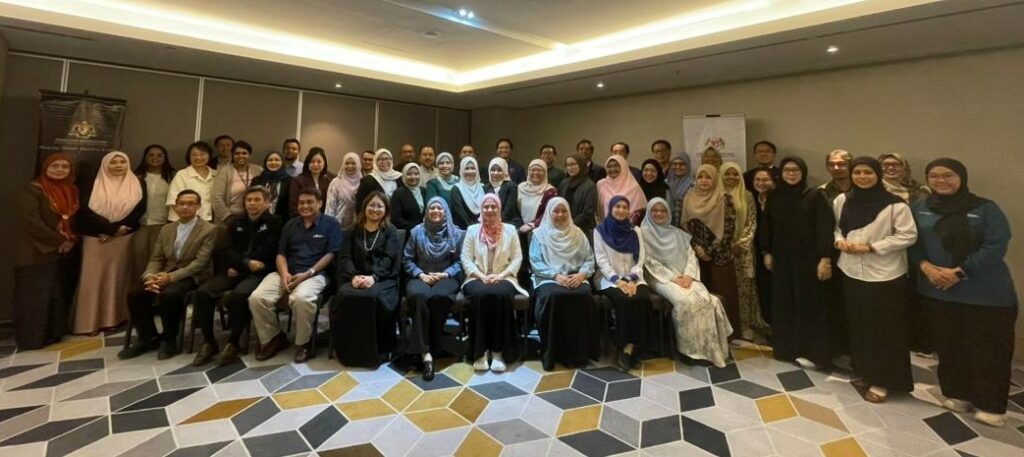
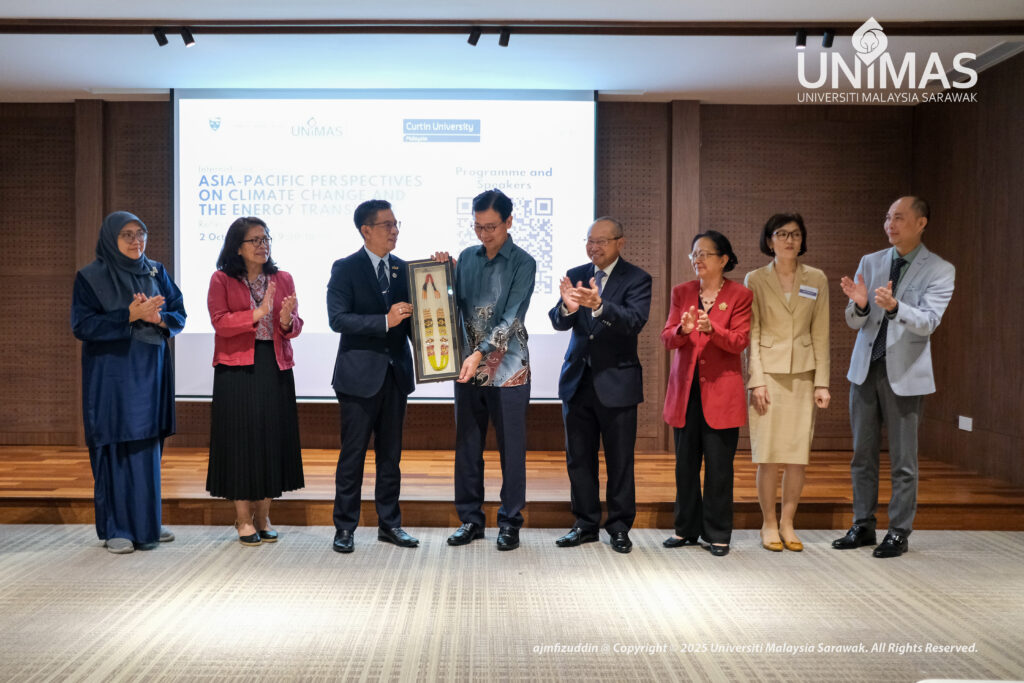
UNIMAS hosted the Asia-Pacific Seminar on Climate Change and Energy Transition in October 2025, bringing together diplomats, academics, policymakers and civil society representatives from Malaysia, Japan and Australia. The seminar provided an educational and knowledge-sharing platform addressing climate governance, policy coordination, renewable energy technologies, green finance and social inclusion. Through expert presentations and panel discussions, participants exchanged insights on policy approaches and strategies for achieving a just and sustainable energy transition.
Keywords: Policymaker Outreach; Climate Change Education; Energy Transition; Climate Governance; Policy Dialogue; International Cooperation; Renewable Energy; Green Finance; Sustainability Policy.
3. Technical Knowledge Transfer and Capacity-Building for Forest Department Sarawak
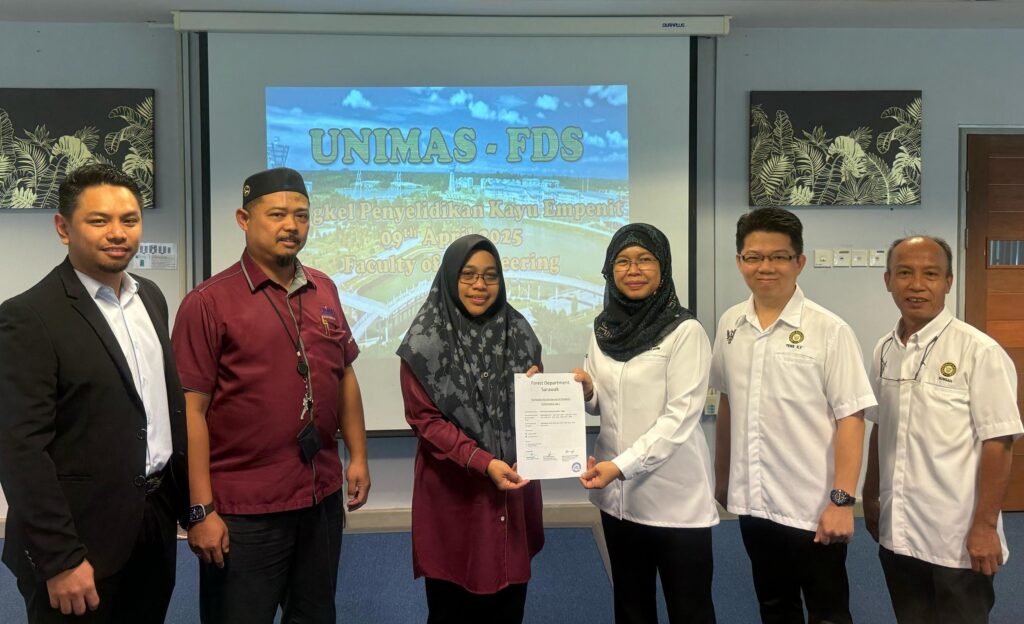
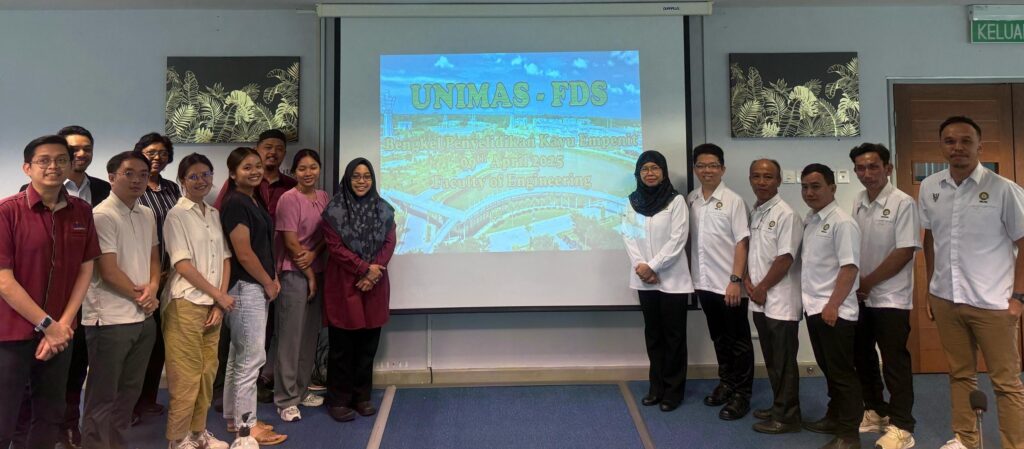
UNIMAS strengthened government technical capacity through the Empenit Wood Research Workshop, conducted in collaboration with the Forest Department Sarawak (FDS) on 9 April 2025. The workshop provided six FDS representatives with practical knowledge and technical training in specimen preparation, laboratory experimentation, data analysis and research interpretation. This initiative facilitated knowledge and skills transfer between university researchers and government personnel, strengthening technical understanding and research capabilities in sustainable forest resource development.
Keywords: Government Capacity-Building; Technical Training; Forest Department Sarawak; Knowledge Transfer; Forestry Research; Sustainable Forest Management; Research Skills Development; Government Education.
16.3.3 Participation in government research
UNIMAS Participation in Government Research
Universiti Malaysia Sarawak (UNIMAS) actively undertakes research collaborations with government ministries and agencies, contributing scientific expertise, empirical findings and evidence-based recommendations to support government policymaking, public-sector planning and sustainable development.
1. Collaboration with the Ministry of Economy
UNIMAS collaborates with the Ministry of Economy, Sarawak Economic Development Corporation (SEDC), Sarawak Digital Economy Corporation (SDEC) and Sarawak Craft Council through the research initiative Empowering Artisans and Craftsmen in Sarawak: Digital Economy Transformation. The study investigates challenges faced by rural handicraft businesses in digital adoption, marketing and market access, while exploring opportunities in e-commerce and artificial intelligence (AI). Its findings will inform a policy guide to support government agencies in developing targeted digital transformation strategies for Sarawak's handicraft sector. This collaboration demonstrates UNIMAS's contribution to government research, evidence-based policymaking and inclusive economic development, advancing SDG 8 (Decent Work and Economic Growth), SDG 9 (Industry, Innovation and Infrastructure) and SDG 17 (Partnerships for the Goals).
Keywords: Government Research; Policy-Focused Research; Government–University Collaboration; Evidence-Based Policymaking; Policy Recommendations; Digital Economy; Rural Development; SDG 8; SDG 9; SDG 17.
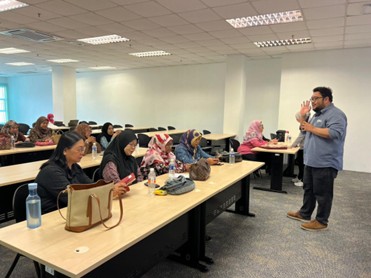
2. Collaboration with the Ministry of Economy – Malaysia Blue Economy Blueprint
UNIMAS contributes research expertise to the development of Malaysia's Blue Economy Blueprint (MBEB), spearheaded by the Ministry of Economy. Through research and stakeholder engagement conducted between August 2024 and August 2025, UNIMAS researchers contributed expertise in marine biodiversity, sustainable fisheries, climate adaptation and ocean governance. These contributions support evidence-informed national strategies for marine resource management, coastal protection and sustainable blue economy development. This collaboration demonstrates UNIMAS's participation in government-associated research and national policy development, advancing SDG 13 (Climate Action), SDG 14 (Life Below Water), SDG 16 (Peace, Justice and Strong Institutions) and SDG 17 (Partnerships for the Goals).
Keywords: Government Research; Policy Development; Ministry of Economy; Government–University Partnership; Blue Economy; Marine Sustainability; Evidence-Based Policymaking; Ocean Governance; SDG 13; SDG 14; SDG 16; SDG 17.
Reference: Advancing the Blue Economy: UNIMAS' Commitment to Marine Sustainability

3. Collaboration with Forest Department Sarawak (FDS)
UNIMAS collaborates with the Forest Department Sarawak (FDS) under a Memorandum of Understanding (MoU) to undertake research on Sarawak hardwood species, focusing on wood bolt connections, specimen preparation, laboratory experimentation and technical analysis. Led by Associate Professor Ir. Dr. Abdul Razak Abdul Karim, the research involves technical investigations, knowledge-sharing and submission of research activity reports to FDS. This partnership demonstrates direct government–university research collaboration, generating scientific knowledge to support timber research, technical standards and sustainable forest resource utilisation. The initiative contributes to SDG 9 (Industry, Innovation and Infrastructure), SDG 12 (Responsible Consumption and Production), SDG 15 (Life on Land) and SDG 17 (Partnerships for the Goals).
Keywords: Government Research; Forestry Research; Forest Department Sarawak; Government–University Collaboration; Research Partnership; Scientific Investigation; Timber Research; Technical Standards; Sustainable Forest Management; SDG 9; SDG 12; SDG 15; SDG 17.
16.3.4 Neutral platform to discuss issues
UNIMAS as a Neutral Platform for Political and Multi-Stakeholder Dialogue
Universiti Malaysia Sarawak (UNIMAS) provides inclusive and accessible platforms for open, constructive and non-partisan discussions on political, social, environmental and governance issues. Through international seminars, public forums and stakeholder engagements, UNIMAS brings together policymakers, diplomats, academics, students and community representatives to exchange perspectives, promote mutual understanding and strengthen inclusive dialogue, supporting SDG 16 (Peace, Justice and Strong Institutions).
1. International and Diplomatic Dialogue on Climate Change and Energy Transition
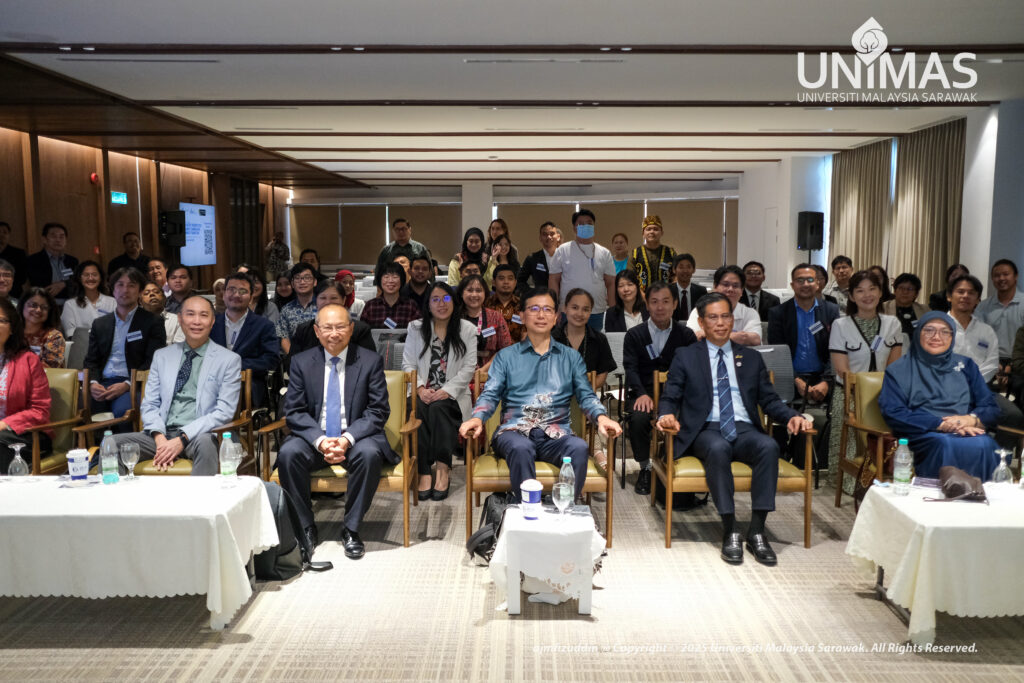
UNIMAS hosted the Asia-Pacific Seminar on Climate Change and Energy Transition in October 2025, bringing together diplomats, policymakers, academics and civil society representatives from Malaysia, Japan and Australia. The seminar provided a neutral platform for multi-stakeholder dialogue on climate governance, international cooperation, renewable energy and green finance. Through expert presentations and panel discussions, participants exchanged perspectives on climate policies and a just energy transition. This initiative demonstrates UNIMAS's role in facilitating diplomatic engagement, international dialogue and collaborative problem-solving, advancing SDG 13, SDG 16 and SDG 17.
Keywords: Neutral Platform; Diplomatic Dialogue; Multi-Stakeholder Engagement; Policymaker Dialogue; Climate Governance; International Cooperation; Open Discussion; SDG 13; SDG 16; SDG 17.
2. Political Dialogue and Democratic Discourse on Sabah's 17th State Election
UNIMAS, through its Politics and Government Studies (POLGOV) Society, organised a public forum in December 2025 examining Sabah's 17th State Election and its political future. The forum provided an academic platform for open discussions on electoral outcomes, political developments, governance, state autonomy and democratic participation. Through panel discussions and interactive exchanges, participants explored political perspectives and governance challenges, promoting critical thinking, informed citizenship and respectful public discourse. This initiative demonstrates UNIMAS's commitment to facilitating non-partisan political dialogue and constructive democratic engagement, supporting SDG 16.
Keywords: Neutral Discussion Platform; Political Dialogue; Democratic Discourse; Non-Partisan Engagement; Electoral Discussion; Governance; Civic Participation; Public Discourse; SDG 16.
Reference: POLGOV Society Forum Examines Sabah's 17th State Election and Its Political Future
3. Strategic Engagement and Student Dialogue for National Cohesion
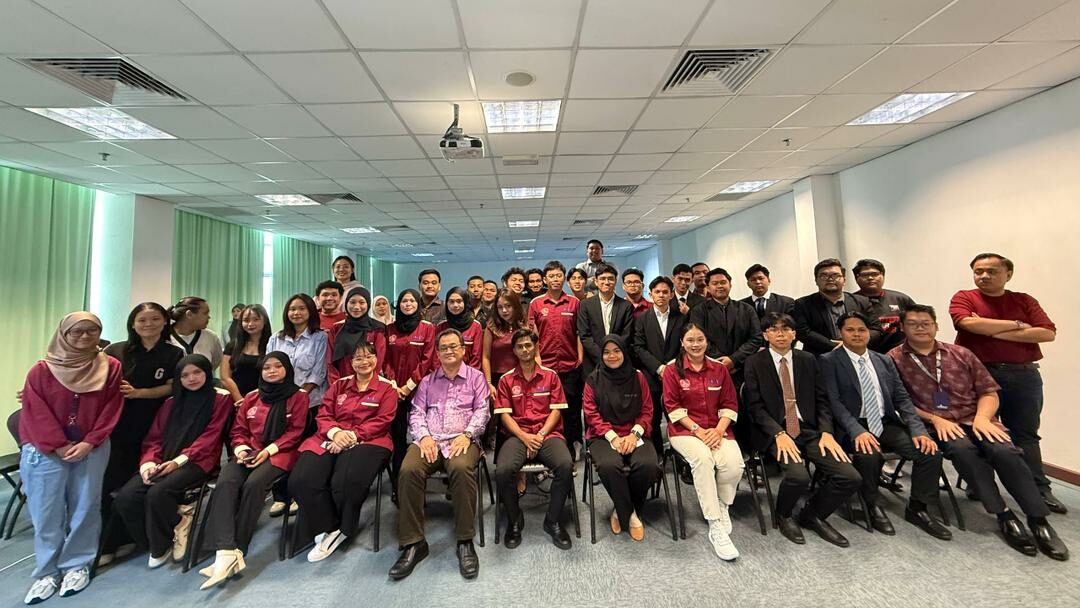
UNIMAS hosted the Program Mahasiswa Negara KPT 2025 – Kursus Kenegaraan Malaysia Madani on 25 October 2025, featuring a Sembang Santai Pengurusan Universiti session. The programme provided a safe and inclusive platform for student leaders, university management and institutional stakeholders to discuss national values, student leadership and campus governance. Through direct engagement with university executives, students exchanged perspectives and participated in constructive discussions, promoting civic engagement, mutual understanding and inclusive decision-making. This initiative demonstrates UNIMAS's commitment to accessible stakeholder dialogue and participatory governance, advancing SDG 16.
Keywords: Neutral Platform; Safe Space; Student Dialogue; Stakeholder Engagement; University Governance; Youth Participation; Civic Engagement; Inclusive Decision-Making; National Cohesion; SDG 16.
Reference Link: Strategic Engagement and Student Dialogue for National Cohesion at UNIMAS


16.4 Proportion of graduates in law and civil enforcement
16.4.1 Proportion of graduates in law
| Indicator | Number / Proportion |
|---|---|
| Number of UNIMAS graduates | 6,613 |
| Number of UNIMAS graduates from law and enforcement related courses | 0 |
| Proportion of UNIMAS graduates in law | 0% |
For the 2025 reporting period, Universiti Malaysia Sarawak (UNIMAS) recorded a total of 6,613 graduates across its faculties.
Regarding graduates from law-related courses, the Faculty of Law (FUU), officially established on 19 March 2025, marks an important milestone in advancing legal education in Sarawak. As its Bachelor of Laws with Honours programme follows a four-year study structure, no graduates were recorded in the 2025 reporting period.
Accordingly, the number of law graduates was recorded as zero, representing 0% of UNIMAS's total graduate population. Future graduate cohorts are expected to contribute to developing legal expertise and strengthening the legal profession in Sarawak and Malaysia.
Keywords: legal education; law graduates; Bachelor of Laws with Honours; Faculty of Law; UNIMAS; legal profession; legal expertise; Sarawak; higher education; graduate outcomes; SDG 16: Peace, Justice and Strong Institutions.
Reference: UNIMAS - Faculty of Law