SDG 15 : Life on Land
SDG 15 aims to protect, restore, sustainably manage terrestrial ecosystems and stopping the biodiversity loss. It focuses on preventing desertification, restoring degraded land, conserving forests, and safeguarding biodiversity.
UNIMAS actively promotes the conservation of land ecosystems through education, fostering awareness and knowledge about the significance of these ecosystems within its community. UNIMAS goes beyond awareness and takes concrete actions to support land ecosystems, engaging in conservation efforts and research to protect terrestrial biodiversity and preserve natural habitats.
15.2 Supporting land ecosystems through education
15.2.1 Events about sustainable use of land
Growing Together: Takasago-UNIMAS Eductional Forest @ Tree Planting Program 2025
The annual Takasago–UNIMAS Tree Planting Program held on November 29, 2025, which marked the 8th year of the Takasago–UNIMAS Educational Forest Project. Bringing together 150 participants, including university members, corporate partners from Japan, and local school students. The event successfully planted 1,000 indigenous tree seedlings. This collaborative initiative reinforces UNIMAS's commitment to advancing forest landscape restoration, enhancing biodiversity and fostering hands-on environmental education and community stewardship.
Keywords: Tree Planting Program 2025; Annual Takasago-UNIMAS Event; Takasago-UNIMAS Educational Forest Project; Planted 1,000 Indigenos Tree Seedlings; Forest Landscape Restoration; Enhancing Biodiversity; Bringing Together 150 Participants Including University Members, Corporate Partners from Japan and Local School Students; Hands-on Environmental Education and Community Stewardship.
Reference Link: Growing Together: Takasago-UNIMAS Eductional Forest @ Tree Planting Program 2025 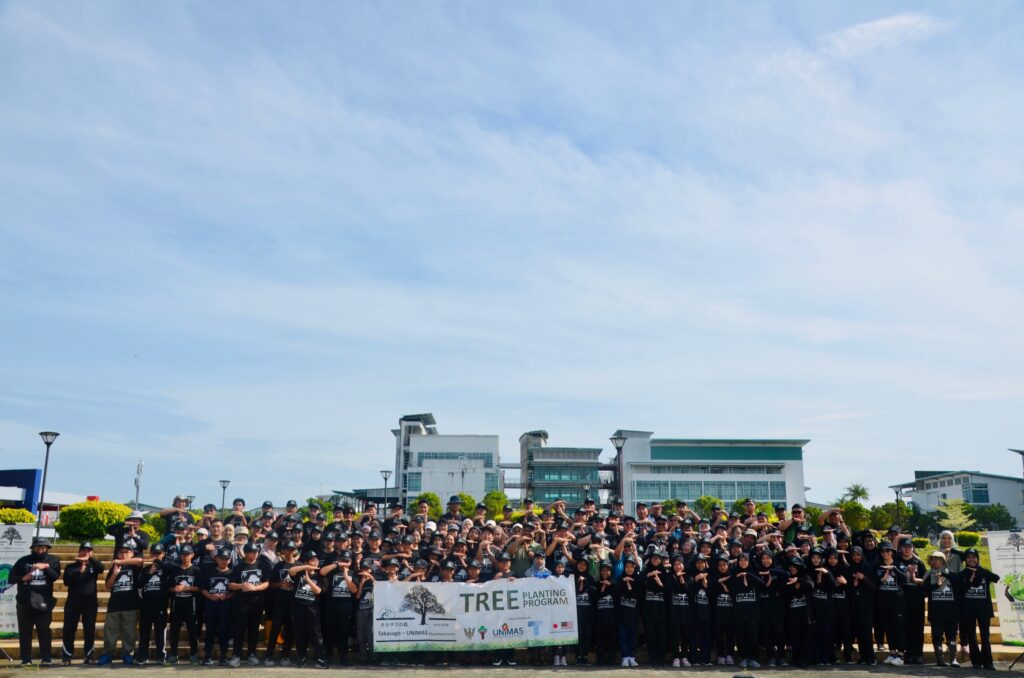
Restoring Forests, Connecting Cultures: Planters, UNIMAS and Zen University Students in Sabal Forest Reserve
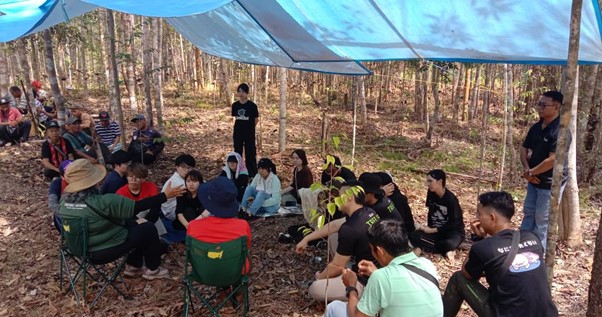
On 4 November 2025, UNIMAS Plant Science (PLANTERS) students from the Faculty of Resource Science and Technology teamed up with Zen University students from Japan, the Japan-Malaysia Association (JMA), the Forest Department Sarawak (FDS), and local villagers for a collaborative reforestation programme at the Sabal Forest Reserve. Planting native tree species to promote ecosystem recovery and forest landscape restoration, the participants engaged in hands-on climate mitigation and cross-cultural environmental learning.
Keywords: Reforestation Programme; Collaborative Reforestation; Forest Lanscape Restoration; Planting Native Tree Species; Ecosystem Recovery; Sabal Forest Reserve; Teamed Up with Zen University students from Japan Japan-Malaysia Association (JMA), Forest Department Sarawak (FDS) and local villagers; UNIMAS Plant Science (PLANTERS); Faculty of Resource Science and Technology (FRST); Hands-on Climate Mitigation and Cross-Cultural Environmental Learning
Reference Link: Restoring Forests, Connecting Cultures: Planters, UNIMAS and Zen University Students in Sabal Forest Reserve
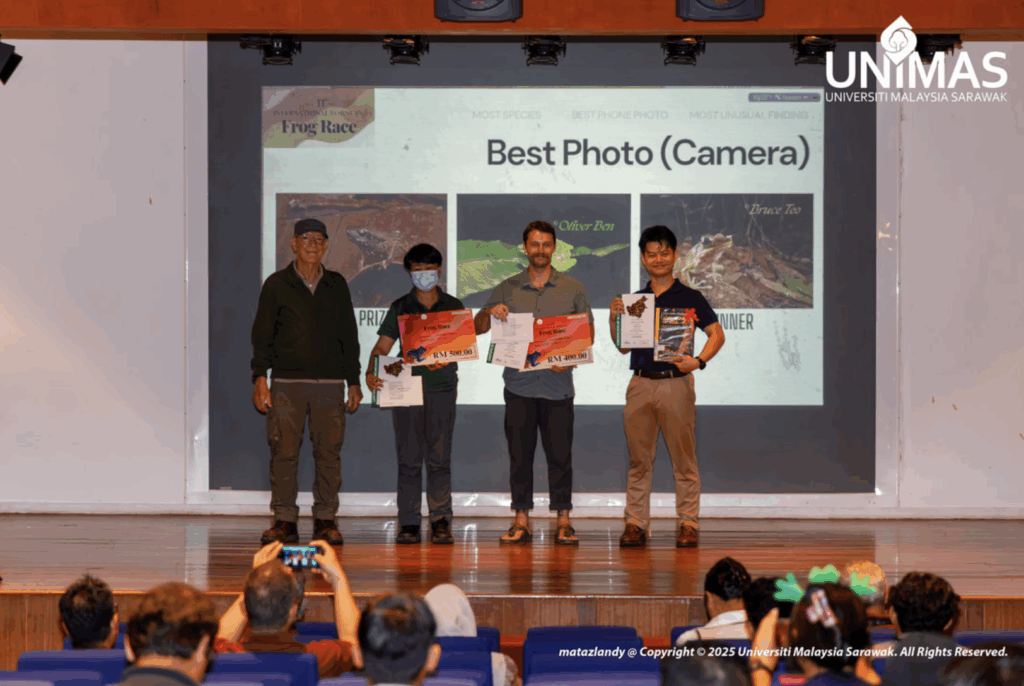
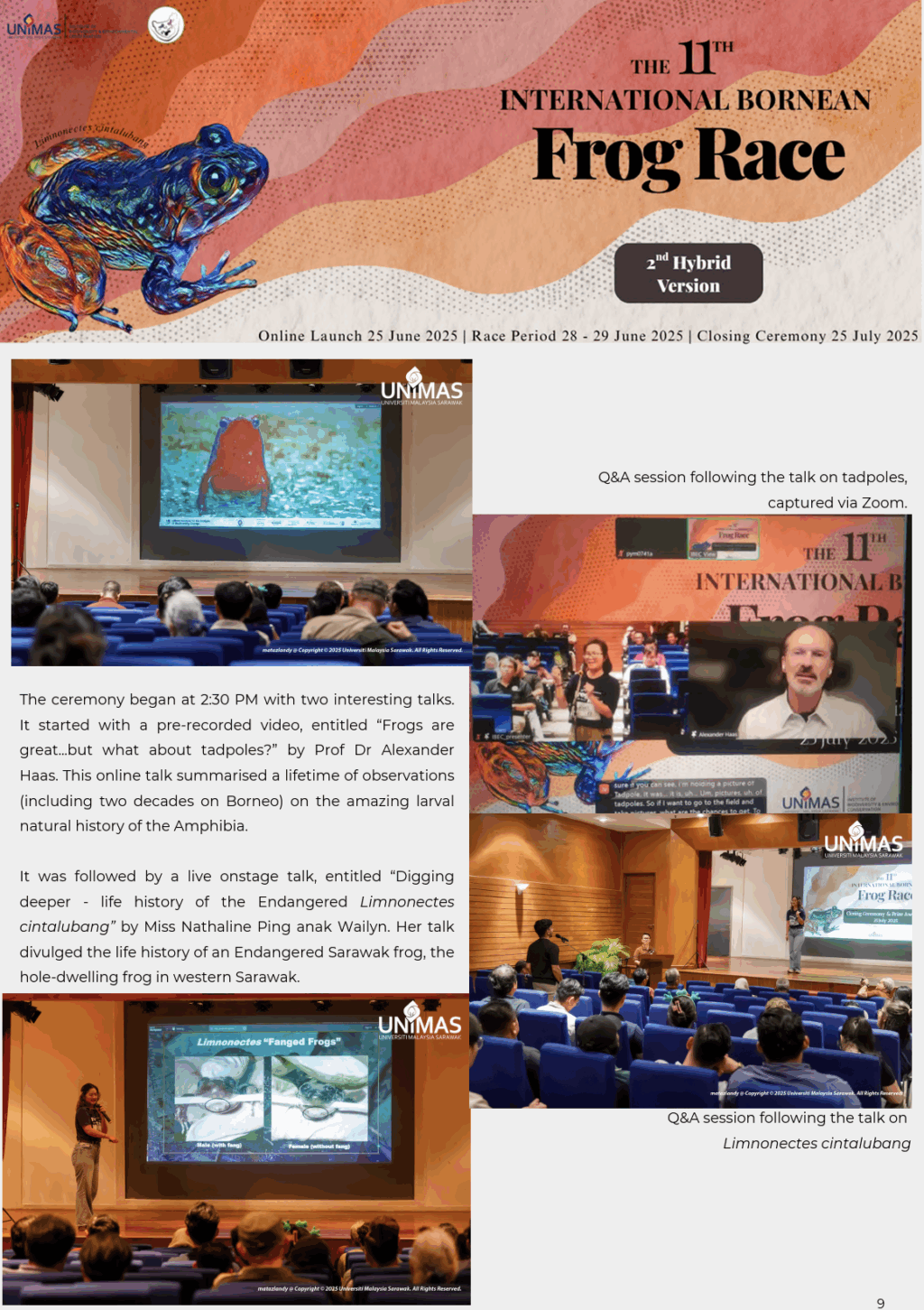
The 11th International Borneon Frog Race 2025
The 11th International Bornean Frog Race 2025 was a conservation and citizen-science event organized by IBEC and UNIMAS to promote awareness of Borneo’s amphibian biodiversity. It combined a frog photography competition with educational talks, exhibitions, documentary screenings, and conservation activities, bringing together experts, participants, and the public to celebrate and support amphibian conservation in Borneo. The event also encouraged community engagement in biodiversity monitoring while highlighting the ecological importance of amphibians as indicators of healthy ecosystems. Supported by the Shell Chair at UNIMAS, the programme showcased the beauty and diversity of Borneo’s frog species and emphasized the need to protect their forest and wetland habitats.
Keywords: Conservation and Citizen-Science Event; 11th International Bornean Frog Race 2025; Protect Their Forest and Wetland Habitats; Amphibians as Indicators of Healthy Ecosystems; Community Engagement in Biodiversity Monitoring; Educational Talks, Exhibitions; Documentary Screenings and Conservation Activities; Institute of Biodiversity and Environmental Conservation (IBEC); Supported by the Shell Chair at UNIMAS.
Reference Link: The 11th International Borneon Frog Race 2025
15.2.2 Sustainably farmed food on campus
National Agrofood Policy 2021-2030 (NAP 2.0)
Universiti Malaysia Sarawak (UNIMAS) demonstrates its commitment to the principles of the National Agrofood Policy 2021-2030 (NAP 2.0) through its sustainably farmed food initiatives on campus. By promoting sustainable agricultural practices, supporting food security, and incorporating innovation and environmental stewardship into campus farming activities, UNIMAS aligns with NAP 2.0’s vision of developing a sustainable, resilient, and technology-driven agrofood sector. These efforts not only provide a platform for experiential learning and research but also contribute to the production of safe and nutritious food while fostering greater awareness of sustainable food systems among the university community.
Keywords: Sustainably Farmed Food Initiatives on Campus; Campus Farming Activities; Sustainable Agricultural Practices; Environmental Stewardship; National Agrofood Policy 2021-2030 (NAP 2.0); Supporting Food Security; Safe and Nutritious Food; Sustainable Food Systems; Experiential Learning and Research.
UNIMAS Environment, Social and Governance Policy
The UNIMAS Environmental, Social and Governance (ESG) Policy demonstrates the university's commitment to integrating sustainability into its campus operations, including responsible procurement and environmentally conscious practices. The policy establishes a framework for promoting sustainable and ethical operations while encouraging responsible sourcing and environmental stewardship throughout the university's activities. In relation to Indicator 15.2.2 (Sustainably Farmed Food on Campus), the policy can provide supporting evidence of UNIMAS's broader commitment to sustainable food procurement and responsible sourcing practices, particularly when prioritising locally sourced and sustainably produced food products. These efforts contribute to promoting environmentally responsible food systems, supporting sustainable agricultural practices and reducing the environmental impacts associated with food supply chains.
Keywords: Environmental, Social and Governance (ESG); Sustainable procurement; Ethical sourcing; Responsible sourcing; Locally sourced food products; Sustainably produced food; Sustainable agricultural practices; Environmental stewardship; Sustainable food supply chains; Responsible consumption; Campus sustainability; Environmental responsibility.
Cultivating Sustainable Food on Campus Through Agroforestry Farming
As part of UNIMAS's commitment to promoting sustainably farmed food, the Agrotech Team led by Dr. Hilmi successfully cultivated eggplants within a well-managed agroforestry system on campus. Through the application of sustainable agricultural practices and continuous crop management, the project produced a healthy harvest of fresh eggplants, yielding 0.833 kg during the harvest period. The produce was harvested, packed, and shared with the community, demonstrating how campus-based food production can contribute to sustainable food systems, environmental stewardship, and local food availability while providing practical learning opportunities in sustainable agriculture.
Keywords: Sustainably Farmed Food; Campus Food Production; Agroforestry System; Sustainable Agricultural Practices; Fresh Local Produce; Sustainable Food Systems; Environmental Stewardship; Community Food Sharing; Responsible Land Management; Sustainable Crop Cultivation.
UNIMAS Plant Research Centre Supporting Sustainable Food Production and Agroforestry
On 5 December 2025, the Faculty of Resource Science and Technology (FSTS), Universiti Malaysia Sarawak (UNIMAS), welcomed Lidam Assan, State Assemblyman for Katibas, for a visit to the Plant Research Centre (PPT) nursery facilities. During the visit, UNIMAS showcased its efforts in cultivating and propagating Engkabang tree seedlings, highlighting the University's commitment to sustainable land management, plant conservation, and the development of campus-based agricultural resources. The visit provided an opportunity to demonstrate how research and nursery operations support sustainable cultivation practices, biodiversity conservation, and long-term food and agroforestry sustainability initiatives within the university ecosystem. This initiative reflects UNIMAS's commitment to promoting sustainable agricultural practices and strengthening campus capacity for environmentally responsible food and plant production systems.
Keywords: Campus-Based Agricultural Resources; Sustainable Cultivation Practices; Plant Research Centre Nursery; Plant Propagation; Engkabang Tree Seedlings; Sustainable Agricultural Practices; Agroforestry Sustainability Initiatives; Nursery Operations; Environmentally Responsible Production Systems; Sustainable Land Management
Plant Science UNIMAS
15.2.3 Maintain and extend current ecosystems' biodiversity
The Contribution of Other Effective Area-Based Conservation Measures (OECMs) to Protecting Global Biodiversity
The study “The contribution of other effective area-based conservation measures (OECMs) to protecting global biodiversity” provides important scientific evidence on how conservation areas beyond formal protected areas can contribute to safeguarding biodiversity and ecosystem integrity, which was published in 2025. By assessing the effectiveness of OECMs in protecting species, habitats, and ecological processes, the research highlights opportunities to expand conservation coverage, strengthen ecosystem connectivity, and enhance biodiversity outcomes. The findings support strategies aimed at maintaining and extending existing ecosystems while promoting long-term conservation of terrestrial biodiversity and ecological resilience.
Keywords: Biodiversity Conservation; Other Effective Area-Based Conservation Measures (OECMs); Ecosystem Protection; Habitat Conservation; Ecosystem Connectivity; Protected Areas; Biodiversity Management; Species Protection; Ecological Resilience; Conservation Planning; Landscape Conservation; Ecosystem Integrity; Biodiversity Preservation; Nature Conservation; Sustainable Ecosystem Management; Ecological Networks; Conservation Effectiveness; Biodiversity Monitoring; Terrestrial Ecosystems; Global Biodiversity.
Reference Link: The Contribution of Other Effective Area-Based Conservation Measures (OECMs) to Protecting Global Biodiversity [PDF]

State of Nature Conservation in Malaysia Symposium
From 25-27 November 2025, the Institute of Biodiversity and Environmental Conservation (IBEC), Universiti Malaysia Sarawak (UNIMAS) participated in the State of Nature Conservation in Malaysia Symposium, organised by the Malaysian Nature Society. The symposium served as a platform for conservation experts, researchers, and practitioners to share knowledge and discuss strategies for biodiversity protection, ecosystem conservation, and sustainable environmental management. Through engagement in discussions on conservation challenges and solutions, IBEC reinforced its commitment to maintaining and enhancing biodiversity, supporting efforts to protect ecosystems and ensure the long-term conservation of Malaysia’s natural heritage.
Keywords: Biodiversity Conservation; Ecosystem Conservation; Biodiversity Protection; Natural Heritage; Species Conservation; Sustainable Ecosystem Management; Ecological Sustainability; Conservation Science; Environmental Management; Biodiversity Research; Ecosystem Protection; Habitat Conservation; Nature Conservation; Biodiversity Enhancement; Ecological Resilience.
UNIMAS Institute of Biodiversity and Environmental Conservation (IBEC)
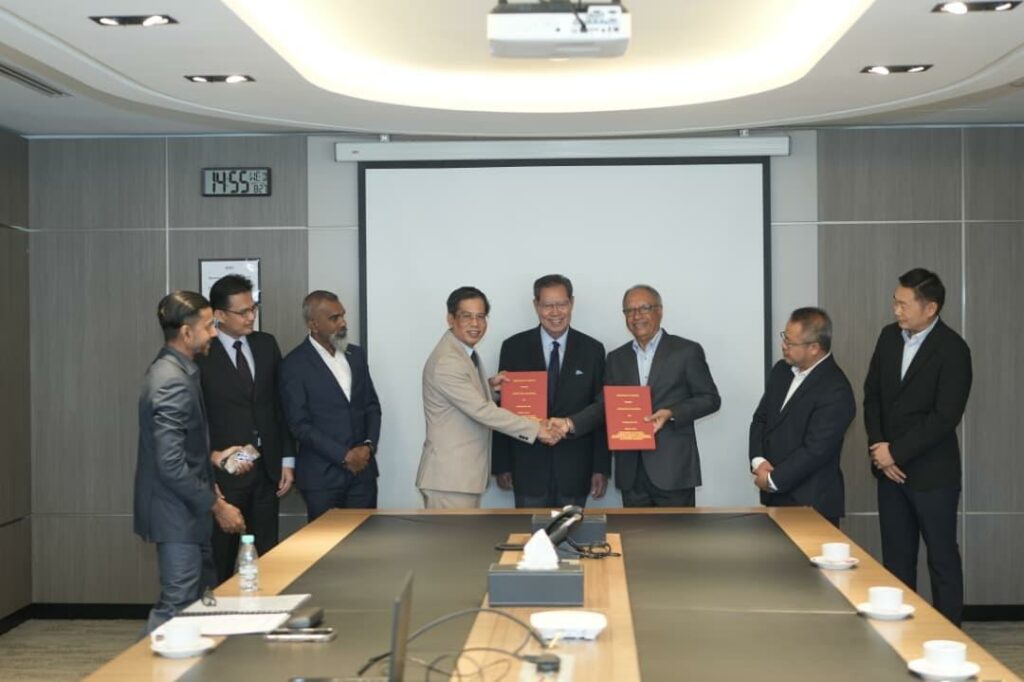
Wilmar and UNIMAS Deepen Partnership to Advance Biodiversity Research in Sarawak
On 27 August 2025, Universiti Malaysia Sarawak (UNIMAS) and Wilmar Plantations Sdn Bhd, through its subsidiary Saremas Sdn Bhd, signed a Memorandum of Agreement to conduct a comprehensive biodiversity survey in conservation areas within Wilmar’s oil palm plantations in Sarawak. Building on a partnership that has been ongoing since 2014, the project will run until March 2027 and focus on assessing threatened mammal and bird species using camera traps, while enhancing knowledge on wildlife ecology, conservation, local community dependence on natural resources, research publications, and graduate student training in biodiversity conservation. The initiative aims to generate scientific data that supports sustainable land-use practices, biodiversity hotspot identification, and conservation corridor planning within plantation landscapes.
Keywords: Conduct a Comprehensive Biodiversity Survey; Conservation Areas within Oil Palm Plantations; Assessing Threatened Mammal and Bird Species; Conservation Corridor Planning; Biodiversity Hotspot Identification; Sustainable Land-Use Practices; Wildlife Ecology; Graduate Student Training in Biodiversity Conservation.
Reference Link: Wilmar and UNIMAS Deepen Partnership to Advance Biodiversity Research in Sarawak
15.2.4 Educational programmes on ecosystems
Free
Paid
Nyambung Blaja: Education Outreach 2025 Programme
On 6 September 2025, the Institute of Biodiversity and Environmental Conservation (IBEC), Universiti Malaysia Sarawak (UNIMAS) participated in STEM Inspiration Day at SMK Sarikei Baru, organised by the Persatuan Mahasiswa Sarawak Universiti Malaya (PMSUM) under the Nyambung Blaja: Education Outreach 2025 programme. The outreach initiative featured a biodiversity and conservation session delivered by Dr Jongkar Grinang, introducing students to the importance of ecosystem conservation, biodiversity protection, and environmental sustainability. Through STEM-based learning and knowledge sharing, the programme enhanced students’ awareness and understanding of natural ecosystems, while encouraging greater interest in science, nature, and environmental stewardship, supporting SDG 15.2.4 on educational programmes for ecosystems.
Keywords: Educational Programme on Ecosystems; Biodiversity Conservation; Ecosystem Awareness; Environmental Education; STEM Education; Biodiversity Protection; Conservation Education; Ecosystem Conservation; Environmental Sustainability; Nature Education; Science Outreach; Community Outreach; School Engagement; Environmental Stewardship; Biodiversity Awareness; Youth Environmental Awareness; Sustainable Development; Knowledge Sharing; STEM Inspiration Day; Nyambung Blaja: Education Outreach 2025.
UNIMAS Institute of Biodiversity and Environmental Conservation (IBEC)
Corporate Biodiversity Day 2025
Through its participation as an exhibitor at Corporate Biodiversity Day 2025, organised by Sarawak Energy, the Institute of Biodiversity and Environmental Conservation (IBEC), Universiti Malaysia Sarawak (UNIMAS) promoted ecosystem and biodiversity education by showcasing its ongoing conservation research and initiatives to a diverse group of stakeholders. The event served as an important platform for knowledge sharing, raising awareness of biodiversity conservation, and encouraging dialogue on the protection and sustainable management of ecosystems. By engaging with industry partners, organisations, and the wider public, IBEC contributed to environmental education efforts and strengthened understanding of the importance of conserving biodiversity for future generations.
Keywords: Educational Programmes on Ecosystems; Biodiversity Conservation; Ecosystem Conservation; Environmental Education; Biodiversity Awareness; Knowledge Sharing; Public Engagement; Conservation Education; Ecosystem Protection; Sustainability Awareness; Environmental Outreach; Stakeholder Engagement; Biodiversity Research; Nature Conservation; Corporate Biodiversity Day 2025; Sustainable Ecosystem Management; Conservation Initiatives; Environmental Stewardship; Biodiversity Protection; Science Communication.
UNIMAS Institute of Biodiversity and Environmental Conservation (IBEC)
The 11th International Borneon Frog Race 2025
Universiti Malaysia Sarawak (UNIMAS), through its Institute of Biodiversity and Environmental Conservation (IBEC) and Faculty of Resource Science and Technology (FRST), organised the 11th International Bornean Frog Race 2025 as an initiative to promote amphibian conservation and environmental education. Held in conjunction with the global Save the Frogs Day, the programme featured educational talks on amphibian diversity, documentary screenings, photographic competitions, and exhibitions to raise public awareness of Borneo's rich biodiversity and the importance of protecting natural habitats. Participants were also involved in a field-based photographic competition across wilderness areas in Borneo on 28 and 29 June 2025, providing opportunities to observe and identify different amphibian species in their natural environments. Expert presentations covered the larval stages and diverse lifestyles of Bornean amphibians, as well as the conservation challenges facing Sarawak's endangered Hole-loving frog. Through these educational and experiential activities, UNIMAS strengthens public understanding of amphibian ecology, forest and wetland ecosystems, and biodiversity conservation while encouraging active community participation in protecting natural ecosystems.
Keywords: Ecosystem education; Environmental education; Amphibian conservation; Biodiversity awareness; Bornean amphibian diversity; Forest and wetland ecosystems; Wildlife habitat conservation; Endangered species protection; Save the Frogs Day; Experiential learning; Field-based learning; Species identification; Ecological awareness; Conservation education; Public engagement; Documentary screening; Educational talks; Community participation; Wildlife photography; Environmental awareness.
Reference Link: The 11th International Borneon Frog Race 2025
15.2.5 Sustainable management of land for agriculture (educational outreach)
Free
Paid
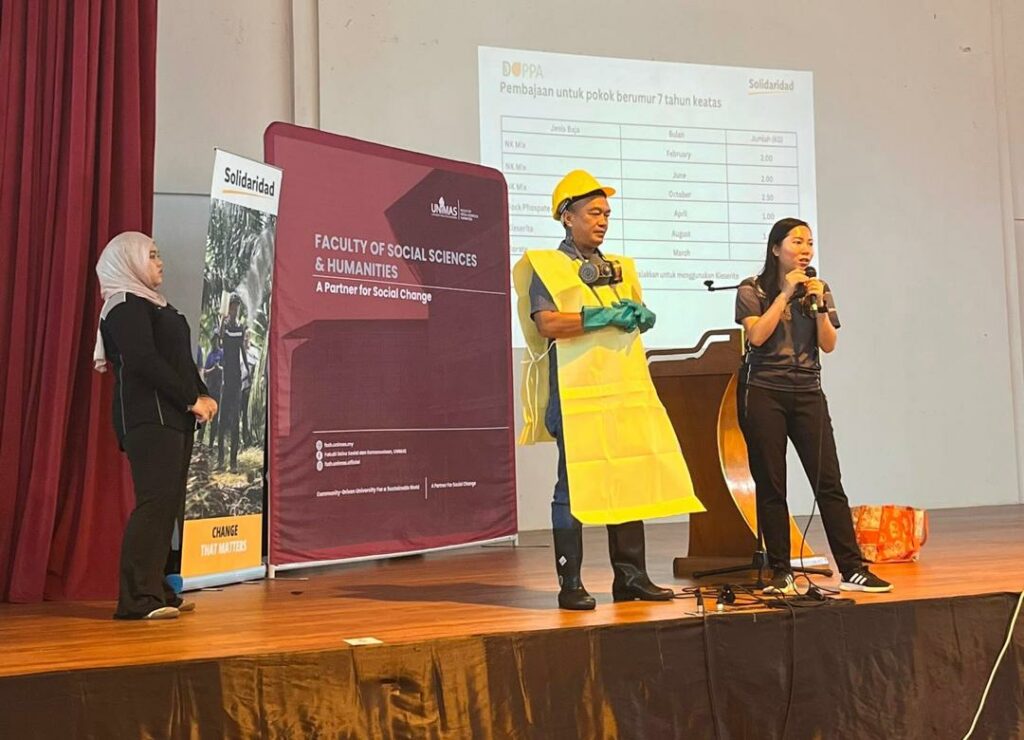
Stronger Palms, Smarter Practices: A Gap Workshop for Mukah’s Oil Palm Smallholders
On 29 November 2025, the Faculty of Social Sciences and Humanities (FSSH), UNIMAS, in collaboration with Land Custody and Development Authority (LCDA) and Solidaridad Network Malaysia, organized a Good Agricultural Practices (GAP) Workshop for oil palm smallholders in Balingian, Mukah. The workshop engaged farmers from six longhouses and aimed to enhance their knowledge of sustainable oil palm management, including fertilizer application, pest and disease control, harvesting techniques, and overall farm management. The initiative also strengthened collaboration among academia, government agencies, NGOs, and local communities to address agricultural and environmental challenges, particularly in peatland areas. By promoting sustainable farming practices and raising awareness of requirements for MSPO certification, the program sought to improve farm productivity, support long-term livelihoods, and contribute to environmentally responsible development of the oil palm sector in Balingian.
Keywords: Good Agricultural Practices (GAP) Workshop; Oil Palm Smallholders; Farmers from Six Longhouse; Sustainable Oil Palm Management; Farm Management; Fertilizer Application, Pest and Disease Control, Harvesting Techniques; Promoting Sustainable Farming Practices; Environmentally Responsible Development; Requirements for MSPO Certification; Address Agricultural and Environmental Challenges, Particularly in Peatland Areas; Collaboration among Academia, Government Agencies (LCDA), NGOs (Solidaridad Network Malaysia) and Local Communities.
Reference Link: Stronger Palms, Smarter Practices: A Gap Workshop for Mukah’s Oil Palm Smallholders
From Paddy Fields to the Laboratory: Integrating Biotechnology, Salinity and Sarawak’s Rice Heritage
On 11 December 2025, Universiti Malaysia Sarawak (UNIMAS), through the Faculty of Resource Science and Technology (FRST), conducted a field-based biotechnology research project in Lingga, Sri Aman, to investigate the effects of salinity on rice cultivation, with a particular focus on traditional Sarawak rice varieties. As part of a Final Year Project for Biotechnology students, the study involved collecting rice, water, and soil samples while engaging with local farming communities to better understand the challenges posed by salinity intrusion and climate change. By integrating biotechnology, field research, and community knowledge, the project aims to support food security, agricultural sustainability, climate resilience, and the preservation of Sarawak’s rice heritage, while providing students with practical research experience and strengthening collaboration between researchers and local farmers.
Keywords: Engaging with Local Farming Communities; Strengthening Collaboration Between Researchers and Local Farmers; Field-Based Biotechnology Research Project; Investigate the Effects of Salinity on Rice Cultivation; Challenges Posed by Salinity Intrusion and Climate Change; Agricultural Sustainability; Sustainable Management of Land; Integrating Biotechnology, Field Research and Community Knowledge; Collection Reice, Water and Soil Samples; Support Food Security & Climate Resilience
Reference Link: From Paddy Fields to the Laboratory: Integrating Biotechnology, Salinity and Sarawak’s Rice Heritage
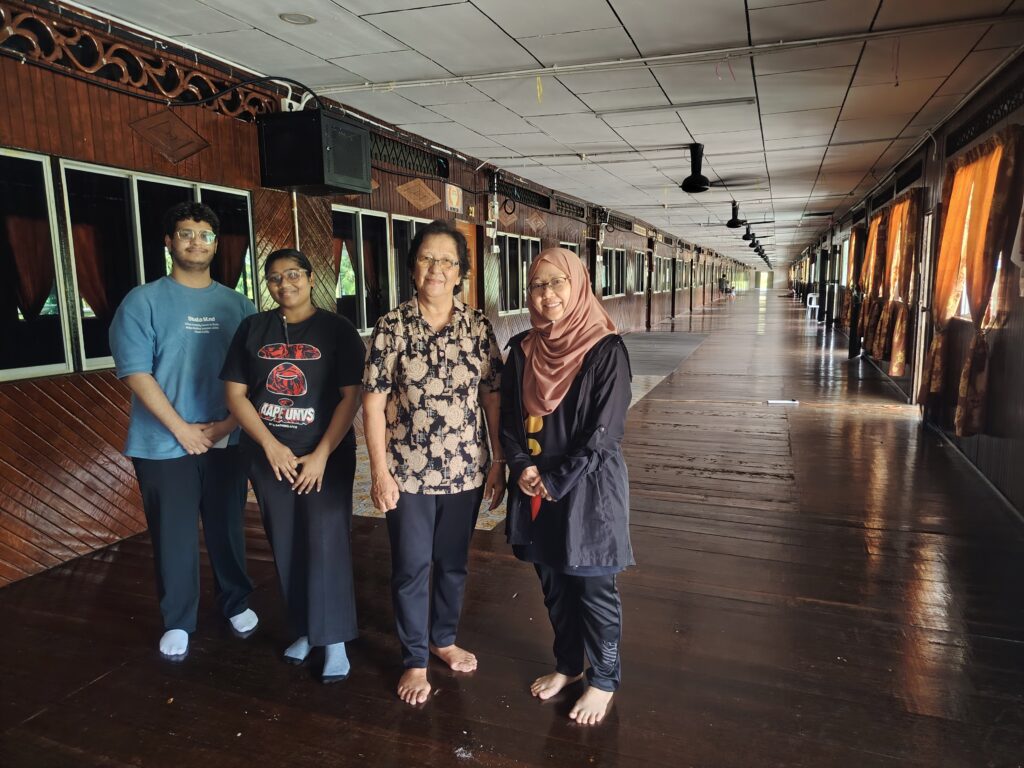
SLUSE-M Field Course Research Proposal Presentations
On 27 February 2025, students participating in the SLUSE-M Master Programme, a collaborative initiative between Universiti Malaysia Sarawak (UNIMAS) and the University of Copenhagen, presented their research proposals to village communities after three days of fieldwork in their assigned villages across Sarawak. The programme, which focuses on sustainable land use and natural resource management, involved 60 students and 16 lecturers from Malaysia, Denmark, and Italy. During the session, six student groups received constructive feedback from village headmen, community members, and resource persons to improve the quality and feasibility of their studies. The presentations marked an important milestone in the annual interdisciplinary field course, preparing the students for data collection and the presentation of their final research proposals on 6 March 2025.
Keywords: SLUSE-M Master Programme; Annual Interdisciplinary Field Course; Presented Research Proposals to Village Communities; Constructive Feedback from Village Headman & Community Members; Sustainable Land Use and Natural Resource Management; Three Days of Fieldwork in Assigned Villages Across Sarawak; Collaborative Initiative between UNIMAS and University of Copenhagen.
Universiti Malaysia Sarawak (UNIMAS)
15.2.6 Sustainable management of land for tourism (educational outreach)
Free
Paid
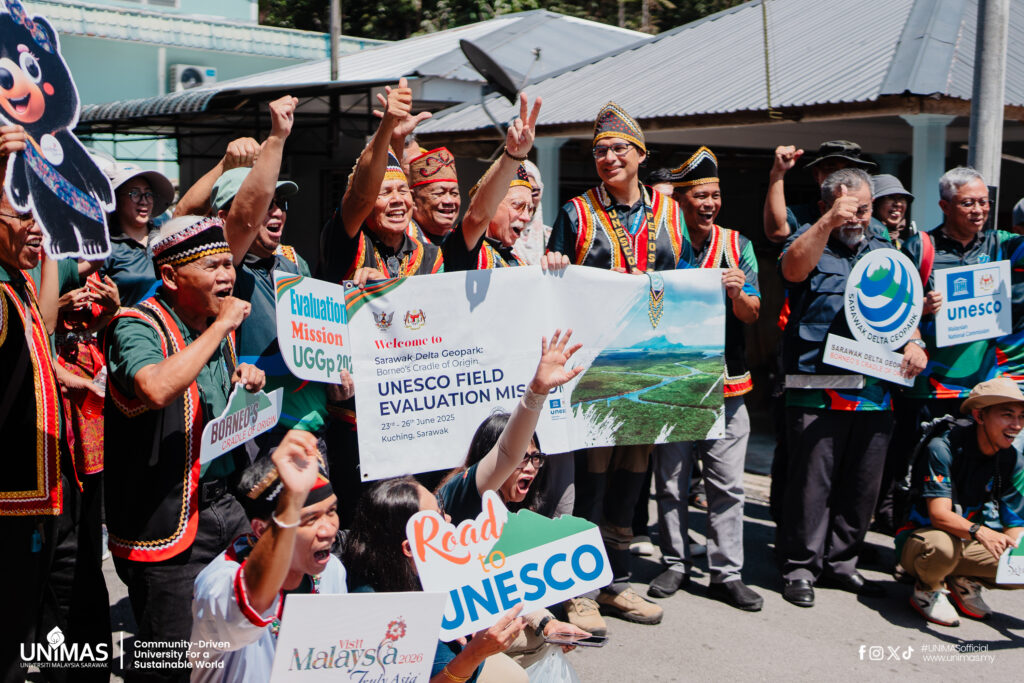
UNIMAS SULAM Project Empowers Kampung Peros Community Towards UNESCO Global Geopark Evaluation
Universiti Malaysia Sarawak (UNIMAS), through the Faculty of Applied and Creative Arts (FSGK) and its Service-Learning (SULAM) framework, led an extensive educational outreach and community-empowerment initiative from October 2024 to June 2025 at Kampung Peros within the Sarawak Delta Geopark. In collaboration with the Forest Department Sarawak, UNESCO evaluators, local youth, and international arts organizations, UNIMAS facilitated capacity-building workshops including smartphone videography, cultural mural co-creation (On Reciprocity), art for well-being (keDIAMan), and digital promotion for the Bung Podad eco-hiking trail. These educational outreach programs directly integrated sustainable land and natural resource management with eco-tourism development, equipping the local community with self-sustaining skills to preserve their terrestrial landscape and cultural heritage. As a result, Kampung Peros achieved official recognition as a "Geopark Village" and "Geopark Partner" exemplifying UNIMAS’s commitment to SDG 15.2.6: Sustainable management of land for tourism (educational outreach) through living-lab education, cross-sector partnership, and sustainable land-use stewardship.
Keywords: Sustainable Management of Land for Tourism; Sarawak Delta Geopark; Geopar Village; Geopark Patner; Bung Podad Eco-Hiking Trail; Service-Learning (SULAM) Framework; Educational Outreach Programs; Capacity-Building Workshops; Preserve Their Terrestrial Landscape and Cultural Heritage; Forest Department Sarawak; UNESCO Evaluators; Living-Lab Education; Sustainable Land-Use Stewardship.
Reference Link: UNIMAS SULAM Project Empowers Kampung Peros Community Towards UNESCO Global Geopark Evaluation
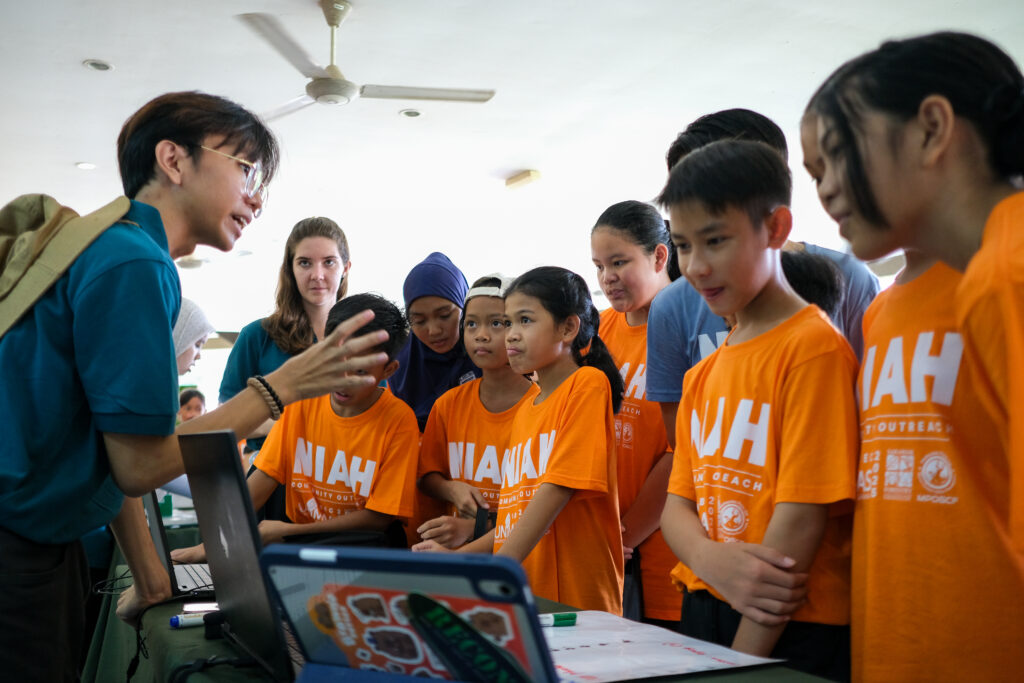
Commemorating the First Anniversary of Niah National Park’s Recognition as a UNESCO World Heritage Site: UNIMAS IBEC Community Program Fosters Biodiversity Awareness with Local Communities
On August 2, 2025, the Institute of Biodiversity and Environmental Conservation (IBEC) at Universiti Malaysia Sarawak (UNIMAS), in collaboration with the Sarawak Forestry Corporation (SFC), organized a high-impact community service program themed “Co-guardians of Niah National Park through Citizen Science” at Niah National Park, Miri, in conjunction with the first anniversary of its recognition as a UNESCO World Heritage Site. Engaging 133 participants including local community leaders, government representatives, teachers, and students from four surrounding schools. The initiative integrated citizen science, educational workshops, and biodiversity conservation training to foster local ecological stewardship and environmental awareness. By combining academic expertise with community-based engagement within a premier protected World Heritage tourism destination, the program promoting the sustainable preservation of terrestrial ecosystems and heritage tourism assets.
Keywords: Protected World Heritage Tourism Destination; UNESCO World Heritage Site; Community Service Program; Educational Workshops; Co-guardians of Niah National Park through Citizen Science; Local Community Leaders, Government Representatives, Teachers and Students from Four Surrounding Schools; Biodiversity Conservation Training; Local Ecological Stewardship; Preservation of Terrestrial Ecosystems and Heritage Tourism Assets; Institute of Biodiversity and Environmental Conservation (IBEC), UNIMAS.
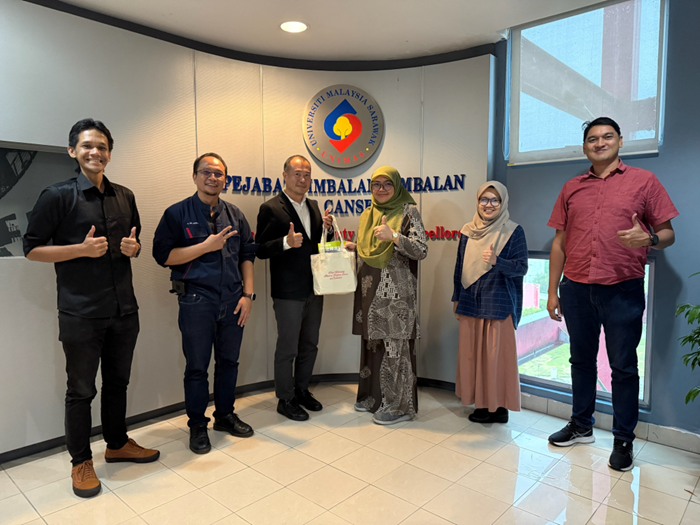
FBE UNIMAS x Universitas Diponegoro Summer Outbound: BIM, Culture & Rural Tourism Adventure!
From 24 to 26 February 2025, the Faculty of Built Environment (FBE), Universiti Malaysia Sarawak (UNIMAS) participated in the Summer Outbound Mobility Course and International Collaboration Community Service at Sekolah Vokasi Universitas Diponegoro (SV UNDIP) in Semarang, Indonesia. The programme brought together students from UNIMAS, Universiti Tun Hussein Onn Malaysia (UTHM), and UNDIP to explore the application of Building Information Modeling (BIM) in rural tourism planning. Through field visits to Tuntang Village, lectures on digital tourism planning, collaborative masterplan development, and cultural activities such as Batik Shibori and Angklung workshops, participants gained practical knowledge, strengthened cross-cultural competencies, and fostered international academic collaboration. A key outcome of the programme was the signing of a Letter of Intent between UNIMAS and UNDIP to enhance future academic and research partnerships.
Keywords: Rural Tourism Planning; Digital Tourism Planning; Building Information Modeling (BIM) in Rural Tourism Planning; Collaborative Masterplan Development; Tuntang Village; Summer Outbound Mobility Course; International Collaboration Community Service; Practical Knowledge and Cross-Cultural Competencies; Faculty of Build Environment (FBE), UNIMAS; Cross-Institutional Academic Collaboration.
Reference Link: FBE UNIMAS x Universitas Diponegoro Summer Outbound: BIM, Culture & Rural Tourism Adventure!

SeJaTi 2025: UNIMAS and Tokai University Strengthen Ties Through Solar Edutourism and Cultural Exchange in Sarawak
From 31 August to 6 September 2025, the Solar Edutourism for Japanese Students (SEJaTi) 2025 programme brought together students and academics from Universiti Malaysia Sarawak (UNIMAS) and Tokai University, Japan, to promote sustainability education, academic exchange, and cultural immersion in Sarawak. Participants gained hands-on exposure to renewable energy through visits to the Batang Ai Hydroelectric Plant, Sarawak’s first floating solar project, and the Centre of Technical Excellence Sarawak (CENTEXS), while also engaging with local communities at Nanga Jela Longhouse and exploring Sarawak’s cultural heritage. The programme strengthened academic and research collaboration between the two universities, fostered intercultural understanding, and provided students with valuable learning experiences related to clean energy, sustainability, community engagement, and international cooperation.
Keywords: Solar Evidence for Japanese Students (SEJaTi) 2025; Promote Sustainability Education; Hands-on Exposure to Renewable Energy; Batang Ai Hydroelectric Plant; Sarawak’s First Floating Solar Project; Engaging with Local Communities at Nanga Jela Longhouse; Academic and Reserach Collaboration; Community Engagement; Cultural Immersion; University Malaysia Sarawak (UNIMAS); Tokai University.
Reference Link: SeJaTi 2025: UNIMAS and Tokai University Strengthen Ties Through Solar Edutourism and Cultural Exchange in Sarawak
15.3 Supporting land ecosystems through action
15.3.1 Sustainable use, conservation and restoration of land (policy)
UNIMAS Environment, Social and Governance Policy
The UNIMAS Environmental, Social and Governance (ESG) Policy demonstrates the University’s commitment to the sustainable use, conservation, and protection of land and natural ecosystems through its environmental sustainability agenda. As part of its strategic focus on biodiversity and environmental conservation, UNIMAS is dedicated to preserving local ecosystems, promoting biodiversity education, and supporting conservation initiatives through the Biodiversity Nexus 2025 Initiative. The policy further emphasizes responsible management of natural resources through water conservation, waste reduction, renewable energy adoption, and environmentally responsible operational practices. In addition, UNIMAS actively engages with local and indigenous communities to promote sustainable livelihoods and environmental stewardship, while strengthening partnerships that support biodiversity conservation and the protection of Sarawak’s unique ecosystems for future generations.
Keywords: UNIMAS Environmental, Social and Governance (ESG) Policy; Commitment to the Sustainable Use, Conservation and Protection of Land and Natural Ecosystems; Biodiversity Nexus 2025 Initiative; Strategic Focus on Biodiversity; Preserving Local Ecosystems; Supporting Conservation Initiatives; Environmentally Responsible Operational Practices; Promote Sustainable Livelihoods and Environmental Stewardship; Protection of Sarawak’s Unique Ecosystems for Future Generations.
Health and Safety Operational Guidelines for Fieldwork or Survey
Universiti Malaysia Sarawak (UNIMAS), through its Health and Safety Operational Guidelines for Fieldwork & Survey, promotes the sustainable use and conservation of natural environments during teaching and research activities. The guidelines require staff and students conducting fieldwork to respect the ecology of study areas, avoid intentional damage to vegetation and natural features, obtain appropriate research permits, and follow responsible field practices that minimize environmental disturbance. By integrating environmental stewardship into field research operations, UNIMAS ensures that scientific activities are conducted responsibly while supporting the protection and long-term sustainability of ecosystems and biodiversity.
Keywords: Health and Safety Operational Guidelines for Fieldwork or Survey; Promotes the Sustainable Use and Conservation of Natural Environments; Respect the Ecology of Study Areas; Avoid Intentional Damage to Vegetation and Natural Features; Obtain Appropriate Research Permits; Minimize Environmental Disturbance; Responsible Field Practices; Integrating Environmental Stewardship into Field Research Operations.
National Policy on Biological Diversity (NPBD) 2022-2030
Universiti Malaysia Sarawak (UNIMAS) supports and aligns its sustainability and biodiversity initiatives with the National Policy on Biological Diversity (NPBD) 2022-2030, which serves as Malaysia’s national framework for the sustainable use, conservation, and restoration of biodiversity and ecosystems. In line with the policy’s goals, UNIMAS promotes biodiversity conservation through research, education, community engagement, and strategic partnerships, while supporting the sustainable management of natural resources, protection of terrestrial ecosystems, restoration of degraded environments, and enhancement of ecosystem resilience. Through its academic programmes, field research, and sustainability initiatives, UNIMAS contributes to national efforts to conserve biodiversity, strengthen environmental stewardship, and advance sustainable development for present and future generations.
Keywords: National Policy on Biological Diversity (NPBD) 2022-2030; Framework for Sustainable Use, Conservation and Restoration of Biodiversity and Ecosystems; Protection of Terrestrial Ecosystems and Restoration of Degraded Environments; Enhancement of Ecosystem Resilience; Sustainable Management of Natural Resources; Strengthen Environmental Stewardship ; Strategic Partnerships; Academic Programmes, Field Research and Sustainability Initiatives.
15.3.2 Monitoring IUCN and other conservation species (policies)
UNIMAS Animal Ethics Policy
Universiti Malaysia Sarawak (UNIMAS) is committed to ensuring that research involving wildlife and other animal species, including species listed by the International Union for Conservation of Nature (IUCN), is conducted in a responsible, ethical, and scientifically sound manner through the implementation of the UNIMAS Animal Ethics Committee (UNIMAS-AEC) Policy. The policy requires all research and teaching activities involving live animals in both laboratory and field settings to obtain ethical approval and adhere to strict standards for animal welfare, humane treatment, monitoring and reporting. Through the oversight of UNIMAS-AEC, research involving biodiversity, wildlife conservation, and threatened species is evaluated to ensure that the use of animals is justified, ethical, and contributes to the understanding, maintenance, and improvement of the natural environment while supporting biodiversity conservation and responsible environmental stewardship.
Keywords: UNIMAS Animal Ethics Committee (UNIMAS-AEC) Policy; Species Listed by the International Union for Conservation of Nature (IUCN); Research Involving Wildlife and Other Animal Species; Threatened Species; Wildlife Conservation; Biodiversity; Strict Standards for Animal Welfare, Humane Treatment, Monitoring and Reporting; Obtain Ethical Approval; Oversight of UNIMAS-AEC; Both Laboratory and Field Settings; Responsible Environmental Stewardship; Maintaining the Natural Environment.
National Policy on Biological Diversity (NPBD) 2022-2030
Universiti Malaysia Sarawak (UNIMAS) supports and aligns its sustainability and biodiversity initiatives with the National Policy on Biological Diversity (NPBD) 2022-2030, which serves as Malaysia’s national framework for the sustainable use, conservation, and restoration of biodiversity and ecosystems. In line with the policy’s goals, UNIMAS promotes biodiversity conservation through research, education, community engagement, and strategic partnerships, while supporting the sustainable management of natural resources, protection of terrestrial ecosystems, restoration of degraded environments, and enhancement of ecosystem resilience. Through its academic programmes, field research, and sustainability initiatives, UNIMAS contributes to national efforts to conserve biodiversity, strengthen environmental stewardship, and advance sustainable development for present and future generations.
Keywords: National Policy on Biological Diversity (NPBD) 2022-2030; Conserve Biodiversity; Protection of Terrestrial Ecosystems; Restoration of Degraded Environments; Enhancement of Ecosystems Resilience; Field Research and Sustainability Initiatives; Sustainable Management of Natural Resources; Strengthen Environmental Stewardship; Strategic Partnerships.
UNIMAS Supports Species Conservation Through Participation in the Workshop to Standardize the Species Conservation Action Plan (SCAP)
On 3 December 2025, the Institute of Biodiversity and Environmental Conservation (IBEC), Universiti Malaysia Sarawak (UNIMAS), participated in the Workshop to Standardize the Species Conservation Action Plan (SCAP) organized by the Sarawak Forestry Corporation (SFC) at Imperial Hotel, Kuching. The workshop brought together key stakeholders to strengthen species conservation efforts in Sarawak through the development and standardization of conservation action plans. UNIMAS’ participation demonstrates its commitment to supporting the monitoring, protection, and conservation management of threatened and protected species, in line with biodiversity conservation priorities and species-focused conservation policies.
Keywords: Species Conservation Action Plan (SCAP); Threatened species; Protected species; Monitoring; Conservation management; Species conservation; Biodiversity conservation; Conservation policies; Species protection; Conservation action plans
UNIMAS Institute of Biodiversity and Environmental Conservation (IBEC)
UNIMAS Advances Conservation Genetics Research to Support Monitoring and Conservation Management of Wildlife Species
From 17 to 25 February 2025, researchers from the Institute of Biodiversity and Environmental Conservation (IBEC), Universiti Malaysia Sarawak (UNIMAS), participated in an attachment programme at the National Wildlife Forensic Laboratory, Department of Wildlife and National Parks (PERHILITAN). Led by Dr. Jeffrine Rovie Ryan Japning and postgraduate student Nur Hidayah Abdullah, the programme formed part of a collaborative research project entitled “Conservation Genetics of Old-World Porcupines in Malaysia: Assessing Genetic Diversity, Population Structure, and Implications for Conservation Management.” Through the application of conservation genetics and wildlife forensic approaches, the project supports the monitoring of wildlife populations, assessment of genetic diversity, and generation of scientific evidence to inform species conservation and management strategies. This initiative demonstrates UNIMAS’ commitment to strengthening biodiversity conservation and supporting evidence-based management of wildlife species through collaborative research and capacity building.
Keywords: Conservation Genetics, Genetic Diversity, Population Structure, Conservation Management, Species Conservation, Wildlife Species Monitoring, Biodiversity Conservation, and Evidence-Based Management.
UNIMAS Institute of Biodiversity and Environmental Conservation (IBEC)
15.3.3 Local biodiversity included in planning and development
UNIMAS Strategic Plan 2021-2025
Universiti Malaysia Sarawak (UNIMAS) demonstrates its commitment to SDG 15.3.3: Local biodiversity included in planning and development through its institutional strategic planning framework. The UNIMAS Strategic Plan 2021–2025 positions Borneo's rich biodiversity as a key strategic asset and highlights the university’s role in optimising the region’s biodiversity through education, research, and international collaborations. The plan further aligns UNIMAS’ strategic priorities with the Sustainable Development Goals (SDGs), ensuring that biodiversity conservation and sustainable development considerations are integrated into the university’s long-term planning and decision-making processes.
Keywords: Borneo's rich biodiversity; Strategic asset; Optimising the region's biodiversity; Biodiversity conservation; Sustainable development; Strategic planning framework; Institutional planning; Planning and decision-making processes; Long-term planning; Development strategies; Aligned with the Sustainable Development Goals (SDGs); Education, research, and international collaborations; Local biodiversity values; Embedded within institutional planning; Integrated into planning and development
UNIMAS Sustainability Masterplan 2021–2025
Universiti Malaysia Sarawak (UNIMAS) demonstrates its commitment to SDG 15.3.3: Local biodiversity included in planning and development through the UNIMAS Sustainability Masterplan 2021–2025. The Masterplan identifies Biodiversity & Environmental Conservation as one of the university's core niche areas and incorporates biodiversity considerations into its sustainability planning framework. Under its SDG 15 initiatives, UNIMAS commits to establishing policies for the maintenance, restoration and sustainable use of land ecosystems, protecting IUCN Red Listed Species, monitoring biodiversity impacts, and reducing the effects of invasive alien species. These initiatives demonstrate that local biodiversity conservation is embedded within the university's planning, policy development, and sustainability strategies.
Keywords: Biodiversity & Environmental Conservation; Borneo's rich biodiversity; Planning related to the implementation and reporting of university sustainability initiatives; SDG 15 initiatives; Maintenance, restoration and sustainability of land ecosystems; Identification, monitoring and protection of IUCN Red Listed Species; Reducing the impact of Alien Species; Sustainability initiatives and directions; University Sustainability Masterplan; Environmental sustainability
UNIMAS Biodiversity Nexus Blueprint
Universiti Malaysia Sarawak (UNIMAS) is developing the Biodiversity Nexus Blueprint, a strategic framework designed to strengthen biodiversity research, conservation, innovation, and sustainable development across Sarawak and Borneo. The blueprint places biodiversity at the centre of research and development efforts by integrating science, policy, communities, industry, and technology to translate biodiversity knowledge into practical solutions. Through a stakeholder engagement session involving government agencies, industry representatives, research institutions, communities, and academics, UNIMAS incorporated diverse perspectives to enhance the relevance, feasibility, and impact of the blueprint. The initiative demonstrates how local biodiversity considerations are embedded into planning and development processes while supporting environmental sustainability, the green economy, and inclusive development in alignment with regional development strategies.
Keywords: Biodiversity Nexus Blueprint; Biodiversity at the centre of research and development efforts; Strategic framework; Biodiversity research; Conservation; Sustainable development; Connect science, policy, communities, industry and technology; Stakeholder engagement session; Government agencies; Environmental sustainability; Green economy; Inclusive development.
Reference Link: UNIMAS Biodiversity Nexus Blueprint

2nd Natural Sciemce and Technology Conference (NaSTeC 2025)
On 10 September 2025, Universiti Malaysia Sarawak (UNIMAS) strengthened the integration of biodiversity into planning and development through the organisation of the 2nd Natural Science and Technology Conference (NaSTeC 2025). The conference highlighted the university's Biodiversity Nexus initiative, which was recognised by the Sarawak Government as a strategic platform for advancing biodiversity conservation, environmental sustainability, and innovation. Through interdisciplinary research, strategic partnerships, and stakeholder engagement involving government agencies, industry, communities, and international partners, UNIMAS promotes the incorporation of biodiversity knowledge into research, policy development, and sustainable economic planning, supporting Sarawak's transformation towards a high-income, green, and digital economy.
Keywords: Biodiversity Nexus; Biodiversity in Planning; Sustainable Development; Environmental Sustainability; Research and Innovation; Policy Development; Strategic Partnerships; Interdisciplinary Research; Stakeholder Engagement; Natural Resource Management; Sustainable Economy; Green Economy; Biodiversity Conservation; Development Planning; Knowledge-Based Decision Making.
Reference Link: 2nd Natural Sciemce and Technology Conference (NaSTeC 2025)

15.3.4 Alien species impact reduction (policies)
National Action Plan on Invasive Alien Species 2021-2025
Universiti Malaysia Sarawak (UNIMAS) supports the implementation of Malaysia’s National Action Plan on Invasive Alien Species (NAP IAS) 2021-2025 through its commitment to biodiversity conservation, environmental research, and evidence-based management of invasive species. In alignment with the national action plan, UNIMAS contributes to efforts aimed at improving awareness and understanding of invasive alien species, strengthening research and monitoring activities, supporting risk assessment and management approaches, and promoting measures to prevent, contain, and reduce the impacts of invasive species on native biodiversity and ecosystems. Through research, teaching, field studies, and collaboration with government agencies and stakeholders, UNIMAS helps advance national objectives to safeguard biodiversity, protect ecosystem integrity, and mitigate the environmental impacts of invasive alien species in Malaysia.
Keywords: National Action Plan on Invasive Alien Species (NAP IAS) 2021-2025; Prevent, Contain and Reduce the Impacts of Invasive Species; Protect Native Biodiversity and Ecosystem Integrity; Safeguard Biodiversity; Risk Assessment and Management Approaches; Strengthening Research and Monitoring Activities; Field Studies; Mitigate Environmental Impacts; Evidence-Based Management; Awareness and Understanding of Invasive Alien Species; Collaboration and Government Agenecies and Stakeholders.
National Policy on Biological Diversity (NPBD) 2022-2030
Universiti Malaysia Sarawak (UNIMAS) supports and aligns its sustainability and biodiversity initiatives with the National Policy on Biological Diversity (NPBD) 2022-2030, which serves as Malaysia’s national framework for the sustainable use, conservation, and restoration of biodiversity and ecosystems. In line with the policy’s goals, UNIMAS promotes biodiversity conservation through research, education, community engagement, and strategic partnerships, while supporting the sustainable management of natural resources, protection of terrestrial ecosystems, restoration of degraded environments, and enhancement of ecosystem resilience. Through its academic programmes, field research and sustainability initiatives, UNIMAS contributes to national efforts to conserve biodiversity, strengthen environmental stewardship, and advance sustainable development for present and future generations.
Keywords: National Policy on Biological Diversity (NPBD) 2022-2030; Enhancement of Ecosystem Resilience; Protection of Terrestrial Ecosystems; Restoration of Degraded Environments; Sustainable Management of Natural Resources; Field Research and Sustainability Initiatives; Strengthen Environmental Stewardship; Strategic Partnership.
15.3.5 Collaboration for shared land ecosystems
State of Nature Conservation in Malaysia Symposium
From 25-27 November 2025, the Institute of Biodiversity and Environmental Conservation (IBEC), Universiti Malaysia Sarawak (UNIMAS) participated in the State of Nature Conservation in Malaysia Symposium organised by the Malaysian Nature Society at Dorsett Grand Subang, Kuala Lumpur. The symposium brought together conservationists, researchers, and practitioners from diverse institutions to exchange knowledge, discuss conservation priorities, and strengthen collaborative efforts for protecting Malaysia’s natural heritage. Through its participation, IBEC contributed to national dialogue on biodiversity conservation and ecosystem management, fostering partnerships and collective action that support the conservation and sustainable management of shared land ecosystems.
Keywords: Collaboration for Shared Land Ecosystems; Multi-stakeholder Collaboration; Biodiversity Conservation; Conservation Partnerships; Ecosystem Management; Nature Conservation; Knowledge Exchange; Scientific Collaboration; Conservation Network; Environmental Stewardship; Stakeholder Engagement; Natural Heritage Protection; Biodiversity Research; Collective Action; Conservation Symposium.
UNIMAS Institute of Biodiversity and Environmental Conservation (IBEC)
International Orangutan Day Celebration 2025
The International Orangutan Day Celebration 2025 highlights the importance of collaboration between conservation agencies and academic institutions in protecting Borneo's biodiversity and shared forest ecosystems. Through awareness programmes, knowledge exchange, and community engagement, the partnership between Sarawak Forestry Corporation (SFC), the Institute of Biodiversity and Environmental Conservation (IBEC), and Universiti Malaysia Sarawak (UNIMAS) strengthens collective efforts to conserve orangutans and their habitats. Such initiatives support sustainable land stewardship, biodiversity protection, and environmental education
Keywords: Shared Land Ecosystems; Biodiversity Conservation; Orangutan Conservation; Habitat Protection; Forest Ecosystems; Environmental Awareness; Conservation Partnership; Stakeholder Collaboration; Sustainable Land Management; Ecosystem Resilience; Environmental Education; Knowledge Exchange; Community Engagement; Nature Conservation; Borneo Biodiversity; Wildlife Protection.
UNIMAS Institute of Biodiversity and Environmental Conservation (IBEC)
Wilmar and UNIMAS Deepen Partnership to Advance Biodiversity Research in Sarawak
On 27 August 2025, Universiti Malaysia Sarawak (UNIMAS) collaborates with Wilmar Plantations Sdn Bhd, through its subsidiary Saremas Sdn Bhd, to advance biodiversity conservation and sustainable management of shared land ecosystems in Sarawak. Through a formal Memorandum of Agreement, both parties conduct biodiversity surveys in conservation areas within oil palm plantations, focusing on threatened medium- to large-sized mammals and bird species. The collaboration promotes scientific research, knowledge sharing and evidence-based conservation practices to improve understanding of wildlife distribution, habitats and biodiversity hotspots. It also supports the identification of potential conservation corridors within plantation landscapes, while recognising the relationship between local communities and natural resources surrounding High Conservation Value forests. This partnership demonstrates cooperation between academia and the private sector to protect biodiversity and support the long-term sustainability of land ecosystems.
Keywords: Formal Memorandum of Agreement (MoA); Collaboration between UNIMAS and Wilmar; Biodiversity conservation; Shared land ecosystems; Biodiversity surveys; Conservation areas within oil palm plantations; Conservation corridors; High Conservation Value (HCV) forests; Scientific research and knowledge sharing.
Reference Link: Wilmar and UNIMAS Deepen Partnership to Advance Biodiversity Research in Sarawak
15.4 Land sensitive waste disposal
15.4.1 Water discharge guidelines and standards
Sarawak Water Discharge Guidelines and Standards
In line with Sarawak's environmental sustainability commitment, UNIMAS strictly adheres to the Sarawak Water Discharge Guidelines and Standards across all operational, academic, and research activities. By maintaining rigorous water quality management, the university ensures its effluent discharge consistently meets regulatory standards for safeguarding local aquatic ecosystems and reinforcing its dedication to environmental stewardship.
Keyword: Sarawak Water Discharge Guidelines and Standards; Strictly Adheres; Operational, Academic, and Research Activities; Rigorous Water Quality Management; Effluent Discharge Consistently Meets Regulatory Standards; Safeguarding Local Aquatic Ecosystems; Environmental Stewardship; Environmental Sustainability Commitment.
Reference Link: Sarawak Water Discharge Guidelines and Standards
Environmental Quality (Sewage) Regulations 2009
Universiti Malaysia Sarawak (UNIMAS) strictly adheres to Malaysia's Environmental Quality (Sewage) Regulations 2009 to govern its campus wastewater and sewage treatment operations. By complying with these national guidelines and standards, UNIMAS ensures that all effluent discharges from its facilities meet required environmental thresholds, safeguarding local water resources and supporting sustainable campus environmental management.
Keywords: Environmental Quality (Sewage) Regulations 2009; Strictly Adheres; Campus Wastewater and Sewage Treatment Operations; Effluent Discharges from Its Facilities; Meet Required Environmental Thresholds; Safeguarding Local Water Resources; Sustainable Campus Environmental Management.
Environmental Quality (Industrial Effluent) Regulations 2009
Universiti Malaysia Sarawak (UNIMAS) strictly adheres to Malaysia's Environmental Quality (Industrial Effluent) Regulations 2009 to govern industrial and laboratory wastewater management. By complying with these national standards, UNIMAS ensures that all regulated effluent discharges from its campus facilities meet strict environmental quality criteria, preventing water pollution and supporting sustainable environmental stewardship.
Keywords: Environmental Quality (Industrial Effluent) Regulations 2009; Industrial and Laboratory Wastewater Management; Strictly Adheres; Regulated Effluent Discharges; Meet Strict Environmental Quality Criteria; Preventing Water Pollution; Sustainable Environmental Stewardship.
15.4.2 Policy on plastic waste reduction
Malaysia Roadmap Towards Zero Single Use Plastics 2018-2030
Universiti Malaysia Sarawak (UNIMAS) aligns its campus sustainability initiatives with Malaysia’s Roadmap Towards Zero Single-Use Plastics (2018–2030) to systematically restrict plastic pollution. By adopting the framework's phased guidelines, UNIMAS implements proactive measures across its campus such as restricting single-use plastics, encouraging eco-friendly alternatives, and raising awareness among staff and students to foster a circular economy and support national targets for a plastic-free environment.
Keywords: Malaysia’s Roadmap Towards Zero Single-Use Plastics (2018–2030); Policy on Plastic Waste Reduction; Systematically Restrict Plastic Pollution; Adopting the Framework's Phased Guidelines; Restricting Single-Use Plastics; Encouraging Eco-Friendly Alternatives; Foster a Circular Economy; Support National Targets for a Plastic-Free Environment.
UNIMAS ESG Policy
Grounded in its Environmental, Social, and Governance (ESG) Policy, Universiti Malaysia Sarawak (UNIMAS) formally integrates robust waste management practices into its operational framework to tackle plastic pollution. Under the policy's environmental responsibility directives, UNIMAS enforces measurable reduction and recycling targets- actively phasing out single-use plastics and promoting sustainable material alternatives across campus to fulfill its institutional commitment to circular economy principles and long-term ecological sustainability.
Keywords: UNIMAS Environmental, Social, and Governance (ESG) Policy; Tackle Plastic Pollution; Robust Waste Management Practices; Operational Framework; Measurable Reduction and Recycling Targets; Actively Phasing Out Single-Use Plastics; Promoting Sustainable Material Alternatives; Circular Economy Principles and Long-Term Ecological Sustainability.
UNIMAS ecobrick initiative turns plastic waste into tools for sustainability
Complementing its campus sustainability measures, Universiti Malaysia Sarawak (UNIMAS) actively drives hands-on plastic waste reduction through its innovative ecobrick initiative. By packing non-recyclable soft plastics into bottles to craft durable functional furniture and expanding these educational workshops to surrounding schools, UNIMAS successfully diverts significant plastic waste from landfills while empowering the community to practice circular economy solutions.
Keywords: Ecobrick Initiative; Plastic Waste Reduction; Diverts Significant Plastic Waste from Landfills; Non-Recyclable Soft Plastics; Circular Economy Solutions; Campus Sustainability Measures; Education Workshops; Empowering the Community.
Reference Link: UNIMAS ecobrick initiative turns plastic waste into tools for sustainability

15.4.3 Policy on hazardous waste disposal
Hazardous Waste Guideline
Universiti Malaysia Sarawak (UNIMAS) strictly enforces its specialized Hazardous Waste Guideline across its faculties, such as the Faculty of Resource Science and Technology (FRST) to govern the safe handling, management and disposal of hazardous waste. By adhering to these institutional protocols, UNIMAS ensures that chemical, biological and scheduled wastes generated from laboratories and research facilities are managed responsibly, preventing environmental contamination and protecting campus health and safety.
Keywords: Hazardous Waste Guideline; Policy on Hazardous Waste Disposal; Management and Disposal of Hazardous Waste; Chemical, Biological, and Scheduled Wastes; Faculty of Resource Science and Technology (FRST); Laboratories and Research Facilities; Strictly Enforces; Institutional Protocols; Safe Handling, Management and Disposal; Preventing Environmental Contamination and Protecting Campus Health and Safety.
UNIMAS Campus Wide Waste Management Handbook
UNIMAS demonstrates its commitment to responsible hazardous waste management through the implementation of the UNIMAS Campus-Wide Waste Management Handbook (2025), which establishes comprehensive procedures for the handling, storage, monitoring, and disposal of scheduled waste generated from laboratories, clinics, and research centres. Scheduled waste is classified according to Malaysia’s Environmental Quality (Scheduled Wastes) Regulations 2005 and includes toxic, flammable, corrosive, and reactive substances. The university requires proper waste segregation, labelling with DOE Schedule Codes, maintenance of scheduled waste inventories, storage in secure chemical-resistant containers with spill-control measures, and disposal through licensed DOE contractors using established documentation procedures (Schedule 2, 5, and 7). Regular inspections, waste audits, compliance monitoring, staff training, and emergency response protocols for chemical spills further strengthen the university’s efforts to protect human health and the environment from hazardous waste risks.
Keywords: Hazardous Waste Management; Scheduled Waste; Environmental Quality (Scheduled Wastes) Regulations 2005; Waste Segregation; Waste Inventory; DOE Schedule Codes; Chemical-Resistant Storage; Spill Containment; Licensed DOE Contractors; Schedule 2, 5, and 7; Regulatory Compliance; Waste Audits; Compliance Monitoring; Chemical Spill Response; Safety Training; Laboratory Waste; Clinical Waste; Environmental Protection; Human Health Protection; Sustainable Waste Management.
Reference Link: UNIMAS Campus Wide Waste Management Handbook
Environmental Quality (Scheduled Waste) Regulations 2005
Universiti Malaysia Sarawak (UNIMAS) bases its internal waste management and disposal protocols on Malaysia’s Environmental Quality (Scheduled Wastes) Regulations 2005. By aligning its institutional guidelines with these national regulations, UNIMAS ensures that all hazardous and scheduled wastes generated across its laboratories and research facilities are systematically identified, handled, stored, and disposed of in full compliance with legal and environmental safety standards.
Keywords: Environmental Quality (Scheduled Wastes) Regulations 2005; Policy on Hazardous Waste Disposal; Internal Waste Management and Disposal Protocols; Hazardous and Scheduled Wastes; Laboratories and Research Facilities; Systematically Identified, Handled, Stored, and Disposed Of; Full Compliance with Legal and Environmental Safety Standards; Bases Its Internal Protocols; Aligning Its Institutional Guidelines.