SDG 11 : Sustainable Cities and Communities
SDG 11 “Sustainable Cities and Communities” aims to build inclusive, secure, resilient, and sustainable cities and communities by improving urban planning, infrastructure, and essential services with environmental sustainability.
At UNIMAS we are dedicated to advancing SDG 11 by championing sustainable and inclusive cities and communities. UNIMAS places a strong emphasis on nurturing local arts and preserving cultural heritage within campus and to the community outside. UNIMAS actively engages in activities that celebrate and preserve local cultural traditions, encourage a deep appreciation for the arts.
11.2 Support of arts and heritage
11.2.1 Public access to buildings
Universiti Malaysia Sarawak (UNIMAS) provides free access to all significant university buildings and facilities, supporting educational, cultural and institutional activities. These facilities promote learning, knowledge sharing and community engagement, subject to applicable access policies and security requirements.
Established in 1994, Universiti Malaysia Sarawak (UNIMAS) occupies a total area of approximately 7.84 km² (7,842,808 m²), comprising the UNIMAS West Campus and UNIMAS East Campus.
| No. | Building Name |
|---|---|
| 1 | Dewan Tunku Abdul Rahman Putra (DeTAR Putra) |
| 2 | Tun Tuanku Haji Bujang Arena / UNIMAS Sports Centre |
| 3 | Digital Experience Hub, PeTARY |
| 4 | Chancellery Building |
| 5 | Pusat Islam Tun Abang Salahuddin (PITAS) |
| 6 | East Campus Hall |
| 7 | Perpustakaan Tun Abdul Rahman Ya'kub (PeTARY) |
*Table shows some of the buildings with public access at UNIMAS.
TRACE 2025: A Job-Matching Platform for Graduates Located at DeTAR Putra UNIMAS
DeTAR Putra is a major event venue at UNIMAS that accommodates conferences, career exhibitions, cultural programmes and university ceremonies involving external participants. On 17–18 June 2025, the venue hosted the Talent Recruitment and Career Exhibition (TRACE 2025), which brought together more than 50 companies and organisations and welcomed students, graduates and job seekers from across Sarawak. The event demonstrates how UNIMAS makes a significant campus building accessible to the wider community for employment opportunities, professional networking and public engagement. This supports SDG 11.2.1 – Public Access to All Significant Buildings by providing documented evidence of external visitors accessing a university venue for a public-facing event.
Keywords: Public Access to Significant Buildings; DeTAR Putra; TRACE 2025; Career Exhibition; Community Engagement; Employment Opportunities; Industry Collaboration.
Reference Link: TRACE 2025 Perkasa Modal Insan, Buka Peluang Kerjaya Anak Sarawak
STEM Educational Program: Exploring Science Through Experiments and Visit to Faculty of Engineering UNIMAS
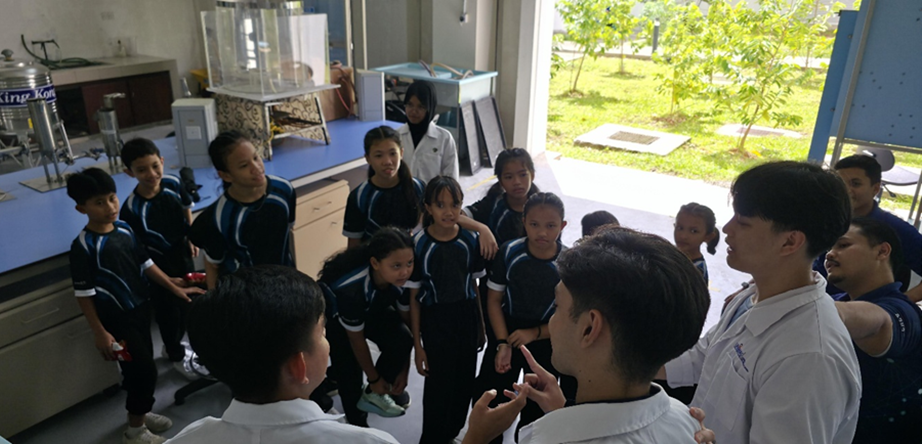
On 22 October 2025, Faculty of Engineering Universiti Malaysia Sarawak (UNIMAS) welcomed 40 students and seven teachers from Sekolah Kebangsaan Tringgus, Bau, for a STEM educational programme. The participants accessed several university facilities, including the STEM Laboratory, Chemical Engineering building, Water Treatment Laboratory, Bioprocess Laboratory, Fluid Mechanics Laboratory, and Computer Laboratory. They also visited the Tun Abdul Rahman Ya'kub Library (PeTARY) and UNIMAS Sports Centre during a guided campus tour. This programme demonstrates how UNIMAS provides external school groups with access to significant university buildings and educational facilities for learning and community engagement. It supports SDG 11.2.1 – Public Access to All Significant Buildings by documenting an organised visit to multiple academic and recreational facilities on campus
Keywords: Public Access to University Buildings; Campus Tours; Faculty of Engineering; PeTARY Library; STEM Laboratories; Sports Centre; Educational Outreach; Community Engagement.
Reference Link: UNIMAS Gazette | SK Tringgus, Bau Visit To Faculty of Engineering, UNIMAS
UNIMAS Hosts “Malam Puisi Lestari Alam” to Promote Environmental Awareness
UNIMAS hosted Malam Puisi Lestari Alam at Arena Gemilang, DeTAR Putra, in collaboration with Persatuan Sahabat Sungai Malaysia, Dewan Bahasa dan Pustaka (DBP) and Persatuan Penulis Nasional Malaysia (PENA). The event brought together more than 700 students and invited guests for poetry recitals, cultural performances and discussions on environmental conservation. By hosting participants from external organisations and the wider community in a university event venue, UNIMAS demonstrated the use of its significant buildings for public cultural and educational activities. This supports SDG 11.2.1 by providing evidence of access to DeTAR Putra for community engagement, cultural appreciation and environmental awareness programmes.
Keywords: Public Access to Significant Buildings; DeTAR Putra; Arena Gemilang; Cultural Events; Community Engagement; Environmental Awareness; Arts and Heritage.
Reference Link: UNIMAS Hosts “Malam Puisi Lestari Alam” to Promote Environmental Awareness

11.2.2 Public access to libraries
Universiti Malaysia Sarawak (UNIMAS) promotes public access to knowledge, educational resources, and lifelong learning through Perpustakaan Tun Abdul Rahman Ya’kub (PeTARY). The library system comprises PeTARY Main at the West Campus, PeTARY Medical and PeTARY Pre-University Library at the East Campus. These facilities provide access to books, academic publications, research materials, and study spaces that support education, research, and knowledge development.
PeTARY Main occupies approximately 22,600 square metres across five floors, offering a range of library facilities and information services. These include book collections, reading and study areas, computer facilities, circulation services, reference assistance and interlibrary loan services. The facilities enable users to consult printed materials, conduct research, access information and engage in independent or collaborative learning. Meanwhile, PeTARY Medical provides specialised resources for medical and health sciences. At the same time, the PeTARY Pre-University Library accommodates approximately 213 users and offers books, reading materials and study facilities for pre-university students and staff.
Reference Link: PeTARY Facilities
In addition to its physical facilities, PeTARY provides digital services that broaden access to educational resources. The PeTARY Online Public Access Catalogue (OPAC) allows users to search for books, journals and other library materials. Its electronic collections and open-access materials support the discovery of digital publications, scholarly literature and research resources. The UNIMAS Institutional Repository also provides access to the university's research outputs, supporting the dissemination and preservation of academic knowledge.
Reference Link: Petary UNIMAS, Open Educational Resources

PeTARY further extends its services beyond the university through a library membership programme that allows eligible external users, including alumni, government officers, students from other universities, researchers and members of the public, to access library resources and facilities, subject to membership terms and conditions. This approach broadens opportunities for the wider community to use academic information and educational materials.
Through its physical facilities, specialised collections, digital platforms and external membership opportunities, PeTARY supports inclusive access to books, publications and educational resources. These initiatives contribute to SDG 11.2.2 – Public Access to Libraries by enabling the university community and eligible members of the public to access information, develop knowledge and pursue lifelong learning.
Inclusive Access to Library Resources through PeTARY Membership
Perpustakaan Tun Abdul Rahman Ya’kub (PeTARY), Universiti Malaysia Sarawak (UNIMAS), promotes public access to educational and information resources through its library membership programme. The programme is open not only to UNIMAS students and staff but also to external users, including alumni, government officers, students from other universities, researchers and members of the public.
Through various membership categories, external users can access library facilities and resources, with annual membership fees ranging from RM50 to RM1,000 depending on the membership category and services required. Certain eligible groups, such as pensioners, are also entitled to complimentary membership. These different membership options provide opportunities for the wider community to access academic information, reference materials and learning resources.
By extending library services to external users through structured and affordable membership arrangements, PeTARY contributes to improving public access to knowledge and educational facilities. This initiative supports SDG 11.2.2 – Public access to libraries, by providing the community with opportunities to utilise university library resources for learning, research and knowledge development.
Keywords: Public Library Access; Inclusive Library Services; PeTARY Membership; Access to Knowledge; Educational Resources; Community Learning; SDG 11.2.2
Reference Link: New Membership PeTARY , PeTARY Membership


Information Literacy and Reference Services through PeTARY
Perpustakaan Tun Abdul Rahman Ya’kub (PeTARY), Universiti Malaysia Sarawak (UNIMAS), provides reference services and user education programmes to improve information literacy, research capabilities and effective utilisation of library resources. These services aim to equip students, academic staff and other library users with the knowledge and skills needed to locate, evaluate and use information effectively for academic and professional purposes.
Through its Information Literacy Class, PeTARY offers several training modules tailored to different user groups:
1. Introduction to the Libraries – Introduces new students and staff to library facilities, services, operating hours, rules and regulations.
2. LibrARY OneSearch – Guides users in using the library's search platform to locate books, publications and other library collections through basic and advanced search techniques.
3. Finding Information for Academic Writing – Provides guidance on research fundamentals and the effective use of electronic resources to identify relevant academic information.
4. Finding Information on the Web – Develops students' ability to identify reliable websites and evaluate online information using five evaluation criteria.
5. Citing References and Plagiarism – Educates users on appropriate referencing practices, acknowledging other people's ideas and research findings, and understanding how to avoid plagiarism.
In addition to structured training sessions, PeTARY provides consultation services through its Reference Librarians, who assist users in locating information and using library resources and research tools efficiently. These consultations are available during designated office hours, providing further support for users who require assistance with information searches and academic research.
Through these information literacy programmes and reference services, PeTARY strengthens users' ability to access, evaluate and utilise educational information independently. This initiative supports SDG 11.2.2 – Public Access to Libraries, by improving access not only to library books and publications but also to information guidance, research support and educational services that promote inclusive learning and lifelong knowledge development.
Reference Link: Information Literacy Class | USER EDUCATION

UNIMAS Becomes Malaysia's First Public University to Establish Digital Experience Hub
Universiti Malaysia Sarawak (UNIMAS) launched the Digital Experience Hub in collaboration with Google for Education at the Tun Abdul Rahman Ya’kub Library (PeTARY) on 15 August 2025. The hub provides digital training and certification opportunities, promotes access to Google technologies and showcases digital solutions and innovations. Its initiatives are designed to benefit UNIMAS personnel and extend learning opportunities to the wider community. By using its main library as a venue for digital learning and knowledge-sharing initiatives, UNIMAS demonstrates how library facilities can support educational access beyond the university community. This supports SDG 11.2.2 – Public Access to Libraries by illustrating the role of PeTARY as a platform for community learning and digital inclusion, alongside its conventional library services.
Keywords: Public Access to Libraries; PeTARY; Digital Experience Hub; Digital Literacy; Community Learning; Google for Education; Knowledge Sharing; Digital Inclusion
Reference Link: UNIMAS Becomes Malaysia's First Public University To Establish Digital Experience Hub
PeTARY Open Day 2025
Perpustakaan Tun Abdul Rahman Ya’kub (PeTARY) held its Open Day from 3 to 5 December 2025, providing an opportunity for visitors to explore the library's facilities, study spaces and information resources. Activities and facilities highlighted by attendees included individual study cubicles, group discussion rooms, quiet study areas, lounge spaces and access to online library databases. The event encouraged engagement with the library's learning environment and familiarised participants with its services. This supports SDG 11.2.2 – Public Access to Libraries by demonstrating an organised opportunity for users to explore and engage with PeTARY's resources and facilities. However, the available reports do not confirm whether the event was open to the general public or limited to the university community, so official confirmation of visitor eligibility would strengthen the evidence.
Keywords: Public Access to Libraries; PeTARY Open Day 2025; Library Facilities; Information Resources; Study Spaces; Digital Library Services; Learning Environment.
Reference Link: PETARY OPEN DAY 2025 | PeTARY Open Day 2025 TikTok Video , PeTARY Open Day Visit

PeTARY Welcomes Educational Visit from SMK Kalaka, Roban
On 8 September 2025, Perpustakaan Tun Abdul Rahman Ya’kub (PeTARY), Universiti Malaysia Sarawak (UNIMAS), welcomed 43 students and 14 teachers from SMK Kalaka, Roban, for an educational visit. During the visit, participants explored the library’s facilities and services, learned effective information-search techniques and took part in interactive information literacy activities. The programme helped students strengthen their information-seeking skills, discover learning resources and appreciate the importance of knowledge and lifelong learning. This initiative supports SDG 11.2.2 – Public Access to Libraries by demonstrating how UNIMAS facilitates access to its library facilities and educational resources for students and teachers from an external secondary school. It also reflects the university’s commitment to educational outreach, inclusive learning opportunities and knowledge sharing with the wider community.
Keywords: Public Access to Libraries; PeTARY; Educational Visit; SMK Kalaka; Information Literacy; Library Services; Educational Outreach; Knowledge Sharing; Lifelong Learning.
11.2.3 Public access to museums
Universiti Malaysia Sarawak (UNIMAS) supports public engagement with educational, scientific and cultural facilities through its museums, galleries and organised educational visits. These facilities provide opportunities for students, researchers and external visitors to explore scientific collections, appreciate creative works and expand their understanding of Malaysia's natural and cultural heritage.
Among UNIMAS's key museum and gallery facilities are:
| No. | Museums and Galleries |
|---|---|
| 1. | UNIMAS Zoology Museum |
| 2. | Anatomy and Pathology Museum |
| 3. | Mortuary, Fakulti Perubatan dan Sains Kesihatan |
| 4. | Kanvas Lestari, Pusat Kelestarian Universiti |
| 5. | Museum of Aquatic |
| 6. | Gallery of Applied and Creative Arts |
1. UNIMAS Zoology Museum
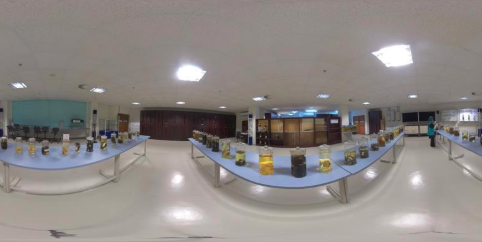
The UNIMAS Zoology Museum serves as an educational and research resource showcasing various animal specimens and biodiversity collections. It supports teaching, scientific learning, and public awareness of wildlife, particularly the importance of understanding and conserving animal diversity.
2. Anatomy and Pathology Museum UNIMAS
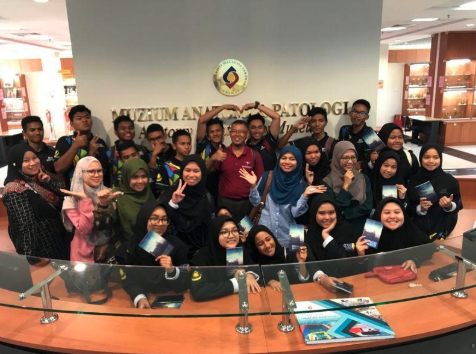
The Anatomy and Pathology Museum provides educational resources for medical and health sciences students through anatomical specimens and pathological materials. It supports practical learning, research and a better understanding of human anatomy, diseases and medical conditions.
3. Mortuary, Faculty of Medicine and Health Sciences UNIMAS
The Mortuary at the Faculty of Medicine and Health Sciences provides essential facilities for medical education, anatomical studies, and practical training. It supports the development of medical knowledge and professional competencies among future healthcare practitioners.
4. Kanvas Lestari, University Sustainability Centre UNIMAS
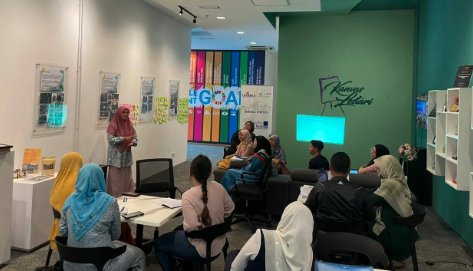
Kanvas Lestari is an exhibition and knowledge-sharing space at the University Sustainability Centre (USC), UNIMAS. It showcases the university's sustainability initiatives, community engagement programmes and environmental efforts. The gallery also provides opportunities for visitors and external delegations to learn about sustainable development and UNIMAS' contributions to society and the environment.
5. Museum of Aquatic UNIMAS
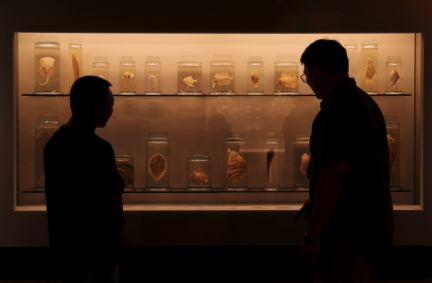
The Museum of Aquatic serves as an educational resource highlighting aquatic life and biodiversity. It complements UNIMAS' teaching and research activities in aquatic sciences, marine biology and freshwater ecosystems, while promoting awareness of aquatic biodiversity and the importance of conserving water-based environments.
6. Gallery of Applied and Creative Arts UNIMAS
The Gallery of Applied and Creative Arts provides a platform for exhibiting artworks, creative projects and artistic expressions by students and members of the university community. Through exhibitions and artistic activities, the gallery encourages creativity, cultural appreciation and public engagement with visual arts and creative heritage.
UNIMAS Hosts Cultural Exchange with Japanese Students
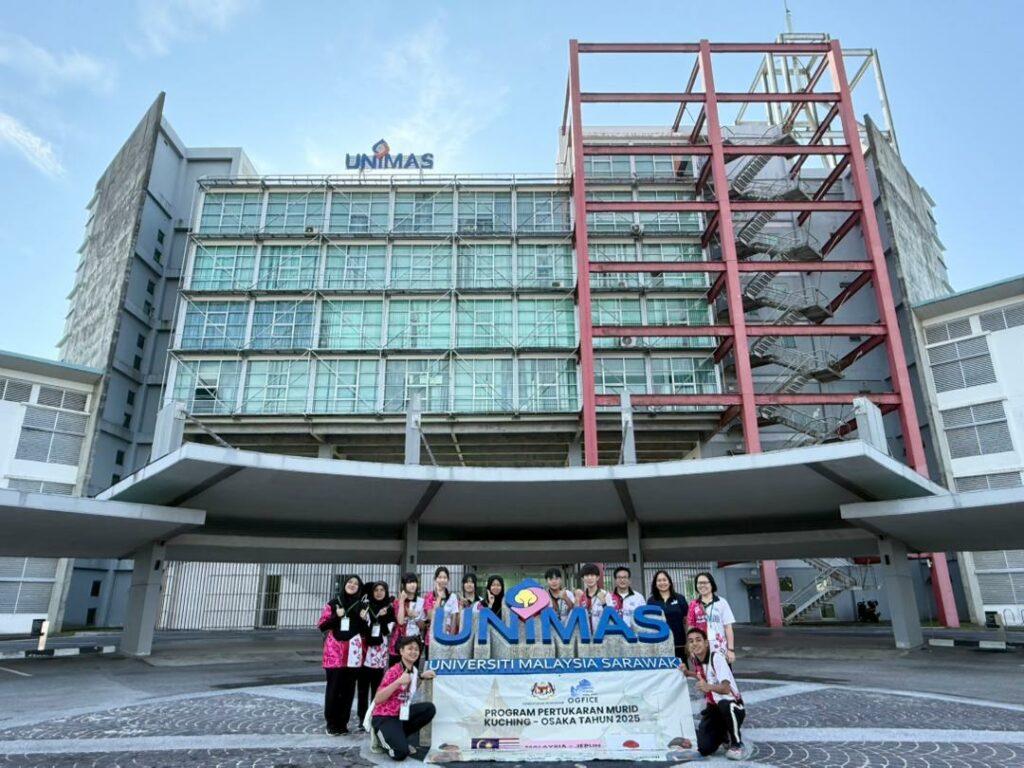
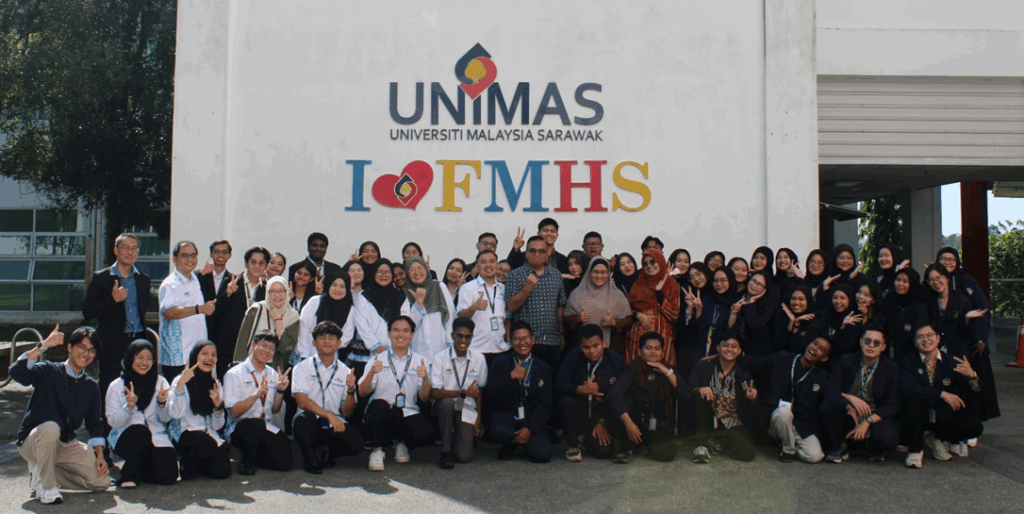
On 4 September 2025, Universiti Malaysia Sarawak (UNIMAS) welcomed five students and two officers from Osaka Prefectural Suito Kokusai Junior and Senior High School, Japan, for a cultural exchange programme. The programme included a visit to the UNIMAS Zoology Museum, alongside a tour of the Tun Abdul Rahman Yaakub Library and other campus activities. The museum visit provided external visitors with an opportunity to explore zoological collections and experience the university's educational resources. This initiative supports SDG 11.2.3 – Public Access to All Museums and Galleries by demonstrating access to a university museum through an organised educational and international cultural exchange programme.
Keywords: Public Access to Museums; Zoology Museum; International Cultural Exchange; Educational Visits; Knowledge Sharing; Museum-Based Learning.
Reference Link: UNIMAS Hosts Cultural Exchange with Japanese Students — 4 September 2025
The Museum Where Students Discovered the Reality of Pathology
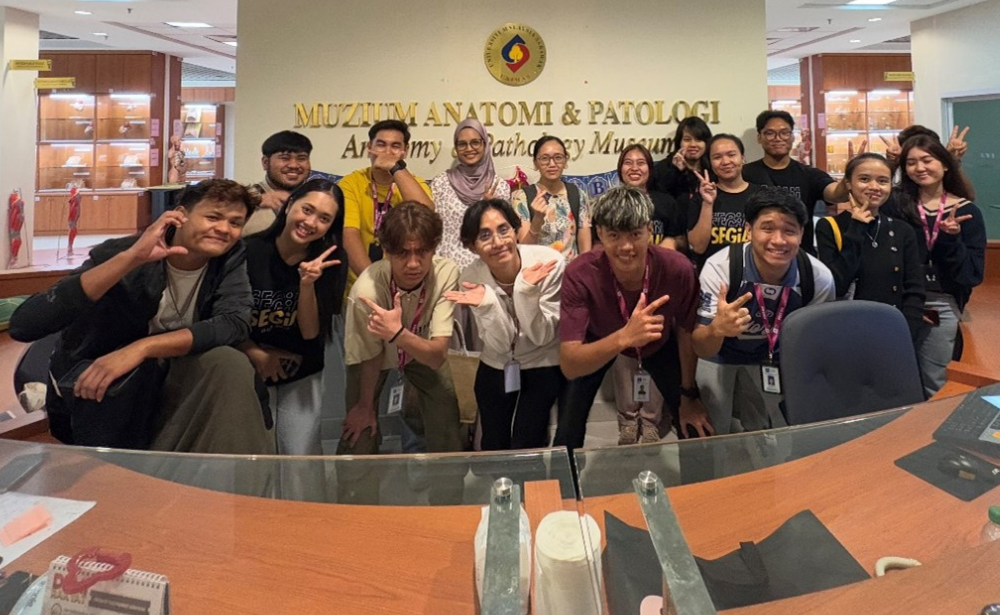
On 17 April 2025, fifteen students and two lecturers from SEGi College Sarawak visited the Anatomy and Pathology Museum at the Faculty of Medicine and Health Sciences, UNIMAS. The visit enabled students from the Diploma in Medical Laboratory Technology and Diploma in Occupational Safety and Health programmes to explore anatomical specimens, learn about specimen processing and participate in interactive question-and-answer sessions. The experience connected classroom theory with practical medical knowledge. This activity directly supports SDG 11.2.3 by demonstrating that UNIMAS provides external educational institutions with access to its museum facilities for learning and knowledge sharing.
Keywords: Public Access to Museums; Anatomy and Pathology Museum; External Educational Visits; Medical Education; Experiential Learning; Academic Collaboration.
Reference Link: The Museum Where Students Discovered the Reality of Pathology
From Pontianak to Samarahan: UNIMED and IMKU Forge Cross-Border Collaborations
On 23 June 2025, the UNIMAS Medical Society hosted a study visit by members of Ikatan Mahasiswa Kedokteran Universitas Tanjungpura (IMKU), Indonesia. During the visit, the delegation toured several facilities at the Faculty of Medicine and Health Sciences, including the UNIMAS Anatomy Museum, Malaria Research Centre and Clinical Simulation Centre. The museum visit introduced external international visitors to UNIMAS's medical education resources and research environment. This initiative contributes to SDG 11.2.3 by providing access to university museum facilities through organised educational visits and cross-border academic engagement.
Keywords: Public Access to Museums; Anatomy Museum; International Delegation; Educational Outreach; Medical Education; Cross-Border Collaboration.
Reference Link: From Pontianak to Samarahan: UNIMED and IMKU Forge Cross-Border Collaborations – UNIMAS Gazette
11.2.4 Public access to green spaces
Universiti Malaysia Sarawak (UNIMAS) provides access to various green and open spaces across its campus, including Tasik UNIMAS, the Takasago–UNIMAS Educational Forest, the Real Living Lab, and Dataran UNIMASKU Sayang. These spaces offer opportunities for outdoor recreation, nature appreciation, environmental education, and community engagement.
| No. | Green and Open Spaces in UNIMAS |
|---|---|
| 1. | Tasik UNIMAS |
| 2. | Takasago-UNIMAS Educational Forest |
| 3. | Real Living Lab |
| 4. | Dataran Canselori (Chancellory Bucida Square) |
| 5. | Student Pavilion |
Tasik UNIMAS
Tasik UNIMAS is a natural feature of the university campus that enhances its green environment and provides a pleasant outdoor space for students, staff and visitors. The lakeside landscape offers opportunities for relaxation, nature appreciation, and outdoor recreation, while contributing to the campus’s visual appeal. It also serves as a venue for water-based sports and student activities, including kayaking, longboat training and inter-college water sports festivals. These activities promote physical activity, teamwork and social interaction, encouraging the university community to engage with nature and enjoy an active, inclusive campus environment.
The UNIMAS official virtual tour identifies Lakeview and Jambatan Cinta as campus points of interest, while the university's SDG 11 page describes its landscaped and green spaces as freely accessible to the public.
Takasago–UNIMAS Educational Forest
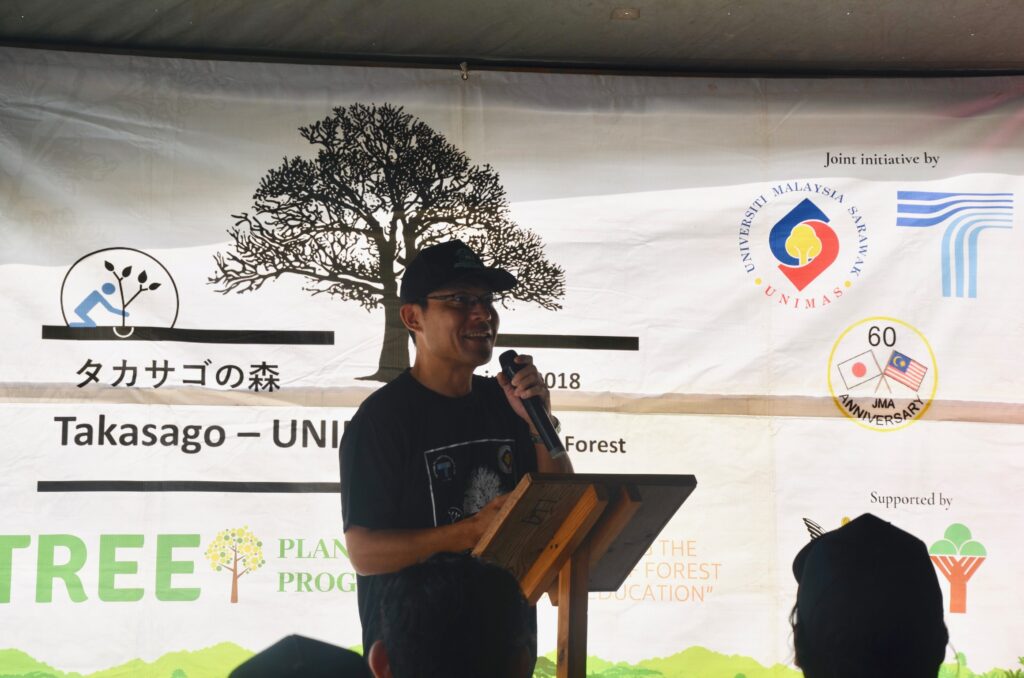
The Takasago–UNIMAS Educational Forest is a forest restoration initiative established in 2018 through collaboration between UNIMAS, Takasago Thermal Engineering Co. Ltd. and the Japan–Malaysia Association, with support from the Forest Department Sarawak. The initiative contributes to the restoration of forest landscapes, the enhancement of biodiversity and the development of environmental awareness through tree planting, education and community participation.
On 29 November 2025, the annual Takasago–UNIMAS Educational Forest tree-planting programme brought together 150 participants, who planted 1,000 seedlings of indigenous tree species on the UNIMAS campus. The programme supports ecological restoration and provides opportunities for students and community participants to engage directly in environmental conservation. The project had planted 29,400 trees by the end of the 2025 programme, demonstrating a sustained commitment to maintaining and restoring green spaces.
The educational forest contributes to a greener campus by supporting native vegetation, improving habitat quality and providing a setting for environmental learning. Its conservation and educational functions align with the objectives of accessible green spaces, although public entry arrangements should be confirmed separately.
Keywords: Takasago–UNIMAS Educational Forest, forest landscape restoration, indigenous tree species, biodiversity, tree planting, environmental education, community participation, 2025.
UNIMAS Real Living Lab (RLL)
The UNIMAS Real Living Lab (RLL) provides a nature-based environment that supports biodiversity research, environmental education and practical learning. It allows participants to explore local plant and animal diversity and develop a greater understanding of tropical ecosystems and the importance of conserving natural heritage. The facility also supports nature-based recreation and ecotourism education, including learning activities related to plant identification, wildlife observation, and tropical ecology.
Through its combination of natural surroundings, research and educational activities, the Real Living Lab contributes to UNIMAS's green campus environment. It offers a potential setting for students, researchers, and programme participants to connect with nature while learning about biodiversity conservation and sustainable environmental management.
Its role in environmental education complements SDG 11.2.4 by demonstrating the value of natural spaces within a university setting. However, visitor access should be confirmed with UNIMAS before describing the facility as freely open to everyone.
Keywords: Real Living Lab, biodiversity conservation, environmental education, tropical ecology, nature-based recreation, ecotourism, natural heritage, green spaces.
Dataran Canselori (Chancellory Bucida Square)
Dataran Canselori, also known as Dataran Bucida Canselori, is an open space at Universiti Malaysia Sarawak (UNIMAS) that serves as a venue for university ceremonies, student activities, official gatherings and community events. The space provides an environment for interaction among students, staff, university management and external visitors, contributing to campus life and community engagement.
In 2025, Dataran Canselori continued to serve as a venue for activities that encouraged social interaction and strengthened relationships within the university community. On 21 March 2025, the Faculty of Cognitive Sciences and Human Development (FCSHD) organised the FCSHD Sungkei with Tahfiz Raudhatul Ilmi at Dataran Bucida Canselori. The Ramadan iftar gathering brought together university members and the Tahfiz community, promoting togetherness, compassion and meaningful social engagement. The event demonstrated how shared campus spaces can facilitate inclusive community activities and strengthen connections between the university and external groups.
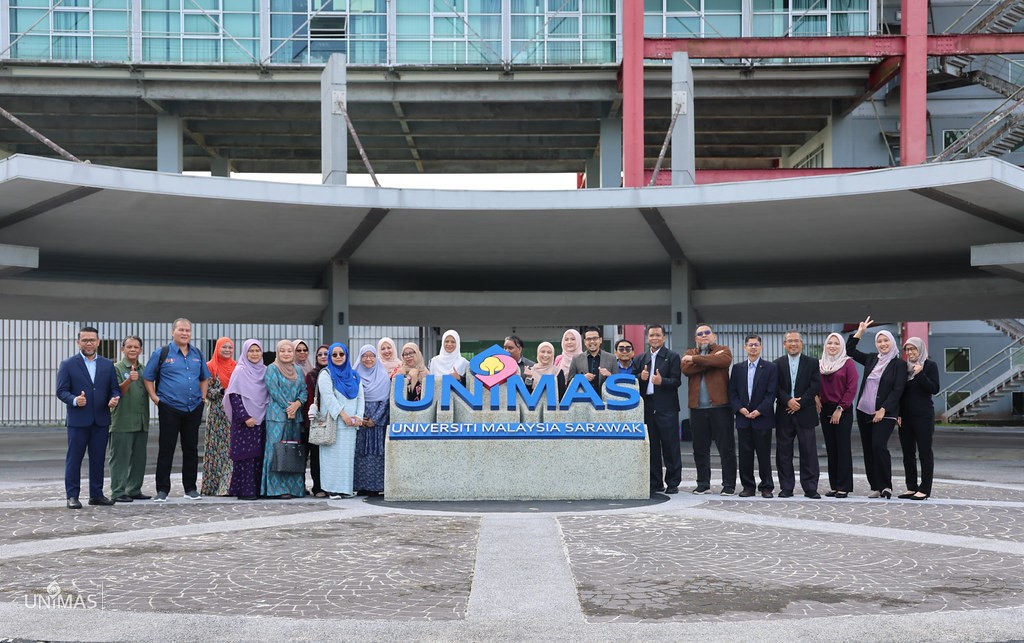
Additionally, UNIMAS hosted Permukiman Majlis Dekan Bahasa Universiti Awam (MalDec) 2025, which took place from 17 to 19 May 2025. The programme brought together deans and representatives from language faculties of public universities nationwide to strengthen academic collaboration, promote cultural heritage and raise awareness of environmental sustainability. Delegates were photographed at the UNIMAS Chancellery grounds, highlighting the area's role as part of the university's institutional setting for welcoming visitors and supporting university-wide engagement.
Through these activities, Dataran Canselori and its surrounding grounds contribute to the university's provision of shared spaces for gatherings, social interaction and institutional engagement. Such spaces support a more connected and welcoming campus environment by accommodating activities that bring together different groups within and beyond the university.
Keywords: Dataran Canselori, Dataran Bucida Canselori, UNIMAS, public open space, community engagement, social inclusion, campus facilities, university events, community gatherings, sustainable campus, SDG 11, Sustainable Cities and Communities.
Reference Link: FCSHD Sungkei with Tahfiz Raudhatul Ilmi: A Meaningful Ramadan Gathering – UNIMAS Gazette

Reference Link: Permukiman MalDec 2025 di Sarawak: Mengakar Ilmu, Menjulang Budaya
Student Pavilion
The Student Pavilion at Universiti Malaysia Sarawak (UNIMAS) serves as a central campus hub for student activities, events, studying and social interaction. Managed by UNIMAS Holdings, the facility features a commercial area, food kiosks, a multipurpose hall and outdoor spaces available for event bookings. These facilities provide a welcoming environment for students, staff and visitors to gather, participate in university programmes and engage in community activities, supporting student engagement and fostering a vibrant, inclusive campus environment.
Reference Link: New Student Pavilion

IBEC's Blood Donation Program 2025: Your Blood, Their Hope
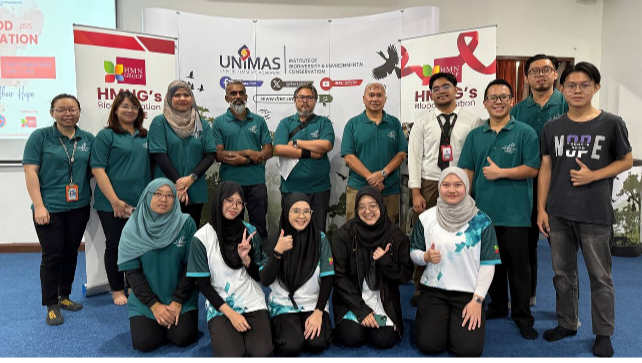
This program was held on 9 September 2025 and organised by the Institute of Biodiversity and Environmental Conservation (IBEC), in collaboration with the UNIMAS Teaching Hospital and the Blood Bank Unit of Sarawak General Hospital. It aimed to raise awareness of blood donation and support hospital blood supplies. A total of 61 people volunteered, with 53 successfully donating blood. The use of the Student Pavilion demonstrates how a shared university facility can accommodate community-oriented programmes that encourage public participation and social well-being.
Keywords: Student Pavilion, public participation, community engagement, social well-being, inclusive campus, shared spaces, UNIMAS, 2025.
Reference Link: IBEC’s Blood Donation Program 2025: Your Blood, Their Hope – UNIMAS Gazette
11.2.5 Arts and heritage contribution
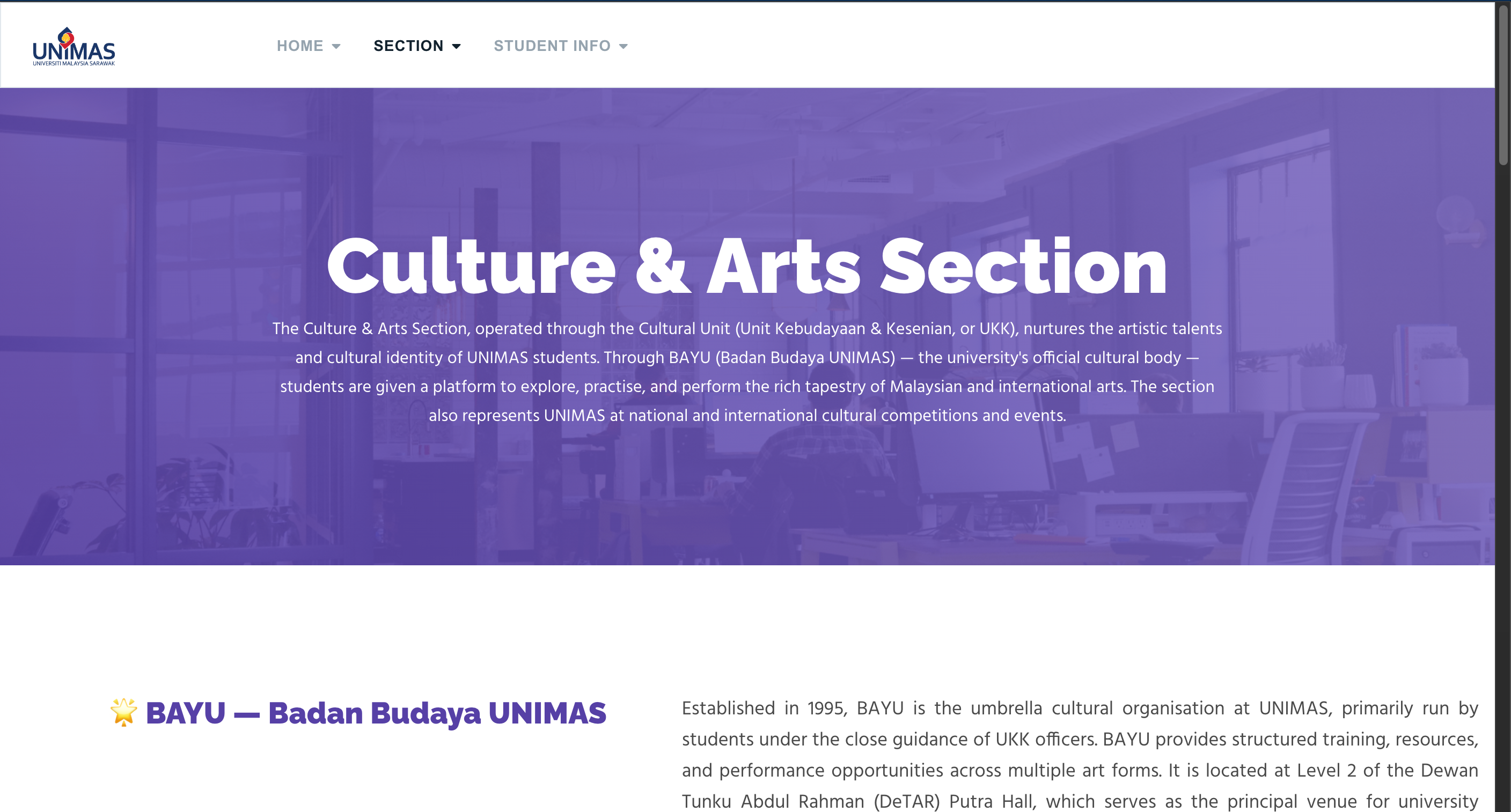
Universiti Malaysia Sarawak (UNIMAS) contributes to the preservation, promotion and appreciation of arts and cultural heritage through its Culture and Arts Section, under the Centre for Student Services (Pusat Khidmat Pelajar, PKP). Through the Cultural Unit (Unit Kebudayaan dan Kesenian, UKK) and Badan Budaya UNIMAS (BAYU), the University provides students with opportunities to develop artistic talents, participate in cultural activities and appreciate Malaysia's diverse cultural heritage, particularly the traditional arts of Sarawak.
Established in 1995, BAYU serves as the University's cultural organisation, providing structured training, resources and performance opportunities in various artistic disciplines. These include traditional dances such as Joget, Zapin and Iban traditional dance, as well as Gamelan and 24 Seasons Drum performances. Such initiatives help sustain traditional art forms, encourage intergenerational cultural appreciation and strengthen students' understanding of Malaysia's multicultural identity.
Beyond campus activities, UNIMAS actively contributes to the wider cultural landscape through national and international competitions, cultural festivals and exchange programmes. Through participation in the Majlis Kebudayaan Universiti-Universiti Malaysia (MAKUM), BAYU represents the University and showcases local artistic talents on broader platforms. The University also organises cultural performances during major institutional events, including convocation ceremonies, Hari UNIMAS, national celebrations and official visits.
Furthermore, UKK extends its cultural contributions to the wider community through outreach programmes, workshops and collaborations with local cultural organisations, schools, community halls, Sarawak Cultural Village and international embassies. These initiatives promote cultural awareness, encourage community participation and strengthen the preservation of traditional arts and heritage beyond the University.
Through these continuous efforts, UNIMAS demonstrates its commitment to safeguarding cultural heritage, nurturing artistic expression and making meaningful contributions to the cultural development of Sarawak and Malaysia.
Reference Link: Culture & Arts Section
Universiti Malaysia Sarawak (UNIMAS) actively contributes to the promotion and appreciation of local arts and cultural heritage through public performances, creative showcases and cultural programmes. These activities provide opportunities for students and the university community to express their artistic talents, celebrate cultural diversity and engage with the wider community.
In 2025, UNIMAS highlighted its contribution to the local arts and cultural scene through several key programmes. These included RUAI FACA 2025 – Ba Ruai Kitai, which provided a platform for creative and artistic expression; Malam Puisi Lestari Alam, which brought together poetry and cultural performances; and Semarak Syawal FSKPM: A Celebration of Cultural Heritage, Unity, and Student Creativity, which celebrated cultural traditions and student creativity.
UNIMAS also participated in the Samarahan Food and Cultural Festival 2025, featuring cultural performances by its residential colleges, as well as Citrawarna 2025, which showcased cultural expressions and artistic performances. Collectively, these programmes demonstrate the University's continued efforts to provide platforms for artistic participation, promote appreciation of cultural traditions and strengthen engagement between the university and the surrounding community.
Through these initiatives, UNIMAS supports the development of local artistic talent, encourages student involvement in the performing arts, and contributes to the preservation and promotion of Malaysia's diverse cultural heritage.
The table shows the contributions of the main highlight events to local arts and culture.
| No. | Name |
|---|---|
| 1. | RUAI FACA 2025 – Ba Ruai Kitai |
| 2. | Malam Puisi Lestari Alam |
| 3. | Semarak Syawal FSKPM: A Celebration of Cultural Heritage, Unity, and Student Creativity |
| 4. | Samarahan Food and Cultural Festival 2025 – Cultural Performances by UNIMAS Colleges |
| 5. | Citrawarna 2025 |
| 6. | Persembahan Gamelan — “Juh Sungkei di Borneo Convention Centre Kuching (BCCK)” |
| 7. | Persembahan Gamelan — SHELL “Raya Bergaya” Open House |
| 8. | Rumah Terbuka Aidilfitri UNIMAS — “Raya Nusantara” |
| 9. | Gala State Dinner — 33rd ASEAN Socio-Cultural Community (ASCC) 2025 |
| 10. | Konsert Suara 34 — Peringkat Zon Sarawak |
| 11. | Festival Tari dan Lagu Asli 2025 — Peringkat Zon Selatan |
| 12. | Sambutan Hari Kebangsaan & Hari Malaysia Peringkat UNIMAS 2025 |
| 13. | Program Mobiliti Pelajar & Staf — Xi’an, China |
| 14. | Citra Tari Nusantara 2025 — Pertandingan Tarian Etnik & Tradisional |
| 15. | Konvensyen STEP UNIMAS 2025 |
| 16. | Festival Puisi dan Lagu Rakyat Antarabangsa ke-11 (PULARA) 2025 |
| 17. | Gala Dinner ARTEV 2025 |
| 18. | 11th International Conference on Low Carbon Asia (ICLCA) 2025 — Majlis Perasmian |
| 19. | Pembukaan & Penutupan SUKIPT Sarawak 2025 |
| 20. | Persembahan Gamelan — Konvokesyen Swinburne 2025 |
| 21. | Makan Malam Mesra Sarawak–Pahang |
| 22. | Persembahan Kebudayaan — Majlis Konvokesyen ke-29 UNIMAS |
| 23. | Pementasan Teater Muzikal — Kumang Keling |
| 24. | Festival of Ideas (FOI) 2025 — Sound of Malaysia: Orkestra Tradisional Malaysia |
RUAI FACA 2025 – Ba Ruai Kitai
Universiti Malaysia Sarawak (UNIMAS), through the Faculty of Applied and Creative Arts (FACA), organised RUAI FACA 2025, a two-day arts and cultural event held on 10 and 11 January 2025. Organised by second-year Arts Management students, the programme featured creative performances, music workshops, exhibitions and a public mini-concert at Panggung Gemilang. The highlight, Malam Kita, featured performances by UNIMAS music students, local bands including E-Square and Malaysian band Insomniacks. The event provided a platform for emerging artists and students to showcase their musical talents while encouraging public participation and appreciation of local creative arts.
Keywords: RUAI FACA 2025, Malam Kita, Public Concert, Live Music, Performing Arts, Student Performances, Local Artists, Creative Arts, FACA UNIMAS.
Malam Puisi Lestari Alam
Universiti Malaysia Sarawak (UNIMAS) hosted Malam Puisi Lestari Alam, a public arts and cultural event celebrating poetry, music and creative expression. Organised in collaboration with Persatuan Sahabat Sungai Malaysia, Dewan Bahasa dan Pustaka Malaysia (DBP) and Persatuan Penulis Nasional Malaysia (PENA), the event featured cultural performances by the UNIMAS cultural troupe and poetry recitations by established and emerging literary figures. Attended by more than 700 students and distinguished guests, the programme provided a platform for literary and performing arts while promoting the role of creative expression in raising environmental awareness.
Keywords: Malam Puisi Lestari Alam, Poetry Recitation, Cultural Performance, UNIMAS Cultural Troupe, Performing Arts, Literary Arts, DBP, PENA, Public Engagement.
Reference Link: UNIMAS Hosts “Malam Puisi Lestari Alam” to Promote Environmental Awareness
Semarak Syawal FSKPM: A Celebration of Cultural Heritage, Unity, and Student Creativity
The Faculty of Cognitive Sciences and Human Development (FSKPM), UNIMAS, organised Semarak Syawal FSKPM on 11 April 2025 as a cultural celebration bringing together students, staff and faculty members. The programme featured traditional Malay dance performances, including Tarian Inang and Tarian Joget, presented by members of Bakat FSKPM. Attended by more than 1,500 participants, the celebration provided a platform for students to showcase their performing arts talents while promoting cultural appreciation, unity and community participation within the university.
Keywords: Semarak Syawal, Bakat FSKPM, Tarian Inang, Tarian Joget, Traditional Dance, Cultural Performance, Student Talent, Cultural Appreciation.
Reference Link: FSKPM: A Celebration of Cultural Heritage, Unity, and Student Creativity
Citrawarna UNIMAS 2025
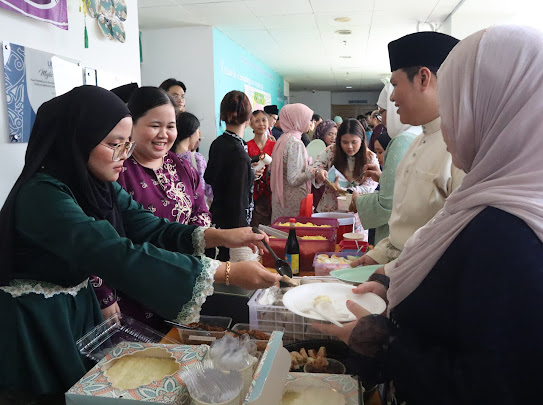
Citrawarna UNIMAS 2025 provided a platform for students from the University's residential colleges to showcase their creativity, artistic talents and cultural expressions through performances. The programme encouraged student participation in the performing arts while promoting teamwork, cultural appreciation and healthy competition among the university community.
The competition recognised the outstanding performances of several residential colleges. Kolej Cempaka emerged as the overall champion, followed by Kolej Bunga Raya as runner-up and Kolej Allamanda in third place. Kolej Sakura received the Special Jury Award.
Additional awards recognised excellence in different aspects of performance, including Best Choreography and Best Music Arrangement, awarded to Kolej Cempaka; Best Costume, awarded to Kolej Bunga Raya; and Best Set and Props as well as Best Finale Performance, awarded to Kolej Allamanda.
Through Citrawarna UNIMAS 2025, the University provided opportunities for students to develop their performing arts skills, demonstrate creative expression, and appreciate diverse cultural elements. The programme also strengthened collaboration and engagement among residential colleges, contributing to the vibrancy of campus arts and cultural activities.
Keywords: Citrawarna UNIMAS 2025, Cultural Performances, Performing Arts, Student Creativity, Residential Colleges, Cultural Expression, Choreography, Costume Design, Music Arrangement, Community Engagement.
11.2.6 Record and preserve cultural heritage
Universiti Malaysia Sarawak (UNIMAS) continues to implement initiatives to record, preserve and promote intangible cultural heritage, including indigenous traditions, ethnic languages, traditional knowledge and performing arts. These initiatives demonstrate the university's commitment to safeguarding Sarawak's rich cultural diversity and strengthening the recognition of indigenous communities.
Local or Regional Cultural Heritage
Echoes of the Ancestors: Uncovering Bisaya Plant Wisdom in Limbang
Universiti Malaysia Sarawak (UNIMAS), in collaboration with Universiti Kebangsaan Malaysia (UKM), conducted research to document and preserve the traditional ethnobotanical knowledge of the Bisaya community in Limbang, Sarawak. The research documented more than 100 plant-related terms associated with indigenous knowledge, including traditional medicine, food practices, rituals and ecological understanding. Through interviews and knowledge-sharing with village elders, traditional healers and native speakers, the initiative contributes to preserving the Bisaya community's traditional knowledge and cultural heritage for future generations.
Keywords: Bisaya Community, Ethnobotanical Knowledge, Indigenous Knowledge, Traditional Medicine, Plant Knowledge, Oral Documentation, Cultural Preservation, Limbang, Sarawak.
Reference Link: Echoes of the Ancestors: Uncovering Bisaya Plant Wisdom in Limbang
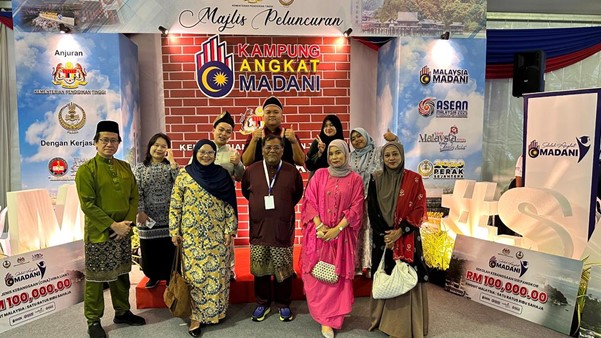
UNIMAS Angkat Warisan Budaya Sarawak ke Pentas Antarabangsa di PULARA 2025
Universiti Malaysia Sarawak (UNIMAS) showcased Sarawak's traditional arts and cultural heritage at the 11th International Festival of Poetry and Folk Songs (PULARA 2025) in Lumut, Perak. Through the participation of Badan Budaya UNIMAS (BAYU) and the Faculty of Education, Language and Communication, the university promoted traditional cultural expressions, including songket and keringkam weaving, traditional musical instruments and folk performances. The programme provided an opportunity to introduce Sarawak's diverse cultural identity to a wider audience while encouraging appreciation of traditional craftsmanship, performing arts and cultural practices.
Keywords: Sarawak Cultural Heritage, Traditional Weaving, Songket, Keringkam, Traditional Musical Instruments, Folk Songs, BAYU, Cultural Promotion, PULARA 2025.
Reference Link: UNIMAS Angkat Warisan Budaya Sarawak ke Pentas Antarabangsa di PULARA 2025
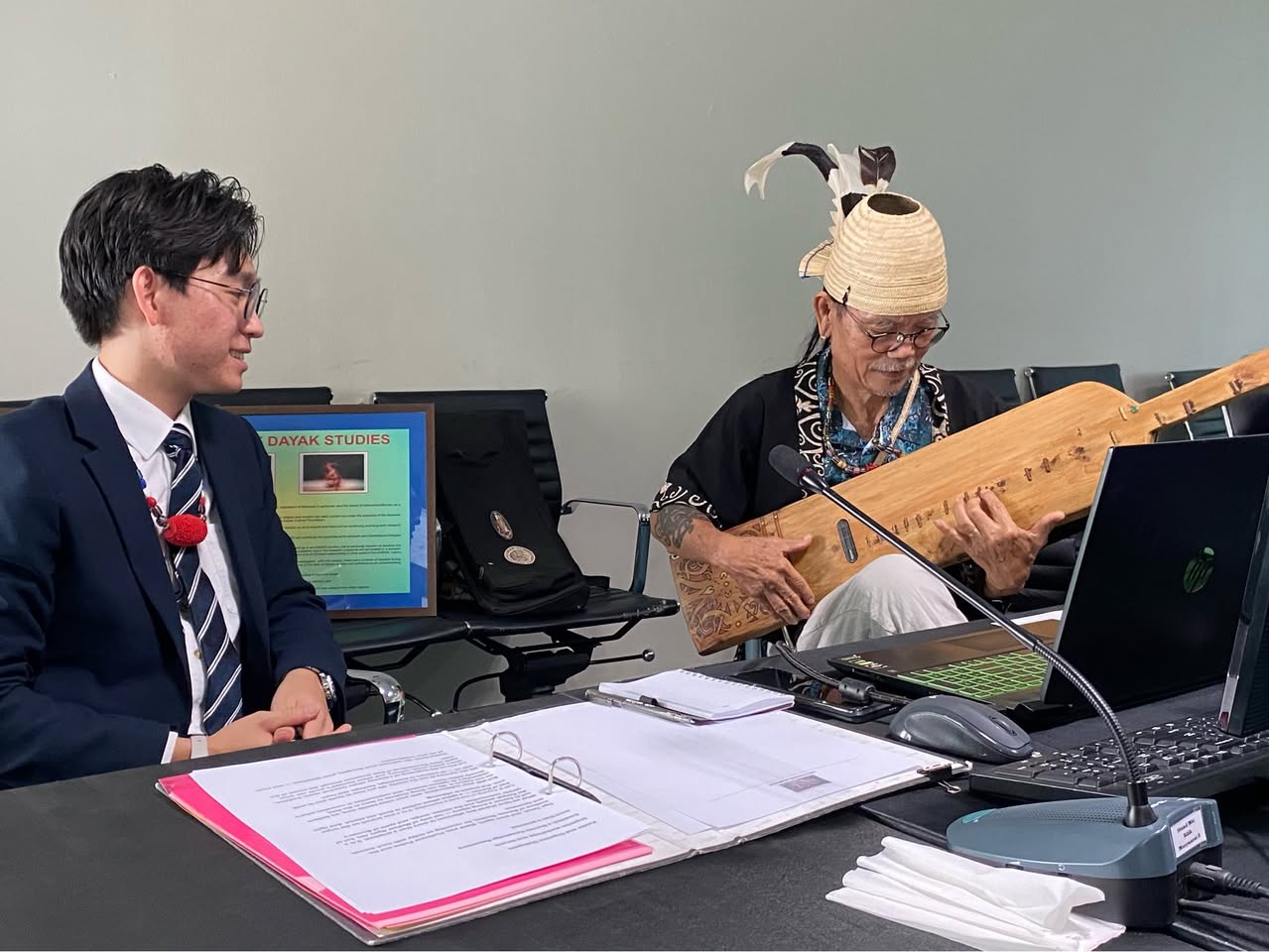
Honoured Visit by Living National Heritage Mathew Ngau Jau to the Institute of Borneo Studies, UNIMAS
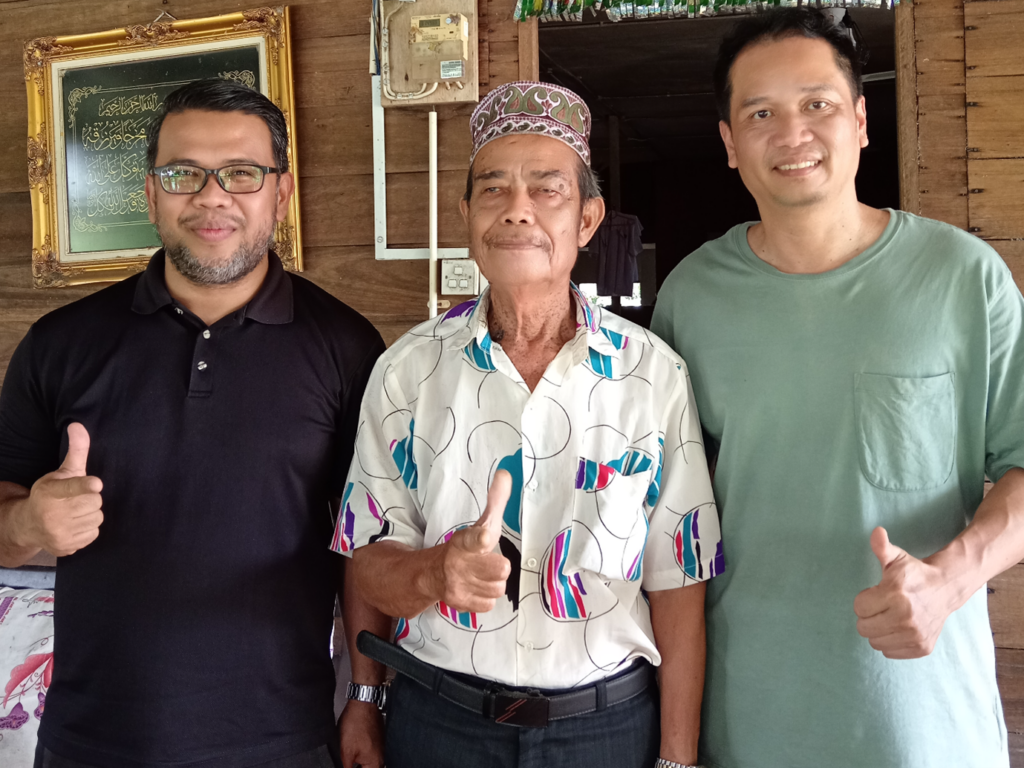
On 11 July 2025, the Institute of Borneo Studies (IBS), Universiti Malaysia Sarawak (UNIMAS), welcomed Mathew Ngau Jau, a Malaysian Living National Heritage recipient (2015), renowned master of the traditional Kenyah sape’ and custodian of indigenous cultural traditions. The visit marked the beginning of a collaborative initiative focusing on cultural revival, heritage restoration and the preservation of traditional knowledge.
One of the key initiatives discussed was the revival of Lan E Tuyang Homestay in Bau, Sarawak, envisioned as a living cultural space that promotes cultural education, intergenerational knowledge transfer, heritage-based tourism and community empowerment. Supported by young Sarawakian volunteers, cultural advocates and experienced cultural practitioners, the initiative aims to strengthen the transmission of indigenous traditions and provide opportunities for younger generations to learn about and appreciate their cultural heritage.
Through this collaboration, UNIMAS demonstrates its commitment to safeguarding Sarawak's intangible cultural heritage, particularly traditional music, indigenous knowledge and cultural practices, while supporting community-led heritage preservation for future generations.
Keywords: Mathew Ngau Jau, Institute of Borneo Studies, IBS UNIMAS, Kenyah Cultural Heritage, Sape’, Living National Heritage, Indigenous Knowledge, Cultural Revival, Lan E Tuyang Homestay, Intergenerational Knowledge Transfer, Heritage-Based Tourism, Community Empowerment, Sarawak Cultural Preservation.
Reference Link: Visit by Living National Heritage Mathew Ngau Jau to the Institute of Borneo Studies
National Cultural Heritage
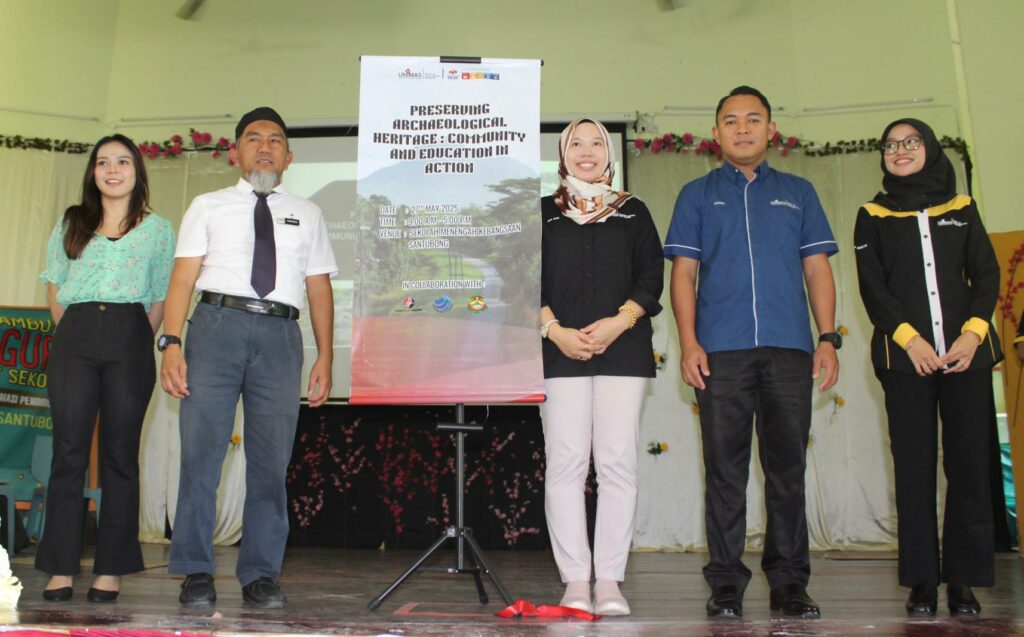
UNIMAS Empowers Archaeological Heritage Awareness at Santubong Through SULAM Programme
Universiti Malaysia Sarawak (UNIMAS) conducted a Service-Learning Malaysia–University for Society (SULAM) programme to promote awareness and appreciation of Malaysia's archaeological heritage at Santubong, Sarawak. The programme involved 132 Anthropology and Sociology students and collaboration with the Sarawak Museum Department, Sarawak Delta Geopark and SMK Santubong. Activities included archaeological heritage lectures, artefact exhibitions, excavation demonstrations and interactive learning sessions. Through these educational and collaborative activities, UNIMAS contributes to increasing public understanding of archaeological discoveries, historical significance and the importance of safeguarding Malaysia's cultural heritage.
Keywords: Archaeological Heritage, Santubong, Historical Preservation, Sarawak Museum Department, Sarawak Delta Geopark, SULAM, Heritage Education, Artefact Documentation.
Reference Link: UNIMAS EMPOWERS ARCHAEOLOGICAL HERITAGE AWARENESS AT SANTUBONG THROUGH SULAM PROGRAMME
Enhancing Anthropological Learning through Museum and Heritage Experiences
Universiti Malaysia Sarawak (UNIMAS), through collaboration with the Borneo Cultures Museum, provided students with opportunities to explore and appreciate Sarawak's historical, archaeological and cultural heritage. In 2025, students participated in museum-based learning activities, including International Museum Day and the Heritage Discourse Programme. The activities introduced participants to various aspects of local heritage, including archaeological discoveries at Niah Caves, traditional cultural artefacts, historical landmarks and heritage building conservation. These initiatives strengthen heritage awareness and encourage the preservation of historical and cultural resources through education, research and institutional collaboration.
Keywords: Borneo Cultures Museum, Museum Education, Archaeological Heritage, Niah Caves, Cultural Artefacts, Historical Preservation, Heritage Awareness, Museum Collaboration.
11.3 Expenditure on arts and heritage
11.3.1 Arts and heritage expenditure
Based on the five arts and heritage programmes and activities provided, the expenditure is calculated as follows:
| No. | Programme / Activity | Dana (RM) |
|---|---|---|
| 1. | Exhibition of Creativity, Innovation, Technology and Research in Arts (eCITRA) 2025 | 40,740.00 |
| 2. | Pameran Cetusan Inspirasi Pelajar Tahun Akhir (CIPTA) 2025 | 26,920.00 |
| 3. | Mini Film Festival (MFF) 2025 | 27,164.00 |
| 4. | Anugerah Kecemerlangan Pelajar Kursi PETRONAS – P. Ramlee 2025 | 5,000.00 |
| 5. | P. Ramlee Chair Symposium 2025 | 30,000.00 |
| 6. | Citrawarna 2025 | 206,160.00 |
| Total Programme Expenditure | 335,984.00 | |
| 7. | Research Grant – PETRONAS–P. Ramlee Chair (2025) | 250,000.00 |
| Total Funding Allocation | 379,824.00 | |
11.4 Sustainable practices
11.4.1 Sustainable practices targets
Sustainable Commuting Targets at UNIMAS
Universiti Malaysia Sarawak (UNIMAS) promotes sustainable commuting as part of its commitment to developing a low-carbon campus. Under the UNIMAS Low-Carbon Campus Roadmap 2030, the university has identified plans to digitalise and electrify its transport fleet and introduce carpooling and feeder bus schemes by 2030. These targets aim to encourage shared and lower-carbon transportation among students and staff. UNIMAS also supports sustainable mobility through pedestrian-friendly walkways, cycling facilities and electric bicycle initiatives, which encourage greener travel within the campus. These measures contribute to the university’s broader sustainability objectives and support SDG 11: Sustainable Cities and Communities.
Keywords: UNIMAS Low-Carbon Campus Roadmap 2030; sustainable commuting targets; sustainable transportation policy; low-carbon mobility; carpooling scheme; feeder bus scheme; transport fleet electrification; electric bicycle initiative; pedestrian walkways; cycling facilities; commuting emissions reduction; sustainable campus mobility; carbon footprint reduction; ESG reporting; SDG 11; Sustainable Cities and Communities.
11.4.2 Promote sustainable commuting
Universiti Malaysia Sarawak (UNIMAS) promotes sustainable commuting as part of its commitment to reducing transport-related greenhouse gas emissions and developing a low-carbon, environmentally responsible campus. Guided by the UNIMAS Low-Carbon Campus Roadmap 2030, the university identifies sustainable transportation measures to encourage lower-carbon travel among students, staff and the wider campus community. These measures support the university’s long-term sustainability objectives by encouraging more efficient transport choices and reducing reliance on conventional private vehicles.
UNIMAS supports sustainable mobility through initiatives such as its electric bicycle campaign, which encourages the adoption of lower-emission transportation alternatives for travelling within the campus. The initiative promotes environmentally friendly commuting practices and raises awareness of the role of sustainable mobility in reducing carbon emissions associated with daily travel. In addition, pedestrian pathways provide opportunities for walking between campus facilities, encouraging non-motorised transportation for shorter journeys.
The university’s Low-Carbon Campus Roadmap 2030 also identifies transport-related measures, including transport fleet electrification, carpooling and feeder bus services, to support the transition towards more sustainable commuting. Fleet electrification aims to reduce dependence on conventional fuel-powered vehicles, while carpooling can reduce the number of individual vehicles travelling to and from campus. Feeder bus services can improve access to campus facilities and provide opportunities for shared transportation among students and staff.
Through these measures, UNIMAS seeks to integrate sustainable commuting into campus operations and encourage the university community to make more environmentally responsible travel decisions. The initiatives align with the university’s broader low-carbon campus agenda and contribute to SDG 11: Sustainable Cities and Communities, particularly by supporting more sustainable and accessible transportation practices. Continued measurement of commuting patterns, together with the establishment of clear targets and monitoring of implementation progress, can further strengthen UNIMAS’s efforts to assess and improve sustainable commuting performance.
Keywords: UNIMAS Low-Carbon Campus Roadmap 2030; sustainable commuting targets; sustainable transportation; electric bicycle campaign; pedestrian pathways; transport fleet electrification; carpooling; feeder bus services; shared transportation; low-carbon mobility; greenhouse gas emission reduction; commuting patterns; sustainable campus mobility; SDG 11; Sustainable Cities and Communities.


11.4.3 Allow remote working
Universiti Malaysia Sarawak (UNIMAS) supports remote working through Pekeliling Pentadbiran Bilangan 11 Tahun 2022, issued by the Registrar’s Office on 30 May 2022. The circular adopts the Malaysian Public Service Department’s improvements to the Dasar Bekerja Dari Rumah (BDR), following approval by the university’s Board of Directors on 13 May 2022. This provides a formal administrative framework for implementing work-from-home arrangements for eligible staff under specified circumstances.
Under the circular, department heads are required to permit or direct employees whose spouse has passed away to work from home following the utilisation of three days of unrecorded leave, in accordance with the applicable public service provisions. The work-from-home period must be appropriate and must not exceed two weeks, including weekends and public holidays, subject to the department head’s consideration. This arrangement provides temporary flexibility for affected employees while allowing them to continue their work responsibilities during a difficult personal period.
By formally adopting the improved work-from-home provisions, UNIMAS demonstrates its alignment with the Malaysian public service framework for remote working. Where applicable, working from home can reduce the need for employees to commute to campus during the approved period, potentially lowering commuting-related emissions. The circular therefore provides evidence of an institutional policy permitting remote work in defined circumstances, contributing to UNIMAS’s broader sustainable campus objectives under SDG 11: Sustainable Cities and Communities.
11.4.4 Affordable housing for employees
Universiti Malaysia Sarawak (UNIMAS) supports employee welfare by providing on-campus accommodation for staff whose duties require them to work outside normal working hours. This arrangement is particularly relevant to technical and safety personnel who may need to perform operational duties beyond standard office hours. By providing accommodation close to the workplace for eligible employees, UNIMAS facilitates staff movement, supports the effective delivery of university operations, and improves convenience for employees with work-related accommodation needs.
On-Campus Accommodation for Employees
UNIMAS supports employee welfare by providing on-campus accommodation for staff whose duties require them to work beyond normal working hours, particularly those involved in technical and safety-related operations. This arrangement offers convenient access to the workplace, reduces the need for additional travel during after-hours duties, and may help minimise commuting time and associated transportation emissions. In addition, eligible employees can access public-sector housing financing through the Public Sector Home Financing Board (LPPSA), supporting their efforts to secure suitable residential properties. Together, these provisions demonstrate UNIMAS’s commitment to employee well-being, housing accessibility, and social sustainability, contributing to SDG 11: Sustainable Cities and Communities through support for suitable housing and improved access to accommodation for employees.
Keywords: UNIMAS on-campus staff accommodation; employee housing facilities; technical and safety personnel; staff welfare; work-related accommodation; employee convenience; reduced commuting; sustainable campus operations; SDG 11; Sustainable Cities and Communities.

Access to Public-Sector Housing Financing
UNIMAS employees who meet the relevant eligibility requirements may access housing financing through the Public Sector Home Financing Board (LPPSA). LPPSA provides financing options for purchasing completed residential properties, buying properties under construction, building houses on privately owned land, purchasing land for residential development, refinancing existing housing loans and undertaking home renovations. These facilities provide eligible employees with financing options to address different housing needs and support their path towards homeownership.
In 2025, LPPSA also introduced the Young Housing Financing Scheme (SPPM), which aimed to help eligible public-sector employees aged 30 and below access housing financing with a repayment period of up to 40 years, subject to the applicable conditions. This initiative demonstrates the availability of public-sector housing financing support that may benefit eligible UNIMAS employees. Access to such financing complements employee welfare efforts by providing opportunities to secure suitable residential accommodation and contributes to the broader objectives of housing accessibility under SDG 11: Sustainable Cities and Communities.
Type of financing provided by LPPSA: Jenis Pembiayaan | LPPSA
Financing Type | Purpose |
Type 1 | Purchase of a completed residential property |
Type 2 | Construction of a house on privately owned land |
Type 3 | Purchase of a property under construction |
Type 4 | Purchase of land for residential construction |
Type 5 | Settlement of an existing housing loan with a bank or financial institution |
Type 6 | Construction of a house on land purchased through government financing |
Type 7 | Renovation of a residential property |
Keywords: UNIMAS employee housing support; Public Sector Home Financing Board (LPPSA); public-sector housing financing; homeownership assistance; housing affordability; employee housing security; residential property financing; staff welfare; sustainable housing; SDG 11; Sustainable Cities and Communities.
11.4.5 Affordable housing for students
Affordable Residential Colleges
Universiti Malaysia Sarawak (UNIMAS) is committed to providing safe, inclusive and affordable student accommodation that supports academic success and overall well-being. Through its residential college system and financial assistance initiatives, the university promotes equitable access to higher education by helping students meet their accommodation needs. Accommodation rates start from RM3 per person per day for shared-room accommodation, offering students a lower-cost housing option to help manage their living expenses.
UNIMAS has residential colleges named after Malaysia’s rich plant biodiversity, located across the West Campus, East Campus and areas outside the main campus. The West Campus includes Allamanda, Sakura, Bunga Raya, Cempaka and Tun Ahmad Zaidi Colleges. Kenanga and Seroja Colleges are located at the East Campus, while Rafflesia College is situated outside the main campus, approximately 10 minutes away by car. This distribution of residential facilities provides students with accommodation options across different university locations.
The residential colleges provide essential facilities to support students’ daily living, academic activities and social well-being. These include cafeterias, self-service laundry facilities, Muslim prayer rooms, student lounges, study spaces, free Wi-Fi and multipurpose spaces for student activities and events. UNIMAS also provides dedicated accommodation rooms for students with disabilities to promote accessibility and inclusion within the campus community.
By providing affordable accommodation and essential residential amenities, UNIMAS helps students manage their living expenses while accessing facilities that support their educational needs. On-campus accommodation also allows residents to live closer to lecture halls, libraries and other university facilities, potentially reducing daily commuting requirements and associated transportation costs. These provisions contribute to a supportive and inclusive campus environment aligned with SDG 11: Sustainable Cities and Communities.
Keywords: Affordable student accommodation; on-campus housing; accommodation rates; shared-room accommodation; student welfare; student financial assistance; accessible housing; disability-inclusive accommodation; residential facilities; campus amenities; reduced student commuting; sustainable campus living; SDG 11; Sustainable Cities and Communities.
Residential Facilities Managed by UNIMAS Holdings
UNIMAS provides additional student accommodation through residential facilities managed by UNIMAS Holdings Sdn. Bhd., including Dahlia College and Allamanda Premium College. These facilities complement the university’s residential college system by offering additional accommodation options for students within the UNIMAS campus environment.
The availability of these residential facilities supports the university’s broader efforts to meet students’ accommodation needs and provide convenient access to campus amenities. By offering additional housing options alongside the university’s other residential colleges, UNIMAS Holdings contributes to the provision of student accommodation within the university community.
Keywords: Student accommodation management; residential facilities; on-campus housing; affordable student housing; student welfare; housing accessibility; campus accommodation options; sustainable campus development; SDG 11; Sustainable Cities and Communities.
Reference Link: Dahlia Residential College Website , Kolej Allamanda Premium Rate (2025) | Facebook Post


11.4.6 Pedestrian priority on campus
Provision of Pedestrian Pathway and Bicycle Lane Around Campus
Universiti Malaysia Sarawak (UNIMAS) promotes pedestrian access as part of its commitment to sustainable mobility and low-carbon campus development. The university has established a network of pedestrian pathways connecting academic buildings, residential colleges and other campus facilities, providing alternative routes for students and staff to travel on foot. These facilities support daily campus mobility, improve connectivity between key destinations and encourage walking instead of using motorised vehicles for short-distance journeys. These efforts align with the objectives of the UNIMAS Low-Carbon Campus Roadmap 2030, which aims to reduce greenhouse gas emissions associated with university operations, including transportation.
Pedestrian Walkways and Campus Connectivity
UNIMAS provides several types of pedestrian infrastructure, including walkways between buildings, pedestrian bridges, and sidewalks alongside roads and the university lake. These routes connect important destinations, including Central Teaching Facilities 2 (CTF2), the Tun Abdul Rahman Ya'kub Library (PeTARY), the Chancellery building, academic facilities and recreational areas. The pedestrian bridge also connects the northern and southern sections of the West Campus, improving access between different parts of the university.
A study titled Low-Carbon Campus: Exploring Universiti Malaysia Sarawak’s Pedestrian Walkways as Tools for Sustainable Mobility, published in the International Journal of Research and Innovation in Social Science, examined pedestrian infrastructure at the UNIMAS West Campus. The researchers conducted site observations at three locations and surveyed 107 students to evaluate pedestrian safety, accessibility, comfort, and connectivity.
The study found that 98 respondents (91.6%) identified walking as their main mode of mobility on campus. However, most respondents were first-year students and on-campus residents, so this finding should be interpreted within the characteristics of the surveyed group rather than as a representation of the entire UNIMAS community. The results nevertheless demonstrate the importance of pedestrian infrastructure in supporting daily student mobility.
Keywords: Pedestrian infrastructure; pedestrian walkways; pedestrian bridges; campus sidewalks; accessible campus routes; sustainable mobility; low-carbon campus; walking as a primary mode of transport; campus connectivity; pedestrian safety; pedestrian accessibility; student mobility; SDG 11: Sustainable Cities and Communities.
Provision of Accessible Pedestrian Pathways and Bicycle-Friendly Mobility on Campus
UNIMAS provides pedestrian pathways that support safe, convenient and accessible movement across the campus for students, staff and visitors, including persons with disabilities. These pathways connect academic buildings, residential colleges and other campus facilities, promoting inclusive mobility and pedestrian-friendly access throughout the university.
In addition to walking, bicycle use offers an alternative for short-distance travel within the campus, supporting active mobility and reducing reliance on motorised transportation. Encouraging cycling as part of campus travel can help promote healthier lifestyles, reduce transport-related carbon emissions and contribute to a more sustainable campus environment.
Through pedestrian infrastructure and the promotion of active mobility, UNIMAS supports a campus environment that prioritises accessibility, convenience and sustainability. These efforts contribute to SDG 11: Sustainable Cities and Communities, particularly the development of safe, inclusive and sustainable transportation environments.
Keywords: Pedestrian pathways; disability-friendly infrastructure; accessible campus; inclusive mobility; bicycle use; cycling; active mobility; sustainable transportation; low-carbon campus; reduced motorised transport; pedestrian safety; campus connectivity; SDG 11: Sustainable Cities and Communities.
11.4.7 Local authority collaboration regarding planning and development
Strategic Capacity Building: SEDC-RDP and UNIMAS Partnership in Action
In April 2025, Universiti Malaysia Sarawak (UNIMAS), through its Faculty of Social Sciences and Humanities and Faculty of Education, Language and Communication, collaborated with the Sarawak Economic Development Corporation's Regional Development and Planning Department (SEDC-RDP) to deliver specialised training sessions for 28 SEDC officers on 10–11 April 2025. The sessions focused on integrated regional development planning, connectivity, and stakeholder engagement with government agencies. Through case studies and stakeholder mapping exercises, participants strengthened their strategic planning and engagement capabilities.
This collaboration demonstrates UNIMAS's contribution to SDG 11.4.7 – Local Authority Collaboration Regarding Planning and Development by sharing academic expertise and providing capacity-building opportunities for professionals involved in regional development planning. The partnership supports collaboration between a public university and a regional development agency, strengthening institutional capabilities and promoting coordinated planning and stakeholder engagement. These efforts contribute to more inclusive, integrated and balanced regional development in Sarawak.
Keywords: Local authority collaboration; regional development planning; UNIMAS–SEDC-RDP partnership; government agency collaboration; integrated regional planning; stakeholder engagement; connectivity planning; institutional capacity building; strategic planning; knowledge sharing; regional development coordination; inclusive and balanced regional development; sustainable regional planning; SDG 11: Sustainable Cities and Communities.
Reference Link: Strategic Capacity Building: SEDC-RDP and UNIMAS Partnership in Action
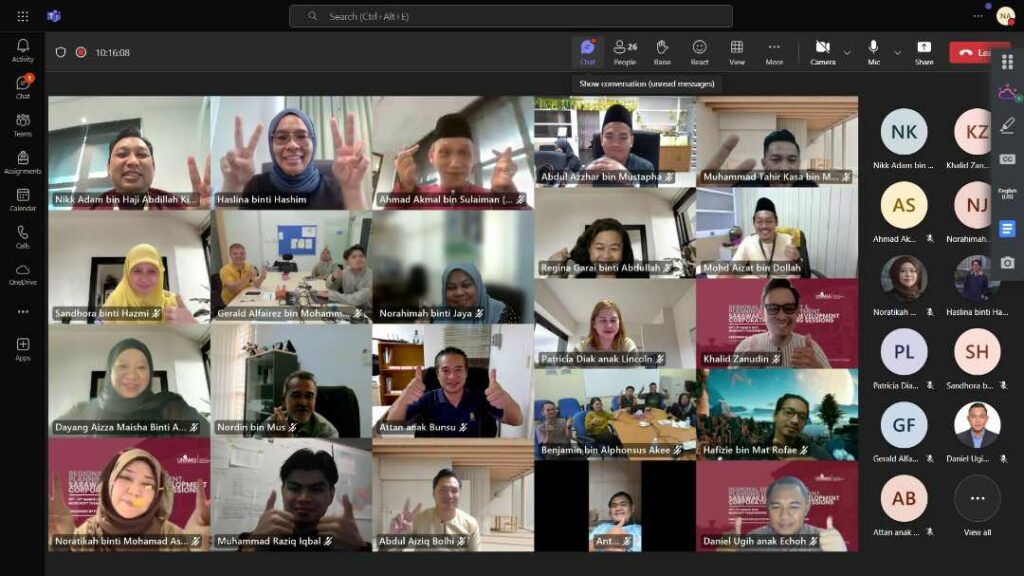
MPKS and UNIMAS Strengthen Strategic Partnership to Support Sustainable Development in Kota Samarahan
On 19 August 2025, the Kota Samarahan Municipal Council (MPKS) and Universiti Malaysia Sarawak (UNIMAS) strengthened their strategic collaboration through a proposed Smart Strategic Partnership focusing on community development, capacity building and the Sustainable Development Goals (SDGs). During a courtesy visit to the UNIMAS Vice-Chancellor, both parties discussed initiatives including Service Learning Malaysia–University for Society (SULAM), capacity-building training and UNIMAS's participation in the Samarahan Food & Cultural Festival 2025. The partnership aims to strengthen cooperation between the local authority and the university to support Kota Samarahan's development as a smart, progressive and inclusive city.
This initiative supports SDG 11.4.7 – Local Authority Collaboration Regarding Planning and Development by demonstrating collaboration between a municipal council and a public university to advance community development and sustainable urban initiatives. Through capacity-building activities, community engagement and knowledge sharing, the partnership provides a platform for combining local governance expertise with academic knowledge to address community needs and support inclusive local development. This collaboration reflects the importance of partnerships between local authorities and higher education institutions in promoting sustainable and well-planned communities.
Keywords: Local authority collaboration; MPKS–UNIMAS strategic partnership; municipal council collaboration; sustainable urban development; community development; local development planning; capacity building; stakeholder engagement; university–government partnership; inclusive city development; smart city initiatives; sustainable community planning; knowledge sharing; SDG 11: Sustainable Cities and Communities.
Reference Link (UKAS): MPKS, UNIMAS Perkukuh Kerjasama Strategik Bangunkan Kota Samarahan 19 Ogos 2025
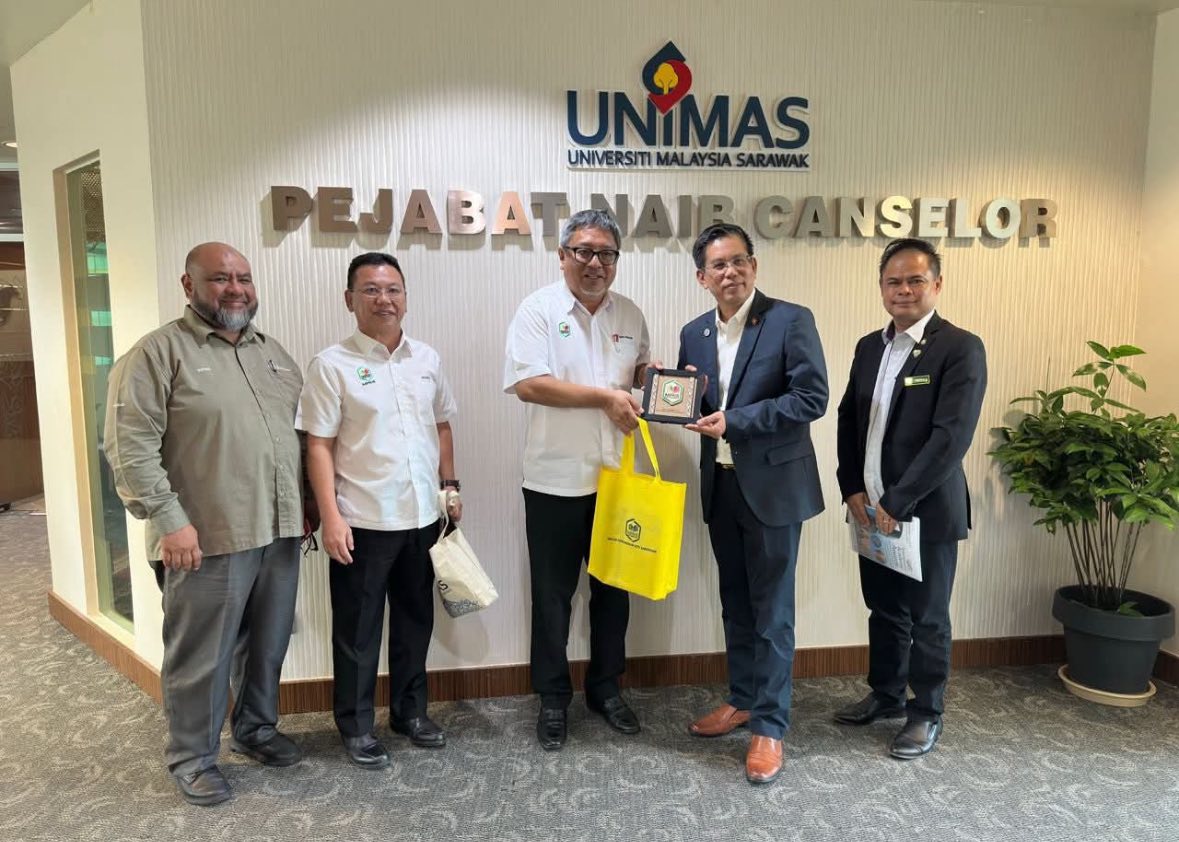
Strengthening Academic-Industry Collaboration: Courtesy Visit to Land and Survey Department, Sarawak
In May 2025, Universiti Malaysia Sarawak (UNIMAS), through its Faculty of Social Sciences and Humanities (FSSH), conducted a courtesy visit to the Sarawak Land and Survey Department (JTS) to explore opportunities for academic and industry collaboration. Discussions focused on spatial planning, land governance, community development, joint research, consultancy projects, student internship placements and specialised training for JTS personnel. The engagement aimed to strengthen cooperation between the university and the government department, facilitating knowledge exchange and the application of academic expertise to address regional planning and development needs.
This initiative supports SDG 11.4.7 – Local Authority Collaboration Regarding Planning and Development by demonstrating UNIMAS's engagement with a government department responsible for land administration and surveying in Sarawak. By exploring collaborative opportunities in spatial planning, land governance and community development, UNIMAS contributes academic knowledge and professional expertise to support informed planning decisions and sustainable regional development. The partnership also provides opportunities to strengthen institutional capacity, promote cross-sectoral cooperation and support more inclusive and sustainable communities in Sarawak.
Keywords: Local authority collaboration; government agency partnership; UNIMAS–Sarawak Land and Survey Department collaboration; spatial planning; land governance; regional development planning; community development; academic-industry collaboration; joint research; consultancy projects; student internship placements; professional training; knowledge exchange; public sector innovation; sustainable community development; SDG 11: Sustainable Cities and Communities.
Reference Link: Strengthening Academic-Industry Collaboration: Courtesy Visit to Land and Survey Department, Sarawak
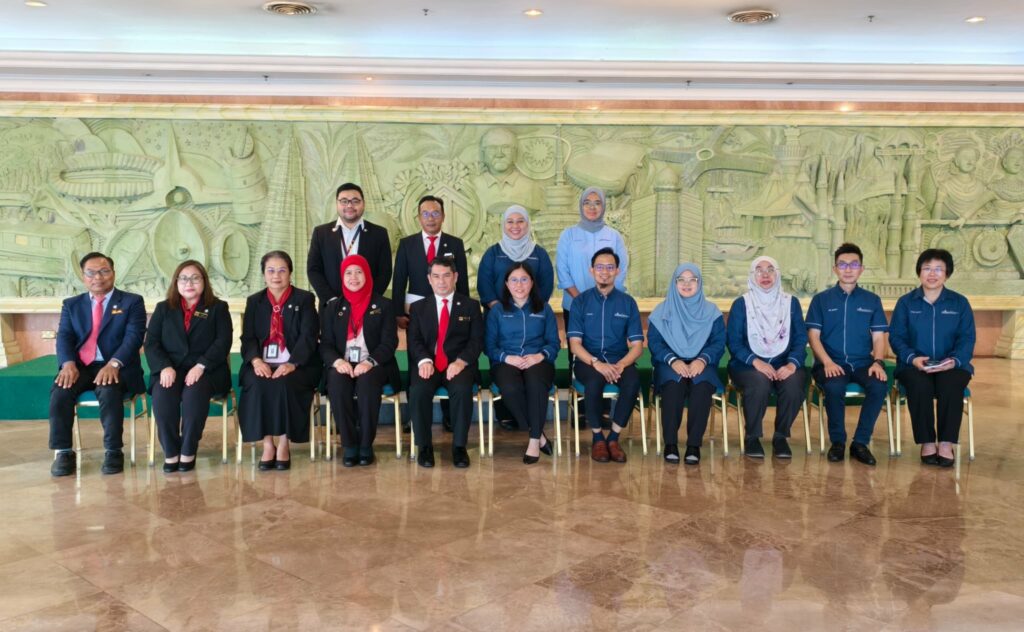
11.4.8 Planning development - new build standards
UNIMAS Energy Policy Supports Sustainable Building Development and Energy Efficiency
Universiti Malaysia Sarawak (UNIMAS) has established an Energy Policy to guide energy management and promote energy efficiency and low-carbon practices across the university. The policy commits the university to optimising energy consumption, reducing carbon emissions, and introducing renewable energy into campus operations.
It also outlines measures to reduce energy consumption through improved maintenance, operational practices, purchasing decisions, and the management of new and existing buildings and equipment. The policy establishes an institutional framework for setting measurable energy-reduction targets and monitoring energy performance while maintaining safety, comfort, and operational reliability.
This policy provides a foundation for integrating energy-efficiency considerations into campus infrastructure planning and building management. It supports UNIMAS's wider efforts to develop a sustainable campus and reduce the environmental footprint of its facilities.
Keywords: Energy Policy; Sustainable Building Development; Energy Efficiency; Renewable Energy; Low-Carbon Campus; Energy Management; Carbon Emission Reduction.
UNIMAS Student Pavilion Incorporates Green Building Features to Promote Sustainable Campus Development
Universiti Malaysia Sarawak (UNIMAS) promotes sustainable campus development through the incorporation of green building principles in its campus facilities, particularly the UNIMAS Student Pavilion. Designed as a commercial hub providing rental spaces for student enterprises, the Student Pavilion incorporates environmentally sustainable features in line with the Green Building Index (GBI) rating criteria.
The building is recognised for its green building features across six key areas: energy efficiency, indoor environmental quality, sustainable site planning and management, materials and resources, water efficiency, and innovation. Among its sustainability features are individual electrical sub-metering systems for tenants to monitor electricity consumption and a rainwater harvesting system to collect and supply water for occupants' needs.
These features demonstrate UNIMAS' efforts to integrate sustainability considerations into building design, resource management and campus infrastructure. By incorporating energy monitoring and water conservation facilities into the Student Pavilion, the university supports more efficient resource utilisation and promotes environmentally responsible building development.
Keywords: Green Building Index (GBI); Green Building Design; Sustainable Infrastructure; Energy Efficiency; Water Conservation; Rainwater Harvesting; Resource Management; Sustainable Campus Development.

UNIMAS Targets 30% Renewable Energy Usage by 2026
Universiti Malaysia Sarawak (UNIMAS) is strengthening its commitment to sustainable campus development through the integration of renewable energy technologies and energy-efficient infrastructure. According to Sarawak Tribune (26 December 2024), UNIMAS has set a target of achieving 30% renewable energy usage across its operations by 2026 as part of its Low Carbon Campus initiatives.
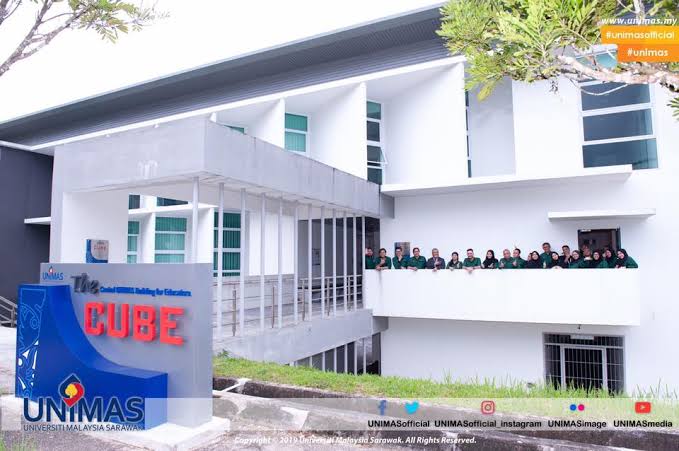
The university has been expanding the installation of solar energy systems in campus facilities, including the Central UNIMAS Building for Educators (CUBE), with further solar-powered projects planned for the Chancellery Building and campus vehicle depot. Solar-powered street lighting is also being implemented along campus routes connecting the East and West Campuses, supporting energy efficiency, improved accessibility and a safer campus environment.
These initiatives demonstrate UNIMAS' commitment to incorporating sustainable energy solutions into campus infrastructure and future development. By integrating renewable energy technologies into building facilities and public infrastructure, UNIMAS aims to reduce carbon emissions, optimise energy consumption and promote environmentally responsible campus development in line with its Low Carbon Campus commitment.
Keywords: Renewable Energy; Sustainable Building Development; Green Building Standards; Solar Energy; Energy Efficiency; Low Carbon Campus; Sustainable Infrastructure; Carbon Emission Reduction.
Reference Link: Unimas targets 30% renewable energy usage by 2026
11.4.9 Building on brownfield sites
Pusat Akademik PPA, UNIMAS — Development on a Former Lecture Room Site
Universiti Malaysia Sarawak (UNIMAS) promotes sustainable land use through the redevelopment of previously utilised campus sites. Pusat Akademik PPA, located on the East Campus, is an example of brownfield development, as the site was formerly occupied by a lecture room used by students. Due to space constraints and the need to provide lecturers with suitable working spaces that offer greater convenience and privacy, UNIMAS constructed a new academic block on the site.
This development demonstrates UNIMAS's efforts to optimise existing campus land to accommodate changing academic and administrative needs. By repurposing a previously developed site, the university supports efficient land utilisation and sustainable campus planning while potentially reducing the need to develop additional undeveloped land. This initiative aligns with 11.4.9: Building on Brownfield Sites, which focuses on the reuse and redevelopment of previously developed land.
Keywords: Brownfield Development; Land Redevelopment; Sustainable Land Use; Campus Planning; Land Optimisation; Academic Infrastructure; Sustainable Campus Development.