SDG 5 : Gender Equality
SDG 5, "Gender Equality," is to end the discrimination, violence and harmful practices against women and girls. It aims to achieve gender equality among women and girls which can promote equal participation and opportunities in all aspects of life.
In areas where women are underrepresented, UNIMAS encourages female involvement through working with a variety of stakeholders. In an effort to foster an open and supportive academic environment for female students and staff, UNIMAS also actively tracks the advancement of women.
5.2 Proportion of graduates with teaching qualification
5.2.1 Proportion of women first-generation
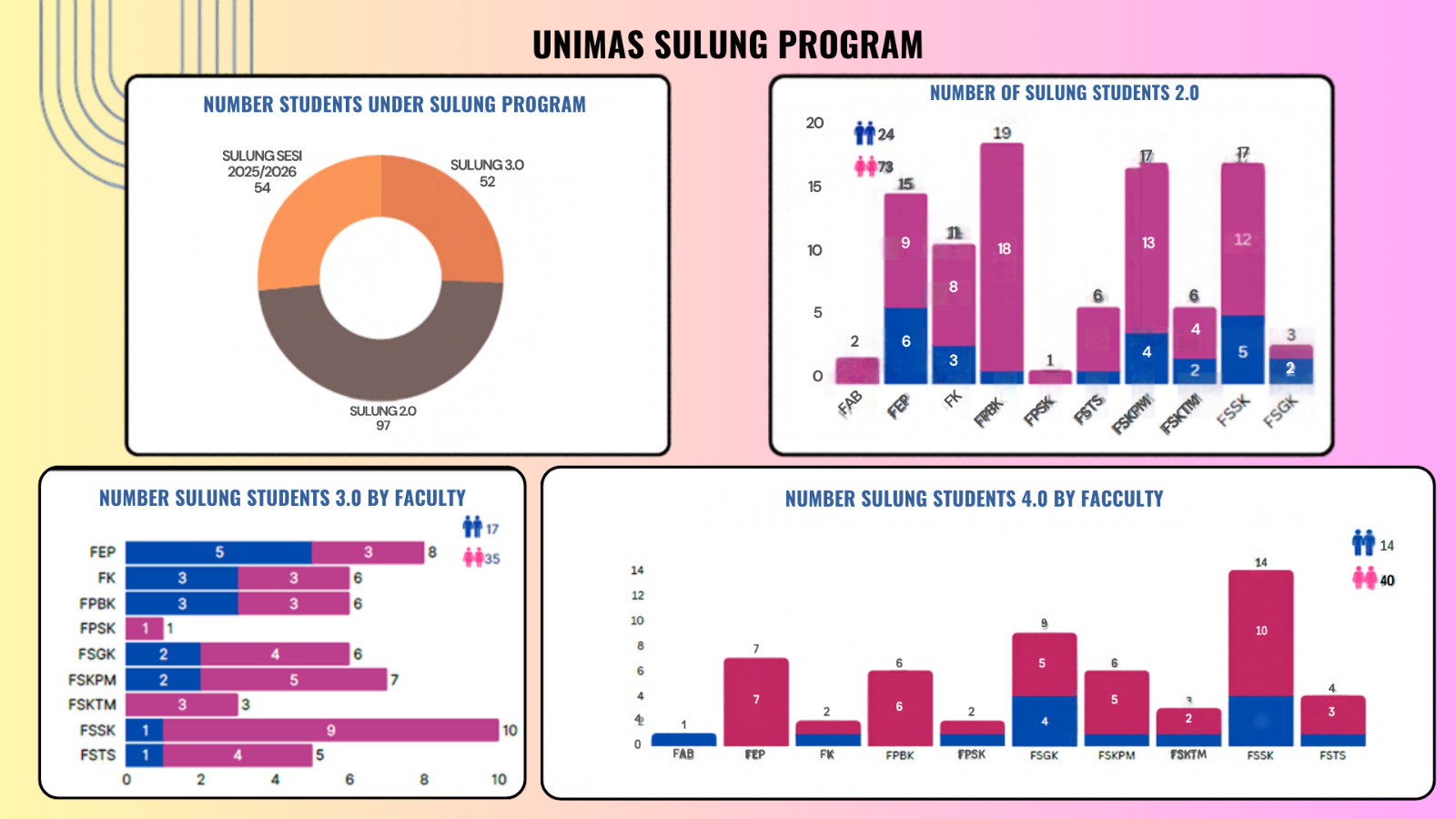
Universiti Malaysia Sarawak (UNIMAS) promotes gender equality and inclusive access to higher education by providing opportunities for women from first-generation backgrounds to pursue university education. This initiative supports women whose parents or guardians may not have attained higher education, helping to reduce educational barriers and encourage greater participation in tertiary education. Through equitable admission opportunities and an inclusive learning environment, UNIMAS contributes to women's empowerment, social mobility and equal access to quality education.For the 2025/2026 academic session(SULUNG 4.0) , data recorded as much as 54 students enrolled under the SULUNG programme , another 52 students under SULUNG 3.0 and the highest number was at SULUNG 2.0 with 97 students. From this a number, 148 students were women which shows the initiatives that demonstrate UNIMAS's continued commitment to expanding access to higher education.
Keywords: Women Empowerment, Gender Equality, Equal Access to Higher Education, Educational Inclusion, Social Mobility
5.3 Student access measures
5.3.1 Tracking Access Measure
Rate of Entry in 2025
Number of Graduates in 2023-2025
UNIMAS monitors student admissions, enrolment and graduation outcomes according to gender and study level. This data helps the university compare women’s and men’s graduation rates, identify potential gender gaps and report outcomes to the Ministry of Higher Education. UNIMAS also highlights mentorship and academic counselling as measures to address disparities and promote equal opportunities for students to complete their studies.
UNIMAS recorded 3,448 graduates: 1,094 men (31.7%) and 2,354 women (68.3%). Women represented over two-thirds of graduates, outnumbering men by 1,260. The data showed an increase of intakes from 2023 and 2024 and as depicted from the graph, the number of female intakes has always been 65% higher than men.

5.3.2 Policy for women applications and entry
UNIMAS promotes equal rights, fair treatment, and protection against discrimination for all campus members. It aims to ensure equal educational opportunities, safeguard individual rights and welfare, and foster an inclusive, safe, and harmonious campus environment regardless of gender, race, religion, ethnicity, age, or background.
Keyword: Gender Equality, Equal rights and fair treatment, Gender-inclusive policies, Equal access to university
Equality Policy in Enjoying Quality Education at UNIMAS
UNIMAS’s Equality and Protection Policy promotes equal rights, fair treatment, and protection against discrimination for all campus members. It aims to ensure equal educational opportunities, safeguard individual rights and welfare, and foster an inclusive, safe, and harmonious campus environment regardless of gender, race, religion, ethnicity, age, or background.
Keyword: Equal rights, Fair treatment, Fair education, No discrimination in education
UNIMAS Environmental, Social and Governance (ESG) Policy
The UNIMAS Environmental, Social and Governance (ESG) Policy establishes a framework for integrating sustainability into university operations, teaching, research, governance and community engagement. It prioritises environmental protection, resource efficiency, biodiversity conservation, social equity, inclusivity, ethical leadership and institutional accountability. Aligned with the United Nations Sustainable Development Goals (SDGs) and UNIMAS’s Sustainability Masterplan 2021–2025, the policy promotes digital transformation, community partnerships and sustainable education to strengthen UNIMAS’s role as a leader in sustainable development in Sarawak and beyond.
Keyword: Environmental, Social and Governance (ESG) Policy, Sustainability and Environmental Protection, Social Equity and Inclusivity, Ethical Governance and Accountability
UNIMAS Academic Quality Assurance Manual
The UNIMAS Academic Quality Manual outlines procedures for academic programme development, accreditation, curriculum improvement, teaching, research and assessment. It establishes institutional responsibilities and quality assurance processes to maintain academic standards, support continuous improvement and ensure compliance with higher education requirements.
Keyword: Academic Quality Assurance, Curriculum Development and Improvement, Academic Standards and Compliance, High Academic Standards
5.3.3 Women's access schemes
UNIMAS supports providing women’s access schemes which include mentoring, scholarships, or other provisions to support their studies throughout the years in university. UNIMAS supports female staff and staff wives through community engagement and empowerment, contributing to women’s development, participation and wellbeing within the university community.
Keywords: Women Education, Mentor-Mentee, Scholarship for Women, Women Engagement
Number of Postgraduate Students with Scholarship
Gender should not be a hindrance to further expand one’s knowledge and enjoy quality education without worrying about tuition fees. From the numbers shown in the graph below it shows that the number of postgraduate students under scholarships who studied and graduated in UNIMAS is very good. The number of students with a Masters degree was similar with both genders but female PhD graduates outnumbered their male counterparts in number.
Keywords: Postgraduate, Higher Education, Women in Education, Equal Opportunities

Women Post-Graduate with Scholarship (Graduated) | ||
Female | Male | |
Masters | 27 | 27 |
PhD | 11 | 1 |
Lessons in Perseverance: How One Educator Transformed Lives and Fought for Equality
UNIMAS is committed to educational equality and empowering students, particularly those struggling with English. Through patient guidance, personalised teaching and encouragement, she helps students improve their academic performance and confidence. Inspired by her mother and grandmother, she advocates stronger protection against discrimination and violence, greater female participation in STEM, and improved access to financial literacy, digital skills and career development for underserved women. Her story emphasises perseverance, self-belief, equal opportunities and the importance of supporting women to achieve their full potential.
Keywords: Quality Education, Women Empowerment, English as Second Language, Women in STEM
Reference Link: Lessons in Perseverance 
Equality Policy in Enjoying Quality Education at UNIMAS
UNIMAS’s Equality and Protection Policy promotes equal rights, fair treatment, and protection against discrimination for all campus members. It aims to ensure equal educational opportunities, safeguard individual rights and welfare, and foster an inclusive, safe, and harmonious campus environment regardless of gender, race, religion, ethnicity, age, or background.
Keyword: Equal rights, Fair treatment, Fair education, Equal Opportunities
5.3.4 Women's application in underrespresented subjects
Every student in UNIMAS is encouraged to take up subjects that they can thrive at even if it is not the norm. There are many ways the university encourages this, which is through outreach programs with different collaborators such as other universities, community groups, the government or with NGOs in regional or national campaigns.
BPSM Personnel Well-being Unit Mentor-Mentee Program
UNIMAS conducts a professional mentoring programme by providing workshops to further women to clarify their roles, responsibilities, expectations, and mentoring processes. The program supports women’s professional development, strengthens leadership capabilities, and promotes equal opportunities for career advancement within UNIMAS
Keywords: Mentor program in UNIMAS, Women in Workforce, Leadership, Equal Opportunities
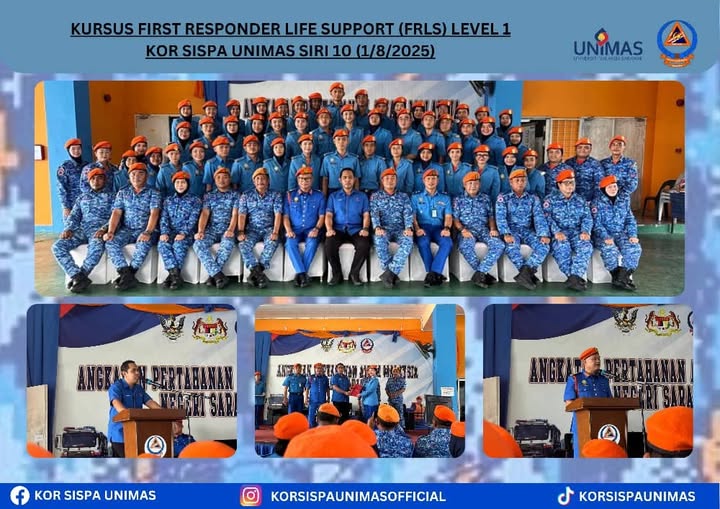
UNIMAS Kor SISPA First Responder Course
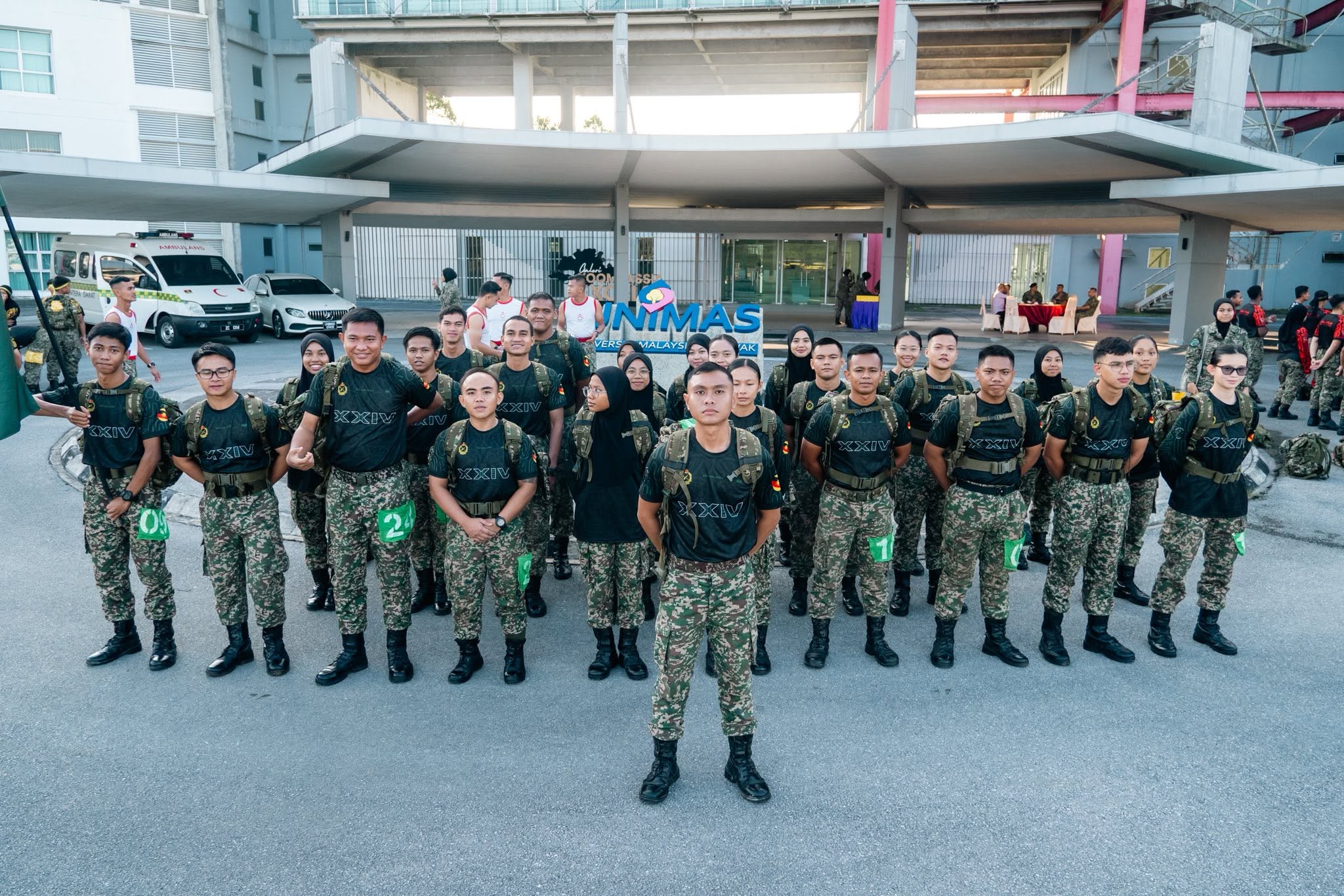
UNIMAS offers a diverse range of uniformed body programmes that promote gender equality by encouraging women to participate in activities traditionally dominated by men. Programmes such as Kor SUKSIS (Police), Kor SISPA (Civil Defence), and PALAPES (Military Reserve Officers Training) provide female students with opportunities to demonstrate their capabilities, discipline, leadership, and commitment, while challenging gender stereotypes and fostering equal participation in leadership and service-oriented roles.
Keywords: Women in Uniform, Women Empowerment, Gender Stereotype, Women in Leadership Role, Equal Participation
Reference Link: UNIMAS Kor SISPA First Responder Course
UNIMAS PALAPES Closing Ceremony
UNIMAS celebrates the successful completion of PALAPES training by 146 cadet officers, comprising 86 females and 60 males, supported by 26 trainers. The programme promotes gender equality and inclusive leadership by providing women and men with opportunities to develop discipline, leadership skills, and contribute to national defence.
Keywords: Women in Uniform, Women Empowerment, Gender Stereotype, Women in Leadership Role, Equal Participation
Reference link: PALAPES UNIMAS Closing Ceremony 2025
5.4 Proportion of senior female academics
UNIMAS promotes gender equality by monitoring women’s representation and encouraging female academics to participate in leadership and decision-making roles to support women’s career advancement and greater representation in senior academic positions. UNIMAS shows a higher number of female senior academic staff as compared to male academicians.
Keywords: Gender Equality, Women in Leadership, Women in Workforce, Academic, Women in Senior Roles
5.4.1 Proportion of senior female academics

Proportion of senior female academics | |
Number of female senior academic staff | 222 |
Number of male senior academic staff | 164 |
Total number of senior academic staff | 386 |
5.5 Proportion of women receiving degrees
UNIMAS promotes gender equality by monitoring women’s representation and encouraging female academics to participate in leadership and decision-making roles to support women’s career advancement and greater representation in senior academic positions. UNIMAS shows a higher number of female senior academic staff as compared to male academicians.
Keywords: Gender Equality, Women in Leadership, Women in Workforce, Academic, Women in Senior Roles
5.5.1 Proportion of women receiving degrees
UNIMAS contributes by tracking the number of female graduates and promoting equal access to higher education. Through inclusive academic opportunities, student support initiatives, and mentoring programs, the university encourages women to achieve academic success and obtain qualifications that strengthen their future career prospects and leadership potential.
Keywords: Women Graduates, Mentoring Programs, Women in Leadership Role

Proportion of Female Degrees Awarded in 2025
| Subject Area | Total Graduates | Female Graduates | Female Proportion |
|---|---|---|---|
| STEM* | 950 | 529 | 55.7% |
| Medicine (including Allied Health) | 212 | 152 | 71.7% |
| Arts & Humanities / Social Sciences | 810 | 563 | 69.5% |
| Total (Selected Subject Areas) | 1,972 | 1,244 | 63.1% |
| Total Graduates (All Subject Areas) | 6,613 | ||
Note: STEM* is a collective of students who graduated from the Faculties of Engineering, Computer Science and Information Technology, and Resource Science and Technology.
5.6 Women's progress measures
5.6.1 Policy of non-discrimination against women
UNIMAS Gender, Religion, Nation and Age Equality and Protection Policy for UNIMAS Citizens
UNIMAS supports non-discrimination against women through its Gender, Religion, Race and Age Equality and Protection Policy. The policy prohibits discrimination based on gender and promotes equal rights, fair treatment, and access to quality education. It also provides a framework for protecting university members from prejudice and ensuring fairness in academic and administrative matters. These measures demonstrate UNIMAS’s commitment to fostering an inclusive, equitable, and respectful campus environment.
Keywords: No Gender Discrimination, Fair Treatment, Equal Opportunities, Fair Education, Safe Study Environment
UNIMAS Environmental, Social and Governance (ESG) Policy
The UNIMAS Environmental, Social and Governance (ESG) Policy establishes a framework for integrating sustainability into university operations, teaching, research, governance and community engagement. It prioritises environmental protection, resource efficiency, biodiversity conservation, social equity, inclusivity, ethical leadership and institutional accountability. Aligned with the United Nations Sustainable Development Goals (SDGs) and UNIMAS’s Sustainability Masterplan 2021–2025, the policy promotes digital transformation, community partnerships and sustainable education to strengthen UNIMAS’s role as a leader in sustainable development in Sarawak and beyond.
Keyword: Environmental, Social and Governance (ESG) Policy, Sustainability and Environmental Protection, Social Equity and Inclusivity, Ethical Governance and Accountability
Equality Policy in Enjoying Quality Education at UNIMAS
The UNIMAS Equality and Protection Policy aims to ensure that all individuals have equal opportunities to access quality higher education, regardless of race, religion, age or gender. Guided by the Federal Constitution and Malaysia’s education policies, UNIMAS promotes inclusive educational opportunities without unnecessary barriers or discrimination. The policy supports the development of skilled, future-ready graduates through quality teaching, research and knowledge sharing, while strengthening social unity, community well-being and national economic development.
Keyword: Equal rights, Fair treatment, Fair education, No Discrimination, Equal Opportunities
5.6.2 Non-discrimination policies for transgender
Equality Policy in Enjoying Quality Education at UNIMAS
The UNIMAS Equality and Protection Policy aims to ensure that all individuals have equal opportunities to access quality higher education, regardless of race, religion, age or gender. Guided by the Federal Constitution and Malaysia’s education policies, UNIMAS promotes inclusive educational opportunities without unnecessary barriers or discrimination. The policy supports the development of skilled, future-ready graduates through quality teaching, research and knowledge sharing, while strengthening social unity, community well-being and national economic development.
Keyword: Equal rights, Fair treatment, Fair education, No Discrimination, Equal Opportunities
UNIMAS Gender, Religion, Nation and Age Equality and Protection Policy for UNIMAS Citizens
UNIMAS upholds its Gender, Religion, Nation and Age Equality and Protection Policy as our Equality Policy in Enjoying Quality Education to promote an inclusive, safe, and respectful learning environment for all members of the university community. The university is committed to ensuring that students, regardless of gender, can pursue their education free from discrimination, intimidation, and threats. UNIMAS recognizes education as a fundamental opportunity for personal and intellectual development, empowering individuals to contribute meaningfully to Malaysia’s continued progress and transformation.
Keywords: No Gender Discrimination, Fair Treatment, Equal Opportunities, Fair Education, Safe Study Environment
UNIMAS Academic Quality Assurance Manual
The UNIMAS Academic Quality Manual outlines procedures for academic programme development, accreditation, curriculum improvement, teaching, research and assessment. It establishes institutional responsibilities and quality assurance processes to maintain academic standards, support continuous improvement and ensure compliance with higher education requirements.
Keyword: Academic Quality Assurance, Curriculum Development and Improvement, Academic Standards and Compliance, High Academic Standards
5.6.3 Maternity and paternity policies
UNIMAS Maternity Leave for Public Officer Policy
The UNIMAS maternity leave policy entitlements for eligible public service officers, following Malaysia's Public Service Department Circular No. 5 of 2017. It provides up to 360 days of fully paid maternity leave throughout an officer’s service, with 60–90 days available for each birth. Officers may begin maternity leave 14 days before the expected delivery date. The circular also explains arrangements when paid leave entitlements are insufficient or exhausted, eligibility following childbirth after 22 weeks of pregnancy, and restrictions on substituting sick leave for maternity leave. These provisions support maternal recovery and employee welfare.
Keywords: Maternity leave policy, Employee welfare, Work-life balance, Human resource policy, Childbirth protection
Sarawak Labour (Amendment) Ordinance 2025 (Pindaan Bab XIB)
Maternity Policies in UNIMAS is supported by providing maternity leave for eligible female staff in accordance with the national public service regulations. The Sarawak Labour (Amendment) Ordinance 2025 allows up to 98 days (about 3 months) of fully paid maternity leave per birth including rest days and holidays. These provisions support maternal health, family wellbeing, and women’s continued participation in the workforce.
Keywords: Maternity Leave Entitlements , Women’s Workplace Rights, Maternal Health and Wellbeing, Gender Equality and Workforce Participation
Malaysia Employment Act 1955 (Amendment) 2022 (Part IX)
The Employment Act 1955 (Act 265) establishes the legal framework governing employment relationships in Peninsular Malaysia and the Federal Territory of Labuan. It outlines the rights and responsibilities of employers and employees, covering employment contracts, wage payments, working hours, rest days, public holidays, annual and sick leave, maternity and paternity leave, and protection against workplace discrimination and sexual harassment. The Act also provides mechanisms for handling labour complaints, conducting inspections and enforcing compliance, promoting fair employment practices and safeguarding workers’ welfare.
Keywords: Employment Rights and Protection , Labour Law Compliance, Maternity and Paternity Leave, Workplace Equality and Non-Discrimination, Employee Welfare and Fair Employment Practices
5.6.4 Childcare facilities for students
Student Welfare Unit
UNIMAS provides many channels on mentoring, counselling, or peer support programmes to support students, staff, and faculty from underrepresented groups. The student Welfare department ensures that each student's needs are being represented and are properly addressed by the university whereas the SQRC promotes and keeps employees and staff updated on latest regulations. The student welfare offers financial assistance, assist with insurance and accident claims, giving support during crisis and support, assist for scholarship and bursary coordination and conduct community welfare programmes.
Keywords: Student Welfare, Student Community, University Assistance
Reference Link: Student Welfare Unit

Taska SeDIDIK UNIMAS
UNIMAS on the other hand also has a childcare facility that serves to take care of children of the working staff. A post-graduate or mature student can discuss with the facility for any arrangements if necessary.
Keywords: Studying Mothers, Mothers and Further Education, Childcare Facilities, University Assistance for Mothers
Reference Link: UNIMAS Women Health and Infertility Clinic

UNIMAS Women Health and Infertility Clinic
The clinic has operated since September 2016 under the care of Obstetrics and Gynaecology (O&G) Department, Faculty of Medicine and Health Sciences, UNIMAS. The clinic offers services and procedures like antenatal check-up and consultations, gynaecological consultation, colposcopy clinic, pap smear and Visual Inspection of Acetic acid (VIA) as well as infertility check ups. This shows that the campus is committed to maintaining the welfare of its campus community.
Keywords: University clinic, Women Health, Community Welfare, University Health, Health check ups
Reference Link: UNIMAS Women Health and Infertility Clinic 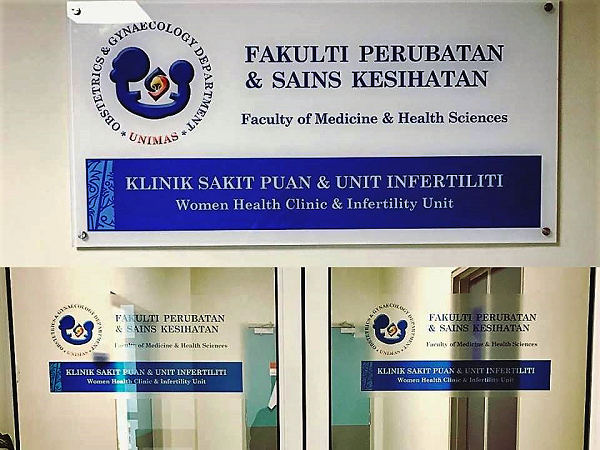
5.6.5 Childcare facilities for staff and faculty
CALW UNIMAS and OSEIC Sarawak Explore Strategic Collaboration in Early Intervention
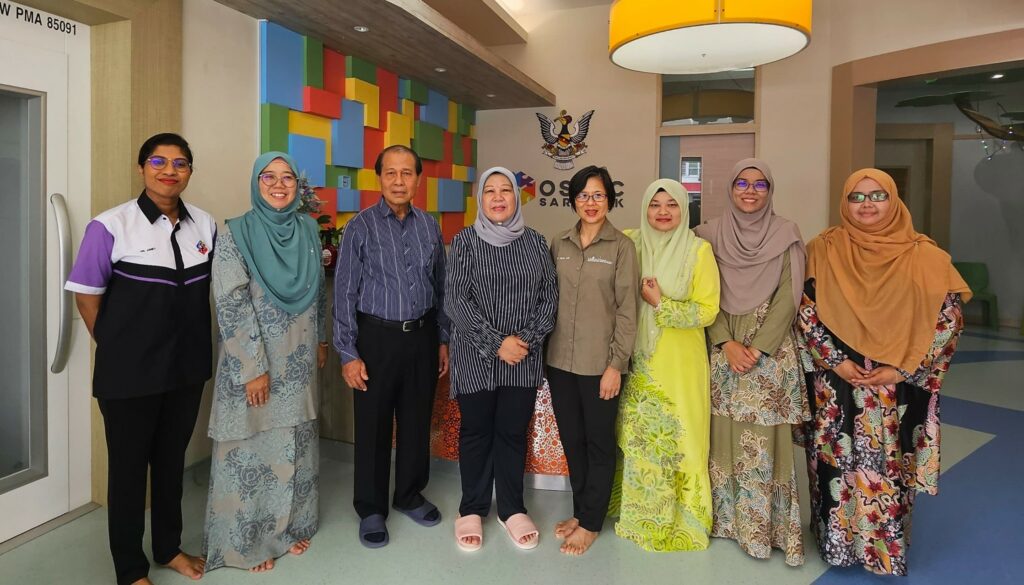
UNIMAS’s Child and Adolescent Learning and Wellbeing Centre (CALW) visited OSEIC Sarawak to explore collaboration in early diagnosis, intervention services, and inclusive education. The engagement included facility tours and discussions on best practices, collaborative research, and public awareness. Both organisations aim to improve developmental support, strengthen community services, and enhance children’s wellbeing across Sarawak.
Keywords: Working Mothers, Mothers in Workforce, Childcare Facilities, Early Child Diagnosis, Public Awareness, University Collaboration
Reference Link: CALW UNIMAS and OSEIC Sarawak
Taska SeDIDIK UNIMAS
UNIMAS Taska SeDIDIK promotes inclusive access to quality early learning through play-based activities, dedicated educators, and holistic development. They also provide essential childcare support for university staff and working parents.
Keywords: Working Mothers, Mothers in Workforce, Childcare Facilities
Reference Link: Taska SeDIDIK UNIMAS

UNIMAS Women Health and Infertility Clinic
The clinic has operated since September 2016 under the care of Obstetrics and Gynaecology (O&G) Department, Faculty of Medicine and Health Sciences, UNIMAS. The clinic offers services and procedures like antenatal check-up and consultations, gynaecological consultation, colposcopy clinic, pap smear and Visual Inspection of Acetic acid (VIA) as well as infertility check ups. This shows that the campus is committed to maintaining the welfare of its campus community.
Keywords: University clinic, Women Health, Community Welfare, University Health, Health check ups
Reference Link: UNIMAS Women Health and Infertility Clinic
5.6.6 Women's mentoring schemes
UNIMADANI Empowering Women Project
UNIMAS supports women’s mentoring schemes where the university aims to provide academic guidance, study strategies, personal development support and peer interaction. The university also promotes women’s participation in STEM through mentorship and networking initiatives, helping female students build confidence, develop professional skills and pursue leadership opportunities.
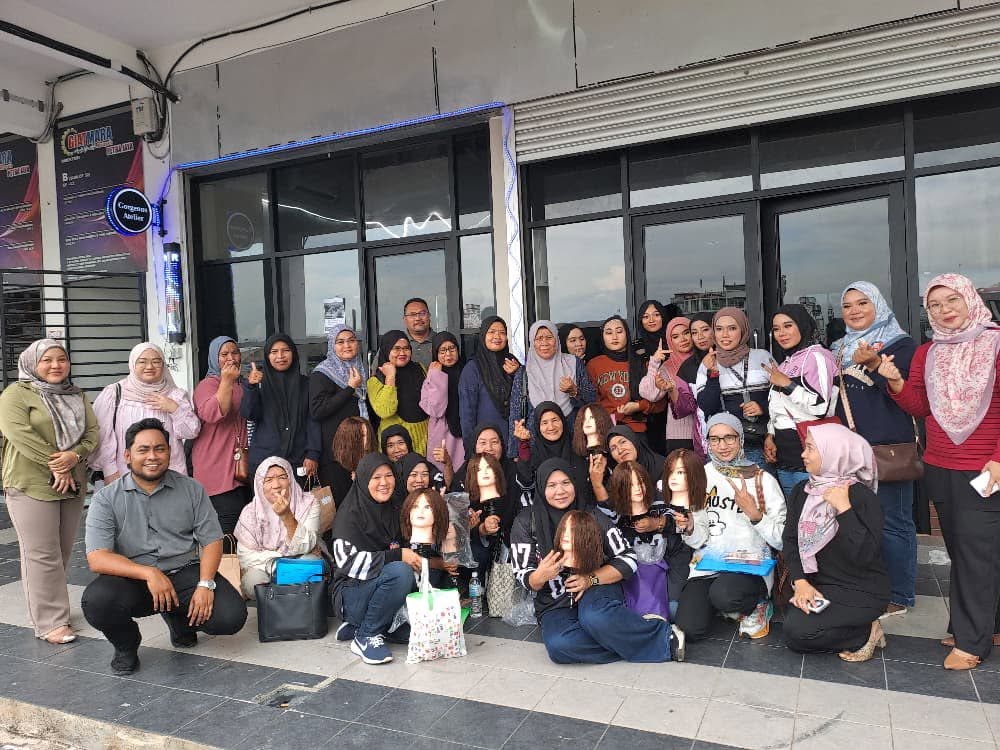
The Kampung Baru Women’s Empowerment Project, a collaboration between GIATMARA Petra Jaya and UNIMAS, trained 24 women in haircutting, formal makeup and body massage. The initiative promotes women’s skills development, confidence and potential entrepreneurship. It aligns with SDG 5.6.6 when supported by ongoing mentorship, career guidance or business coaching.
Keywords: Mentor-Mentee Programs, Academic Guidance, Women in Leadership Role, Women Participation, Business Coaching
Reference Link: UNIMADANI empowering women project
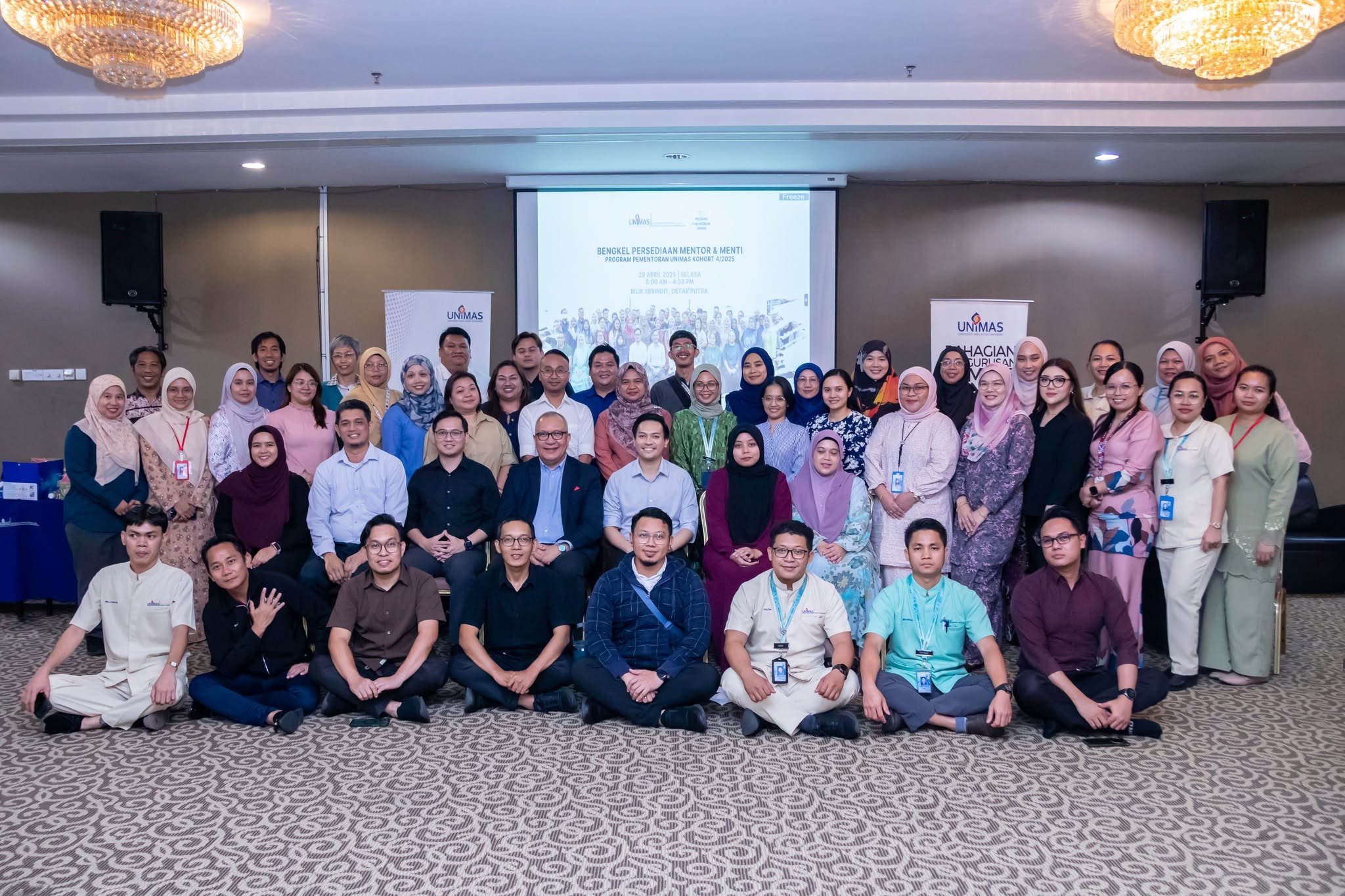
BPSM Personnel Well-being Unit Mentor-Mentee Program
UNIMAS conducts professional mentoring programmes by providing workshops to further women to clarify their roles, responsibilities, expectations, and mentoring processes. The program supports women’s professional development, strengthens leadership capabilities, and promotes equal opportunities for career advancement within UNIMAS
Keywords: Mentor-Mentee Programs, Women in Leadership Role, Equal Work Opportunities, Career Advancement
Reference Link: BPSM Personnel Wellbeing Unit Mentor-Mentee Program
5.6.7 Track women's graduation rate
Number of Graduates by Faculty in 2025
UNIMAS monitors student admissions, enrolment and graduation outcomes according to gender and study level. This data helps the university compare women’s and men’s graduation rates, identify potential gender gaps and report outcomes to the Ministry of Higher Education. UNIMAS also highlights mentorship and academic counselling as measures to address disparities and promote equal opportunities for students to complete their studies.
UNIMAS recorded 3,448 graduates: 1,094 men (31.7%) and 2,354 women (68.3%). Women represented over two-thirds of graduates, outnumbering men by 1,260. The data showed an increase of intakes from 2023 and 2024 and as depicted from the graph, the number of female intakes has always been 65% higher than men.
Keywords: UNIMAS Student Admissions, Ministry of Higher Education, Education Mentorship, Equal Learning Opportunities
Reference Table:
Number of Undergraduates by Faculty in 2025 | ||||
Faculty | Short | Men | Women | Total |
Faculty of Built Environment | FAB | 21 | 59 | 80 |
Faculty of Economics and Business | FEP | 179 | 458 | 637 |
Faculty of Engineering | FK | 169 | 159 | 328 |
Faculty of Language and Communication | FPBK | 58 | 204 | 262 |
Faculty of Medicine and Health Sciences | FPSK | 60 | 152 | 212 |
Faculty of Applied and Creative Arts | FSGK | 83 | 172 | 255 |
Faculty of Cognitive Sciences and Human Development | FSKPM | 108 | 389 | 497 |
Faculty of Computer Science and Information Technology | FSKTM | 165 | 155 | 320 |
Faculty of Social Sciences and Humanities | FSSK | 164 | 391 | 555 |
Faculty of Resource Science and Technology | FSTS | 87 | 215 | 302 |
Total Number of graduates | 3448 | |||
Statistics on Women Empowerment, Malaysia 2025 And Malaysia Gender Gap Index
The Department of Statistics Malaysia’s Statistics on Women Empowerment, Malaysia 2025 reports that women’s tertiary gross enrolment rate reached 56.4% in 2024, compared with 37.0% for men. This gender-disaggregated data supports SDG 5.6.7 by highlighting women’s educational participation and the importance of tracking gender-related education outcomes.
Keywords: Women Empowerment, Women at Work, Equality in Education, Workforce Equality, Education Importance
Reference Link: Malaysia Gender Gap Index

5.6.8 Policies protecting those reporting discrimination
UNIMAS Anti-Bribery Policy
The UNIMAS Academic Integrity Policy 2025 promotes honesty, trustworthiness, fairness, respect and accountability in teaching, learning, research and academic publication. It addresses academic misconduct, including plagiarism, assessment fraud and misuse of resources. All relevant UNIMAS staff are expected to comply with the policy and report suspected academic misconduct to their supervisors or Heads of Responsibility Centres. The policy aims to strengthen ethical academic practices, transparent procedures and a culture of academic excellence.
Keywords: Academic integrity, Research integrity, Honesty and accountability, Transparency and fairness, Responsible academic practices
UNIMAS Upholds Integrity in Compliance with Malaysian Laws
Universiti Malaysia Sarawak (UNIMAS) upholds integrity by aligning its institutional procedures and governance practices with Malaysian laws and regulations. Through its Integrity Division, the university promotes transparency, accountability, ethical conduct and compliance while preventing corruption, abuse of power and misconduct. Key legislation includes the Malaysian Anti-Corruption Commission Act 2009 (Act 694), the Statutory Bodies (Discipline and Surcharge) Act 2000 (Act 605), and the Whistleblower Protection Act 2010 (Act 711). These laws support anti-corruption efforts, disciplinary accountability and the reporting of wrongdoing. UNIMAS also manages complaints, verifies allegations and implements appropriate disciplinary procedures to foster an ethical, responsible and trustworthy university environment.
Keywords: Integrity and ethical conduct, Malaysian laws and regulations, Transparency and accountability, Whistleblower protection, Misconduct prevention, Compliance monitoring
Reference Link: UNIMAS and the Laws of Malaysia

UNIMAS Guidelines for Complaint Management and Investigation
The UNIMAS Guidelines for Complaint Management and Investigation establish a systematic framework for handling complaints involving misconduct, corruption, abuse of power, and violations of university rules and ethical standards. The Integrity Division (Bahagian Integriti) receives, registers, evaluates, monitors and investigates complaints while ensuring confidentiality, impartiality, transparency and fairness. Through the Information Evaluation Committee (JMM) and Internal Investigation Committee (JKSD), UNIMAS determines appropriate actions, including disciplinary measures, referrals to enforcement agencies or improvements to governance and procedures. The guidelines align complaint management with Malaysian laws, including the Malaysian Anti-Corruption Commission Act 2009 (Act 694), the Whistleblower Protection Act 2010 (Act 711) and the Statutory Bodies (Discipline and Surcharge) Act 2000 (Act 605). They also emphasise protecting complainants' identities and ensuring that reported individuals receive fair treatment.
Keywords: Integrity and accountability, Misconduct investigation, Transparency and impartiality, Anti-corruption, Whistleblower protection, Complaint management
UNIMAS Integrity Pledge 2025
UNIMAS launched its Integrity Pledge in February 2025, reaffirming its commitment to transparency, accountability and a corruption-free academic environment. The initiative promotes ethical conduct and responsible reporting of misconduct.
Keywords: Integrity at Work, Accountability and Honesty, Integrity Pledge, Corruption-Free Work, Ethics
Reference Link: UNIMAS Integrity Pledge 2025

UNIMAS upholds its Gender, Religion, Nation and Age Equality and Protection Policy as our Equality Policy in Enjoying Quality Education at UNIMAS to promote an inclusive, safe, and respectful learning environment for all members of the university community.
5.6.9 Paternity policies
UNIMAS Excellence Report 2024
UNIMAS provides paternity leave for male staff to participate in childcare and support their spouses after childbirth. According to UNIMAS’s ESG Excellence Report 2024, 43 staff members took paternity leave in 2023, demonstrating the use of this family-friendly benefit. The policy supports shared parental responsibilities and women’s participation in the workforce. The UNIMAS Excellence report for 2025 is currently in review and yet to be published as of the moment.
Sarawak Labour (Amendment) Ordinance 2025 (Seksyen Baharu 105EA)
UNIMAS also follows the Sarawak Labour (Amendment) Ordinance 2025 in regard to Paternity Leave which starts from 7 days (including rest days and holidays) after the baby is born. The university upholds its support in the well-being of the staff.
Malaysia Employment Act 1955 (Amendment) 2022 (sect 60FA)
The Employment Act 1955 (Act 265) establishes the legal framework governing employment relationships in Peninsular Malaysia and the Federal Territory of Labuan. It outlines the rights and responsibilities of employers and employees, covering employment contracts, wage payments, working hours, rest days, public holidays, annual and sick leave, maternity and paternity leave, and protection against workplace discrimination and sexual harassment. The Act also provides mechanisms for handling labour complaints, conducting inspections and enforcing compliance, promoting fair employment practices and safeguarding workers’ welfare.
Keywords: Employment Rights and Protection , Labour Law Compliance, Maternity and Paternity Leave, Workplace Equality and Non-Discrimination, Employee Welfare and Fair Employment Practices